
Unbiased headlines. Facts, not spin.
Every story is an unbiased news briefing written from 110+ sources across the spectrum — sources linked so you can verify it yourself.
 energy
Notable (6/10)
July 3, 2026 at 12:26 PM
energy
Notable (6/10)
July 3, 2026 at 12:26 PM
Oil Heads for Fourth Straight Weekly Loss as Hormuz Reopening Holds, but a Tolling Fight with Oman Clouds the Outlook
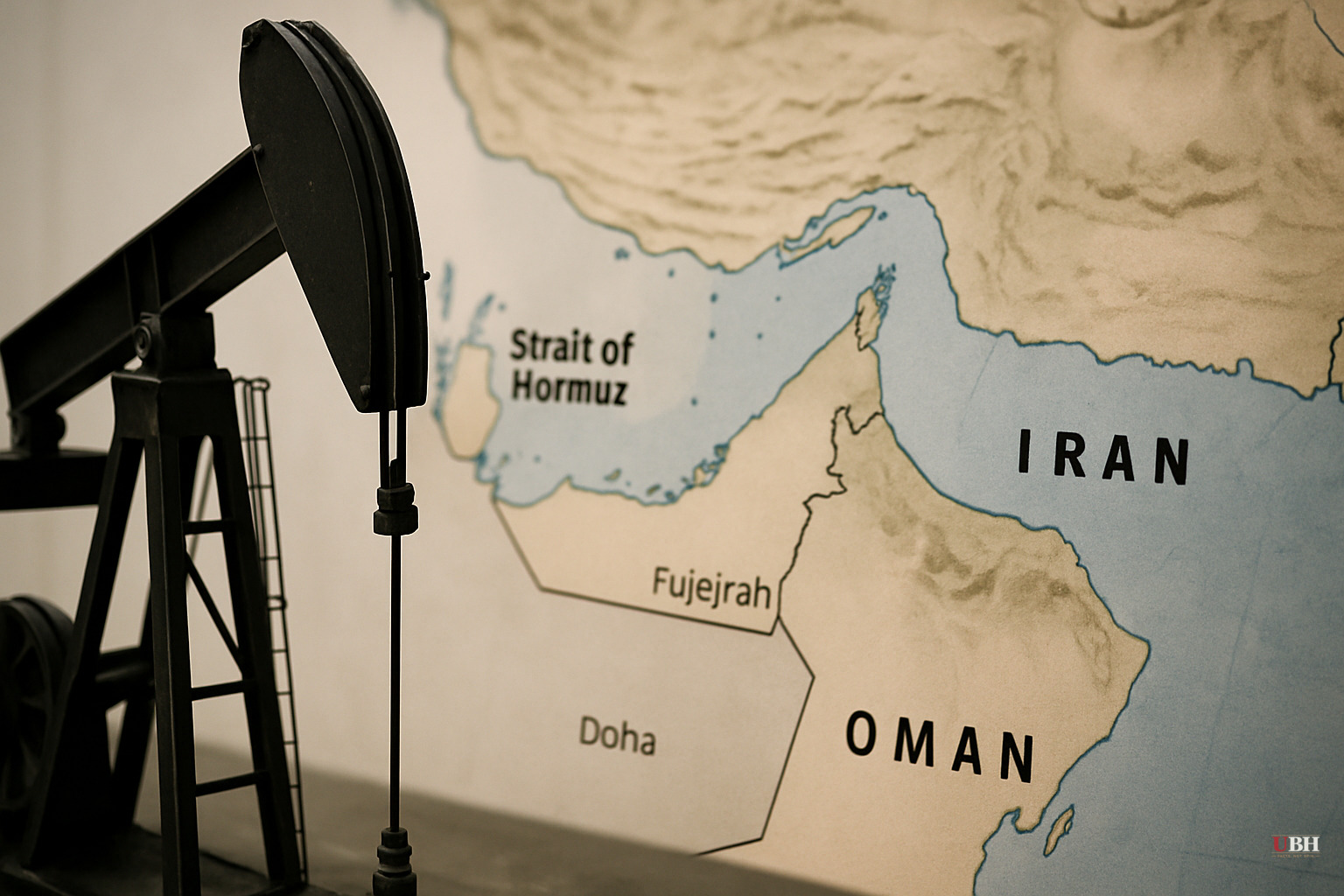
Since the Strait of Hormuz reopened following the U.S.-Iran interim peace agreement, the energy story has shifted from crisis management to the harder question of what a durable new order in the strait actually looks like.
As of Friday, July 3, WTI futures were up 14 cents, or 0.20%, to $68.83 a barrel and Brent up 17 cents, or 0.24%, to $72.10 a barrel as of 0155 GMT, according to CNBC, with both benchmarks having touched their lowest levels this week since before the U.S.-Israeli war on Iran began in late February. Oil is on pace for its fourth consecutive weekly loss, according to OilPrice.com, as physical supply returns faster than the market expected.
The supply picture is moving
The numbers from Gulf producers are concrete. Kuwait's oil output climbed to 1.65 million barrels per day in June, up sharply from 580,000 bpd in May, according to a source familiar with the matter who spoke to Reuters. At least five supertankers carrying a combined 10 million barrels of Saudi crude have already exited the strait, with Saudi Aramco switching to spot pricing to accelerate Asian sales, per trade sources and shipping data cited by CNBC.
Tim Waterer, chief market analyst at KCM Trade, told CNBC the mood is one of "guarded optimism." Markets want to believe the peace efforts hold, but they're hedging until they see sustained evidence on the water.
Citi's forecast is more definitive. According to OilPrice.com, the bank sees oil sinking to $60 as Hormuz traffic normalizes, a level that would represent a significant further drop from where WTI sits today.
The Oman complication
Oman, which sits on the southeastern coast of the Arabian Peninsula directly opposite Iran across the strait, has been holding joint talks with Tehran on a new maritime security framework. Reports indicate the two countries are exploring transit fees or service charges on vessels using the waterway, according to CNBC.
Oman has positioned itself as the neutral broker. It is one of the few governments trusted by both Washington and Tehran, a role that has earned it the informal label "Switzerland of the Middle East." But that neutrality is now creating what analysts described to CNBC as a market "blind spot."
Dania Thafer, executive director of Gulf International Forum, told CNBC that Oman's stated position on fees is intentionally opaque. "You have a regional power, such as Iran, and then you have a global power, the U.S., putting pressure on Oman," Thafer said. "So they're trying to use a degree of strategic ambiguity to try to stay out of the conflict as much as possible."
The legal architecture here matters. The Strait of Hormuz is governed by the international law principle of transit passage, which does NOT permit states to charge vessels simply for passing through. Service fees framed as compensation for navigational assistance or maritime safety infrastructure could be a workaround, but analysts told CNBC that even that option sits within tight legal limits.
Washington's position
The Trump administration has been unambiguous. Treasury Secretary Scott Bessent posted on X on May 28 that "all nations should reject outright any efforts by Iran to disrupt the free flow of commerce," and the administration has previously threatened to "aggressively" impose sanctions on Oman if it facilitates any Iranian tolling system.
The U.S.-Iran memorandum of understanding signed June 17 includes a provision explicitly prohibiting Iran from imposing tolls on ships during the agreement's 60-day window of negotiations to find a permanent settlement. That puts the formal legal constraint on Tehran, not Oman, and it expires.
The strongest case for Oman's approach
Oman cannot simply pick a side between the United States and Iran without destroying the diplomatic value that makes it useful to both. If Oman were to flatly reject any fee framework, it would lose its seat at the table and hand the negotiation entirely to parties with far less interest in stability. Thafer told CNBC that if Gulf nations and key international actors signaled acceptance, Oman would likely move toward a formal service-fee arrangement. Markets, while politically disappointed, "would respond accordingly" to conditions that guarantee safe passage. The counterargument is that any fee mechanism, however labeled, sets a precedent that hands Iran leverage over global energy supply indefinitely.
What is still unresolved
Oman's Foreign Ministry did not respond to CNBC's request for comment. The MOU signed June 17 covers 60 days of negotiations to find a permanent settlement, and no permanent agreement governing the strait's new maritime security order has been announced. Whether the Oman-Iran talks produce a formal fee proposal before that window closes and how Washington responds if they do is the specific unresolved question that will determine whether oil's current retreat continues toward Citi's $60 target or stalls on a new round of geopolitical uncertainty.
Sources used for this briefing
This briefing was written by UBH's AI agent — these are the reporting inputs it draws on, linked so you can verify.


