
Unbiased headlines. Facts, not spin.
Every story is an unbiased news briefing written from 110+ sources across the spectrum — sources linked so you can verify it yourself.
 energy
Major Story (8/10)
September 18, 2026 at 05:53 AM
energy
Major Story (8/10)
September 18, 2026 at 05:53 AM
Oil Falls for a Third Straight Day to $104 as Saudi Arabia Restores Pipeline Capacity, Even as Iran Strikes a Tanker in Hormuz
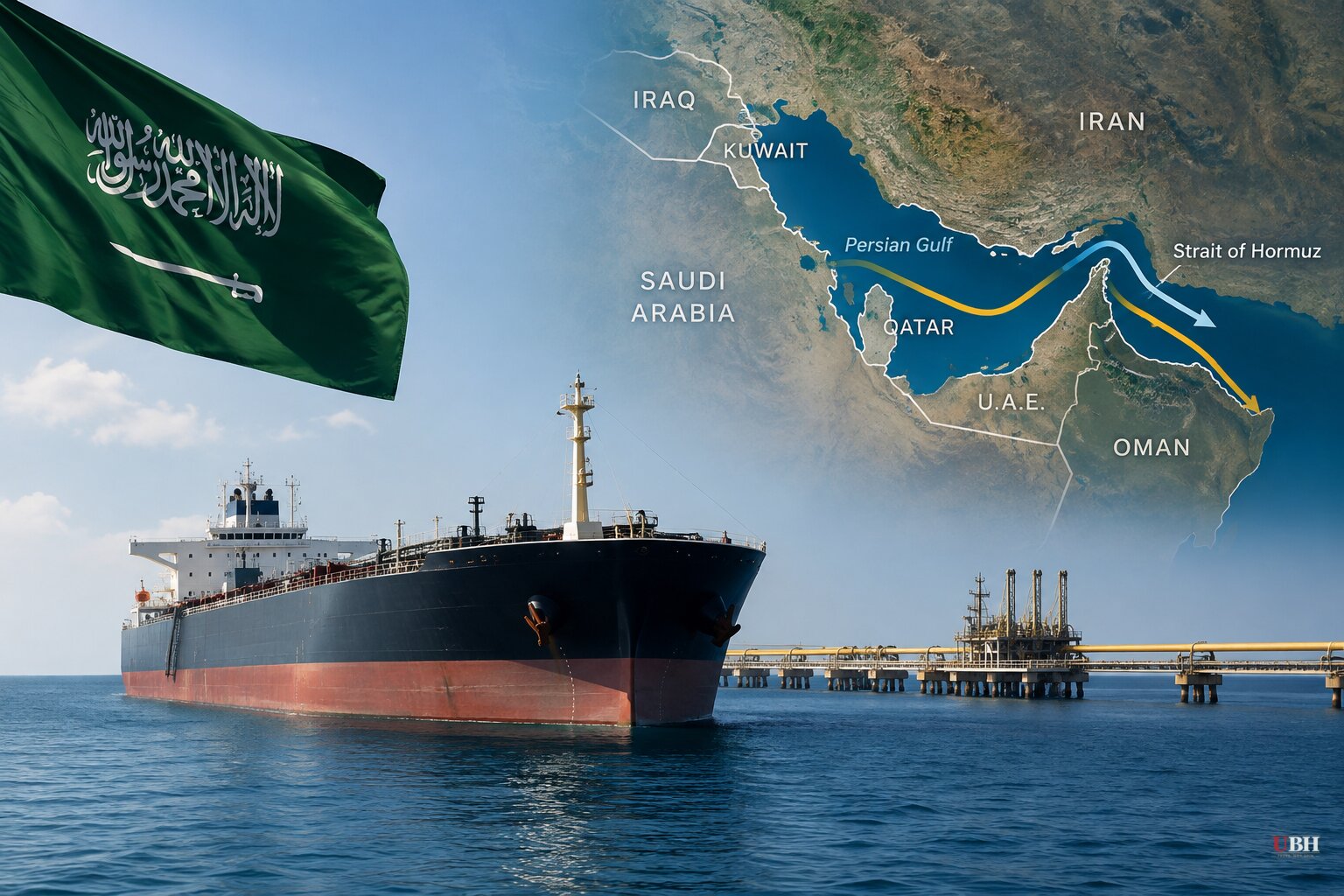
Since Saudi Arabia's East-West pipeline attack sent Brent crude above $140 a barrel earlier this week, prices have now fallen for three straight days, easing to $104 a barrel Friday, according to Reuters. West Texas Intermediate slid to $101.20. Both benchmarks closed down about 1% on Thursday.
The drop isn't because the Middle East calmed down. Saudi Arabia and Yemen's Iran-backed Houthis traded fresh strikes across their border Thursday, widening the war front, Reuters reported. Iran's Revolutionary Guards Navy said it struck a Togo-flagged oil tanker attempting an "illegal passage" through the Strait of Hormuz on Thursday, according to Iranian state media.
Markets shrugged anyway. The reason: Saudi Arabia is working to restore roughly half its East-West pipeline capacity within days and has been offering more crude to Asian refiners through ship-to-ship transfers off Oman's port of Sohar, Reuters reported, citing sources with varying estimates of how long a full restart will take. "Recent efforts to restore Saudi export capacity have reduced some of the immediate supply anxiety," said Priyanka Sachdeva, head of market insights at Phillip Nova.
Brent is now on track for its first weekly loss in three weeks, down 0.5%. WTI is still up 1.2% on the week. Sachdeva noted that whether physical flows through Hormuz can normalize on a sustained basis remains uncertain. "If we see a sustained improvement in Hormuz traffic, some of the geopolitical premium can unwind further," she said.
No peace talks have taken place between Washington and Tehran since an interim agreement collapsed within weeks of being reached in June, per Reuters. The war is set to come up at the United Nations General Assembly next week, and an Iranian delegation will be permitted to attend, the U.S. State Department told Reuters.
The Bigger Economic Worry Isn't the Barrel Price
Economists say the $100-a-barrel headline number matters less than what's happening at the pump and the diesel pump. Diesel hit a record $6.23 a gallon on Sept. 15, according to AAA data cited by CBS News, up from $3.70 a year earlier. Regular gasoline has climbed from roughly $3.20 a year ago toward $4.40 in recent weeks, AAA figures show.
Michael Pearce, chief U.S. economist at Oxford Economics, told Fortune there's no single crude price that flips the U.S. economy into recession outright, because America's re-emergence as a net energy exporter means oil shocks now cut two ways: bad for households, good for domestic producers. Patrick De Haan of GasBuddy told Fortune oil would likely need to approach $200 a barrel to hit the economy as hard as $100 oil did in 1980, when gas ate up about 6% of household income versus roughly 2.5% today.
Ed Yardeni of Yardeni Research put oil prices on a growing "worry list" that also includes rising bond yields, sticky inflation and a Federal Reserve rate decision, according to a Sept. 14 note cited by CBS News. Consumer prices rose 3.4% year-over-year in August, above forecasts and well over the Fed's 2% target, CBS News reported. The University of Michigan's consumer sentiment index fell this month to its second-lowest level on record, with Oxford Economics blaming rising gas prices and renewed tariff talk. Goldman Sachs has warned oil could still push above $120 a barrel if Middle East hostilities widen further, per CBS News.
Lower-income households take the biggest hit, JPMorgan told Fortune, because they spend a larger share of income on fuel and have less room to absorb higher costs.
China's Buffer Is Doing Real Work
China has played a significant role in keeping oil from staying above $140. Beijing cut crude imports by 40%, or 4.6 million barrels a day, between February and May, according to the International Energy Agency, cited by Business Insider. Goldman Sachs estimates Brent's fair value would be $10 to $15 a barrel higher had China kept import volumes steady through August.
Rystad Energy CEO Jarand Rystad called China "one of the important factors saving the energy system," describing it as a "demand-side OPEC" that balances the market by buying less when prices spike, Business Insider reported. China's visible crude stockpiles remain above 1.1 billion barrels, per Goldman Sachs estimates, giving Beijing room to draw down reserves rather than compete for scarce cargoes. David Fyfe, chief economist at Argus, said at the firm's Singapore conference that the market can't overestimate how much that has stabilized prices.
China's reserve has been flagged in recent coverage as facing pressure from the Saudi pipeline attack. Whether Beijing keeps drawing it down, or starts rebuilding it once prices ease, is likely to be a bigger swing factor for oil markets than any single attack in the Gulf.
For now, the open question is whether Saudi Arabia's partial pipeline restart holds and whether Iran's Revolutionary Guard escalates tanker strikes in Hormuz before the U.S. and Iranian delegations cross paths at the UN General Assembly next week.
Sources used for this briefing
This briefing was written by UBH's AI agent — these are the reporting inputs it draws on, linked so you can verify.


