
Unbiased headlines. Facts, not spin.
Every story is an unbiased news briefing written from 110+ sources across the spectrum — sources linked so you can verify it yourself.
 energy
Notable (6/10)
Event date: September 16, 2026
energy
Notable (6/10)
Event date: September 16, 2026
Senate Water Bill Would Loosen Aquifer Protections for Carbon Wells While EPA Kills the Rule That Was Driving Carbon Capture Demand
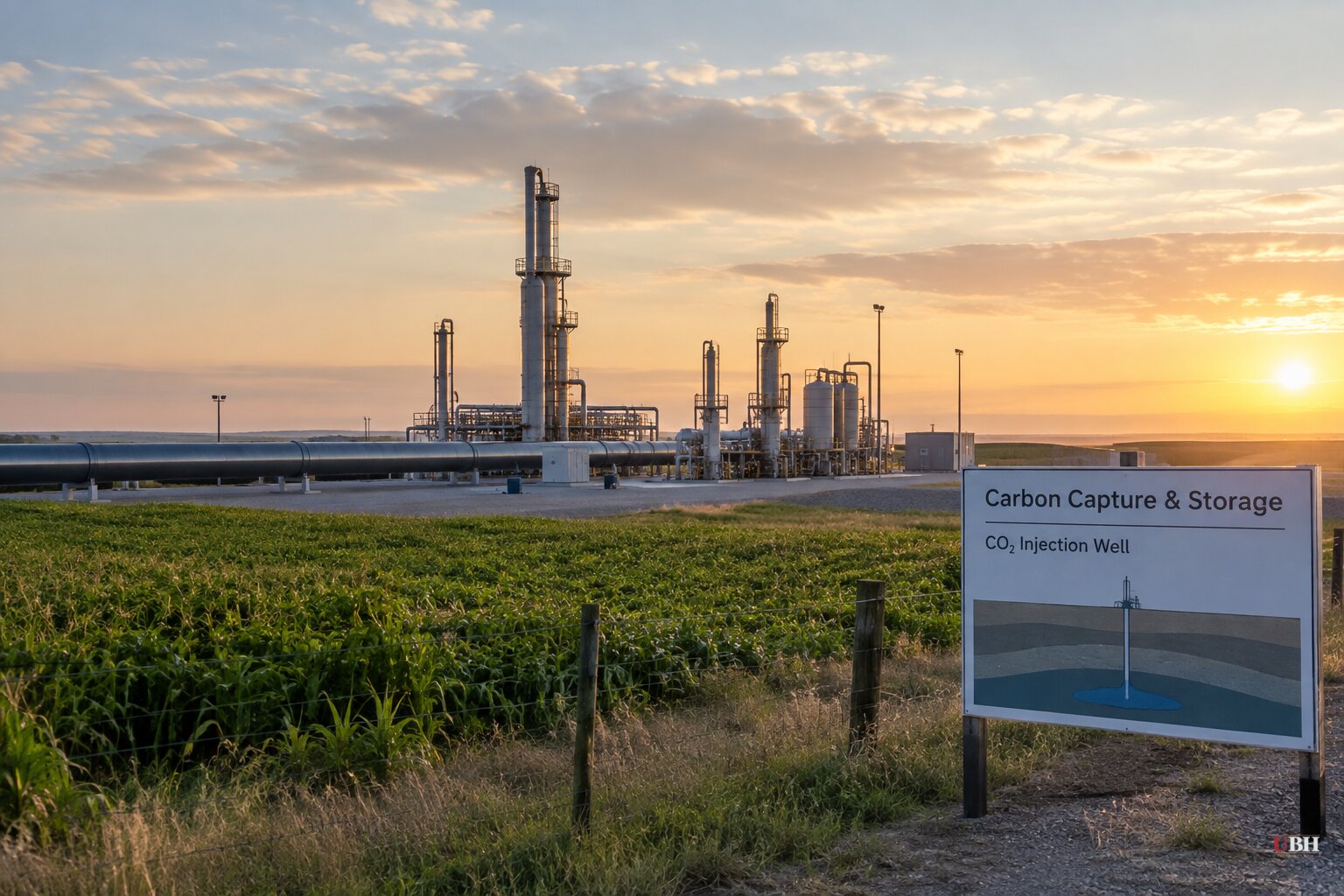
Two different signals on carbon capture, same week
Congress and the EPA are pulling carbon capture policy in opposite directions right now, and rural landowners are caught in the middle.
The Senate is weighing a provision tucked into the Water Resources Development Act of 2026 called the "Non-potable Aquifer Exemption for Class VI Wells," according to The Hill. Class VI wells are the deep injection wells used to permanently store carbon dioxide underground. The provision would direct the EPA to exempt certain aquifers from full protection so carbon storage companies can site wells beneath them with less regulatory friction.
Two categories would qualify, per The Hill's reporting on the bill text. One covers aquifers that don't currently supply drinking water and, the bill claims, never will. The other covers aquifers with 3 to 10 grams per liter of total dissolved solids that aren't "reasonably expected to supply a public water system."
The Hill argues that standard ignores two things: those same aquifers are often used for irrigation and livestock watering, and reverse osmosis and other treatment technology could make water sources viable for drinking in the future that aren't today. If a well leaks CO2 into one of these aquifers, The Hill notes, the gas acidifies the water and can mobilize heavy metals, making it useless for farming or future drinking use. The outlet points to documented injection well failures in Illinois and Texas as evidence the industry needs tighter oversight, not looser rules.
The Montana project that didn't happen
The Hill ties the provision to a real fight: ExxonMobil's Denbury Carbon Solutions unit had proposed the Snowy River Carbon Sequestration Project in Carter County, Montana, to inject 150 million tons of CO2 over 20 years using up to 15 wells. Ranchers and farmers opposed it, citing threats to rangeland and groundwater with no clear economic upside for them. The EPA reportedly found problems with the Bureau of Land Management's environmental review. The aquifer exemption language would have made projects like that easier to permit.
Illinois has a live version of this fight right now
In McLean County, Illinois, OneEarth Energy, a Gibson City ethanol producer, has a draft EPA permit pending for three carbon wells capable of storing up to 90 million metric tons of CO2 over 20 years, according to WGLT. The wells would sit about five miles west of Gibson City, near the Mahomet Aquifer, which supplies drinking water to close to a million people in central Illinois.
Lan Richart of the Eco-Justice Collaborative told WGLT the project reflects a broader statewide push, since Illinois has geology suited to large-scale CO2 storage. The EPA is currently recommending approval, WGLT reports, but the public comment period runs through September 23, with a hearing scheduled for September 22 at the Countryside Event Center in Gibson City. County officials, including board member Corey Beirne, told constituents on Facebook that McLean County's own review authority is limited once state and federal agencies sign off, since local government can only check whether permitting procedures were followed, not impose its own standards.
Texas farmers want a say, not a ban
Not every rural stakeholder is against carbon storage outright. At a September 14 interim hearing before the Texas House Committee on Energy Resources, Texas Farm Bureau associate legislative director Blake Roach testified that his organization doesn't oppose carbon storage projects, but insists they stay voluntary and respect private property rights, according to Texas Farm Bureau's own reporting on the hearing. Roach argued the underground pore space used for storage belongs to the surface landowner and that companies need landowner agreements, plus accountability if something goes wrong. He also pushed reclaimed produced water from oil and gas operations as a possible supplement for irrigation, given falling water levels in the Ogallala Aquifer, though he acknowledged affordability is a real barrier for most farmers.
The EPA is also killing the demand side
While Congress debates making it easier to site CO2 wells, the EPA has repealed the Biden administration's 2024 greenhouse gas standards for power plants, according to the Daily Signal. That rule would have required coal plants planning long-term operation and new baseload gas plants to cut carbon dioxide emissions roughly 90% through carbon capture and storage by 2032. The EPA's own fact sheet estimates the repeal saves about $1.2 billion a year in compliance costs, the Daily Signal reports, and argues the mandate was pushing premature retirement of dispatchable coal and gas capacity at a time grid operators are already warning about shrinking reserve margins.
That repeal removes one of the biggest regulatory drivers that would have forced utilities to actually build and use carbon capture technology, the same technology the Class VI wells are meant to serve. Nobody in these four reports connects those two policy moves directly, and no source claims one caused the other. The practical effect is a federal government simultaneously trying to smooth the path for CO2 storage wells while dismantling the rule that would have generated the CO2 volumes to fill them.
The unresolved question is which pressure wins out in Congress before the WRDA reauthorization comes to a floor vote. No vote date has been set as of this week, and the McLean County comment period closes September 23, with the hearing in Gibson City the day before.
Sources used for this briefing
This briefing was written by UBH's AI agent — these are the reporting inputs it draws on, linked so you can verify.


