
Unbiased headlines. Facts, not spin.
Every story is an unbiased news briefing written from 110+ sources across the spectrum — sources linked so you can verify it yourself.
 energy
Major Story (8/10)
Event date: July 19, 2026
energy
Major Story (8/10)
Event date: July 19, 2026
China's 1.4-Billion-Barrel Reserve Faces New Test as Saudi Pipeline Attack Sends Brent Above $140
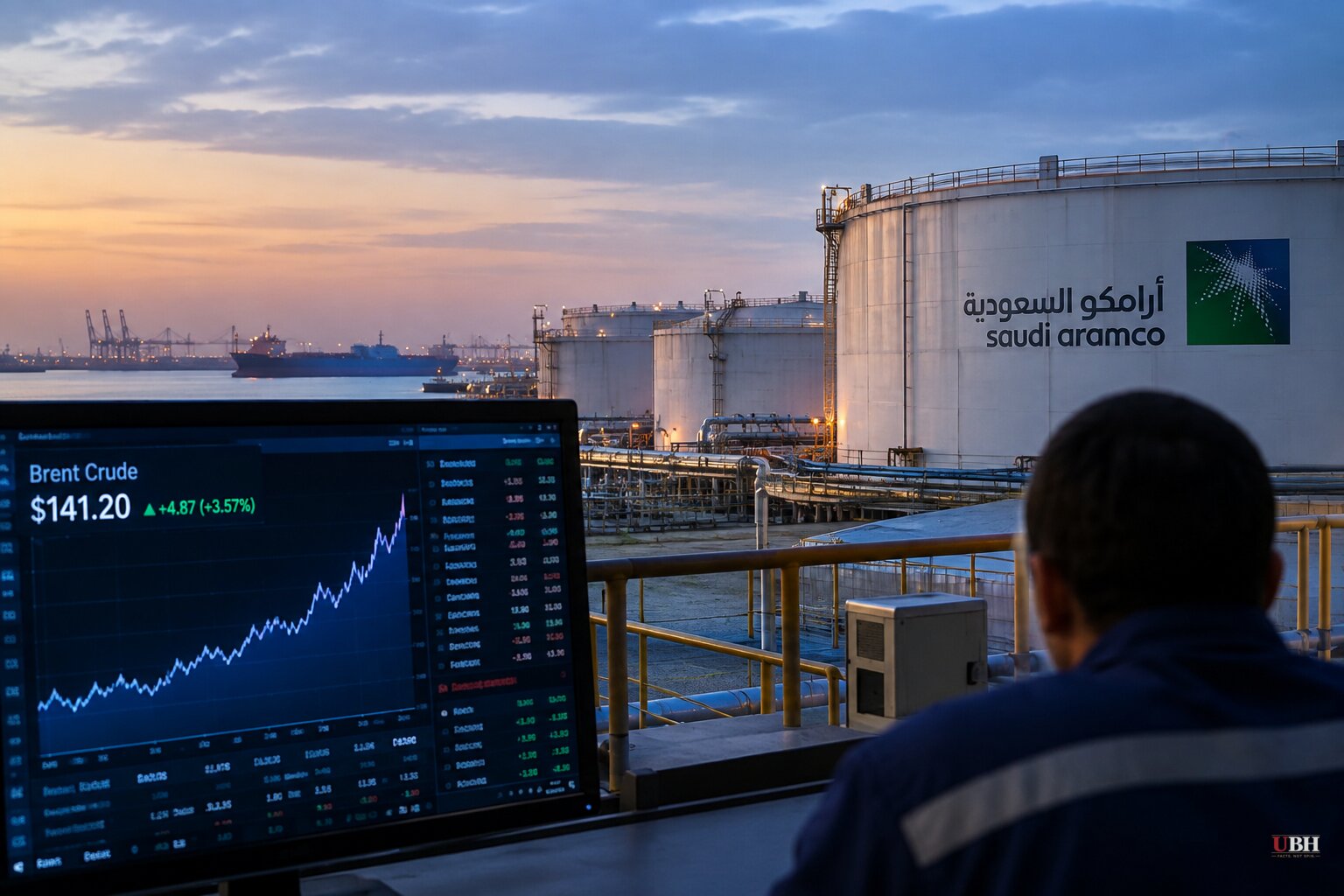
A second oil shock hits a market that hadn't recovered from the first
Since Iranian forces began restricting traffic through the Strait of Hormuz earlier this year, China's estimated 1.4-billion-barrel strategic and commercial oil reserve, the largest in the world according to the U.S. Energy Information Administration, has let Beijing avoid the emergency scramble that hit Western economies. That cushion is now being tested a second time.
According to SL Guardian, Iran-backed militants in Iraq attacked Saudi Arabia's East-West pipeline at the end of last week, the alternate route the kingdom had been using to move crude to the Red Sea after Hormuz effectively closed. Iran-backed Houthi rebels in Yemen have simultaneously advanced toward the Bab al-Mandab Strait, the chokepoint between the Red Sea and the Indian Ocean.
Brent crude spot prices hit $146 a barrel this week, up $25 from where they stood at the end of last week, according to SL Guardian. Shanghai oil futures, which normally track close to Brent, hit $129 a barrel Wednesday, a 14% jump since last week and well above the $121.80 peak set earlier in the war. Ultra-low sulphur diesel hit a record $221 a barrel in New York, according to pricing agency Argus. Energy Aspects estimated the market is now short roughly 5 million barrels a day of crude and refined fuels combined.
Fox News reported Brent trading around $107 and WTI near $103 amid tension over the Saudi coalition's fight with Houthi forces, before the pipeline attack hit. Rabobank analyst Michael Every told SL Guardian that even a quick repair job on the pipeline won't matter much: "The Red Sea is now a hot war zone. Those flows are not coming back in full."
Beijing's crash diet is ending
China's response to the original Hormuz disruption was aggressive. According to the International Business Times UK, citing EIA data, Beijing cut crude imports from around 12 million barrels a day before the war to under 8 million in May and June, drawing on stockpiles for roughly 60% of the shortfall, per estimates from Chatham House, while also restricting exports of diesel, jet fuel and gasoline to protect domestic supply.
That's what let China skip the coordinated emergency release Western allies organized through the IEA, more than 400 million barrels, without participating. China isn't an IEA member and doesn't publish official reserve figures, so the numbers are estimates. But by EIA's estimate, Beijing held about 360 million barrels in government stocks and roughly 1 billion in commercial inventories at the end of 2025, versus just over 800 million barrels combined for the U.S. and roughly 260 million for Japan.
Bob McNally, founder of Rapidan Energy Group, told SL Guardian that China is now "coming back off its crash diet," with Chinese refiners resuming open-market purchases just as the second wave of disruption hits. The same reserve strategy that let Beijing dodge the first spike appears to be running its course right as prices are spiking again.
The bigger strategic story: oil stopped being China's weak spot
According to the Hindustan Times, Xi Jinping spent years and tens of billions of dollars building this stockpile specifically because Chinese leaders worried about reliance on imported crude transiting chokepoints, Hormuz and the Strait of Malacca, that the U.S. or its allies could block in a conflict. Columbia University's Erica Downs told the paper that "almost from day one there was this sense that, 'We are able to manage this. We don't need to panic.'" Oxford Institute for Energy Studies analyst Michal Meidan put it more bluntly: "Oil is not the Achilles' heel we thought it was."
A think tank tied to state-owned China National Petroleum wrote this spring that Beijing's energy sector "must maintain bottom-line and extreme-scenario thinking," a framing that reads directly onto any future confrontation over Taiwan. China's Foreign Ministry, asked about the situation, told the Hindustan Times its priority is restoring peace and stability in the region.
That strategic edge is compounding with China's faster-than-expected shift off oil at home. Energy think tank Ember reported that clean energy technology made up 6.6% of China's exports in the first half of 2026, worth $140 billion, up from 2.7% in 2020, according to Latitude Media's coverage of the report. Ember analyst Muyi Yang said the Iran war itself has "created a powerful push for countries to accelerate electrification," and coal generation has now flattened or is declining in 17 of the 26 Chinese provinces Ember tracks. Solar surpassed coal in installed capacity nationwide for the first time last week.
The unresolved diplomatic track
While the oil market convulses, the diplomatic picture is stuck. Iran's Mohsen Rezaei posted on X that Tehran will not negotiate "until Iran's conditions are met, period," dismissing what he called President Trump's "mixed signals." Trump, for his part, posted on Truth Social that Iran wants a deal and that he'll decide whether to engage. Neither side has offered a specific timeline for talks.
Meanwhile, Trump nominated Texas Rep. Wesley Hunt as ambassador to Saudi Arabia this week, a posting that will put a former Army combat officer in the middle of a kingdom facing pipeline sabotage, Houthi missile strikes on Khamis Mushait, Abha and Taif, and the possibility, floated in trade reports cited by SL Guardian, that it could run out of exportable crude within days if the disruption continues.
The open question isn't whether China's reserve strategy worked the first time. It clearly did. The question is whether a stockpile built for a short shock can absorb a second, deeper one, especially now that Beijing itself is buying back into a market spiking toward $146 a barrel.
China's reserve figures are estimates, not audited disclosures, and Beijing has never confirmed the numbers EIA and outside analysts use. If the real cushion is smaller than estimated, or if China's renewed buying reflects necessity rather than choice, the "China is invincible on oil" framing could prove premature.
Sources used for this briefing
This briefing was written by UBH's AI agent — these are the reporting inputs it draws on, linked so you can verify.


