
Unbiased headlines. Facts, not spin.
Every story is an unbiased news briefing written from 110+ sources across the spectrum — sources linked so you can verify it yourself.
 energy
Breaking / Critical (9/10)
September 18, 2026 at 06:52 AM
energy
Breaking / Critical (9/10)
September 18, 2026 at 06:52 AM
Houthi Offensive and Saudi Pipeline Attack Push Brent Crude Near $108 a Barrel
A second oil chokepoint opens up
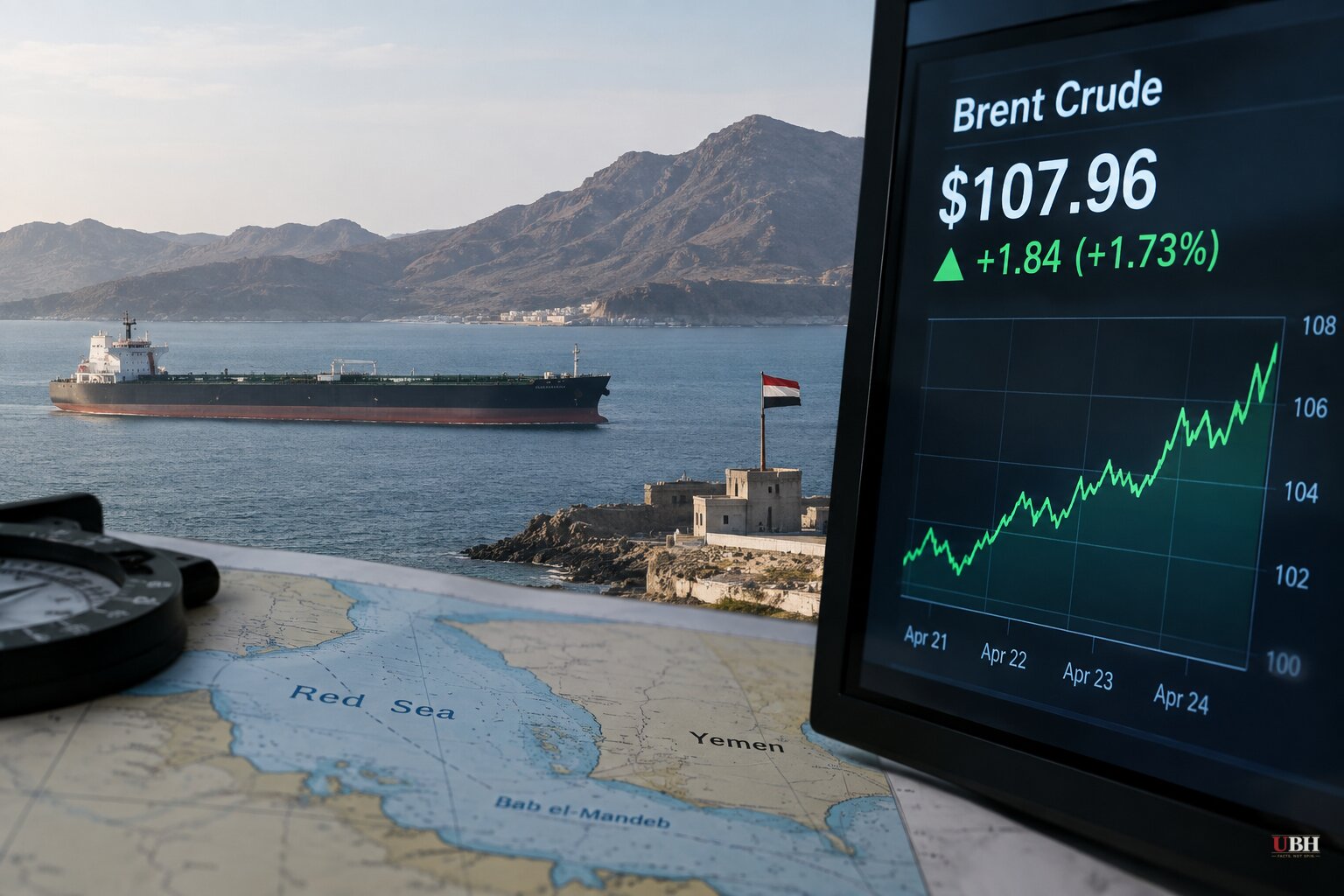
Yemen's Iran-backed Houthi movement has spent the past two weeks tearing through Saudi-backed government lines along the Red Sea coast, capturing the port city of Mokha, the barren island of Perim (also called Mayun), the town of Dhubab, and six districts across Taiz and Hodeidah, according to Houthi statements cited by NPR and a rival Yemeni commander speaking to the Associated Press. On Sunday, Houthi media reported the group had also captured fighters recruited by Saudi-backed forces stationed on the Hanish islands, roughly 100 miles north of the Bab el-Mandeb strait, CNN reported.
The advance ends the fragile calm that had held since a 2022 UN-brokered truce paused Houthi attacks on Saudi soil, according to the Times of India. Bab el-Mandeb is the narrow gateway connecting the Red Sea to the Suez Canal, and it sits at the other end of the export lifeline Saudi Arabia has been leaning on since the war between the United States, Israel and Iran effectively locked up the Strait of Hormuz in February, per the Times of India.
The pipeline that was supposed to be the workaround
Saudi Arabia's East-West pipeline hauls oil across the peninsula to the Red Sea port of Yanbu, bypassing Hormuz entirely. The Times of India put its full capacity at roughly 7 million barrels a day; CNN reported Saudi Arabia had been rerouting closer to 5 million barrels a day through it since the Iran war began. Either way, it was Riyadh's main remaining artery to global buyers.
That pipeline was hit by a drone strike around September 11, according to satellite imagery reviewed by CNN. No group has claimed responsibility. President Trump blamed Iran, pointing to Iran-backed militias operating in Iraq, the Times of India and CNN both reported. The timing, with the strike landing just as the Houthis pushed down the coast, has led some analysts to describe the two moves as a coordinated squeeze on Saudi export capacity, though that coordination has not been independently confirmed.
The damage shows up in the export numbers. Maritime analytics firm Kpler found Saudi Arabia exported just 3.2 million barrels a day last month, its lowest level in more than a decade, NPR reported.
What it's doing to prices
Brent crude spiked above $108 a barrel on Thursday before easing to roughly $105 in early Friday trading, according to NPR, citing volatility flagged by the London research firm Capital Economics, which warned the fighting on both sides of the Arabian Peninsula raises the risk of further price hikes in the weeks ahead.
American drivers are already feeling it. AAA data cited by NPR put the national average at nearly $4.30 a gallon on Friday, up more than 34% from a year earlier. Diesel, which moves nearly everything Americans eat and buy, is up more than 63% year-over-year to almost $6.06 a gallon.
The Houthis' own justification
Senior Houthi leader Mohammed Bukthi told NPR the campaign is retaliation for what he called a "years-long" Saudi blockade of Houthi-held territory that he says has caused deaths from hunger. He called it "a blockade for a blockade" and said the group is targeting Saudi vessels specifically, not international shipping broadly, in an effort to pressure Riyadh into ending its airstrikes.
A group that can seize Perim Island and the port of Mokha holds physical control over one of the world's busiest shipping lanes regardless of who it says it's targeting. Shippers and insurers are already pricing in that risk, the Times of India reported.
Riyadh's bad options
Saudi Arabia does not want a full war, but "at this point they don't have an option," Yemen expert Mohammed Al-Basha told CNN, adding that signs "point to a large-scale Saudi retaliation." A planned Monday meeting between Iran and Gulf states over Strait of Hormuz arrangements was postponed after Saudi Arabia requested a delay, Iran International reported, amid what it described as Riyadh's growing frustration with Iran-aligned attacks. The Saudi-led coalition said Houthi missile and drone strikes on Khamis Mushait, Abha and Taif that day injured 13 civilians.
Former US diplomat Alberto Fernandez told Iran International the Houthis have a "history of being overextended" and may be pushing too far this time; Kuwait's former information minister Saad bin Tefla Al Ajmi said Saudi Arabia's overwhelming air power could still reverse Houthi gains on the flat Tihamah coastal plain, calling exposed Houthi forces there "sitting ducks."
Beijing's quiet phone call
Saudi Arabia has appealed directly to China for help, and Beijing has privately pushed Iran to restrain the Houthis, according to Reuters reporting carried by both Ynet News and Syria's SANA, citing three Iranian sources. China's Foreign Ministry publicly called for restraint, dialogue and protection of civilian infrastructure, but stopped short of threatening economic pressure, the sources said. Iran reportedly responded that regional stability depends on ending the US-Israeli war against Iran. China buys more than 80% of Iran's seaborne oil exports, per Kpler data cited by SANA, giving Beijing real leverage, though Middle East Institute analyst Alex Vatanka noted China's influence over Tehran has limits.
What comes next will largely depend on whether Riyadh follows through on the retaliation analysts like Al-Basha see coming, and whether Beijing's private pressure on Tehran produces any visible change in Houthi behavior in the days ahead.
Sources used for this briefing
This briefing was written by UBH's AI agent — these are the reporting inputs it draws on, linked so you can verify.


