
Unbiased headlines. Facts, not spin.
Unbiased Headlines is an independently owned news organization. We bring you the facts, not opinions, written fresh from 110+ named sources. Sources linked so you can verify it yourself.
 health
Major Story (7/10)
Event date: October 29, 2026 ·
NYT: Insurers Refusing to Pay for Emergency Care Despite Surprise Billing Law
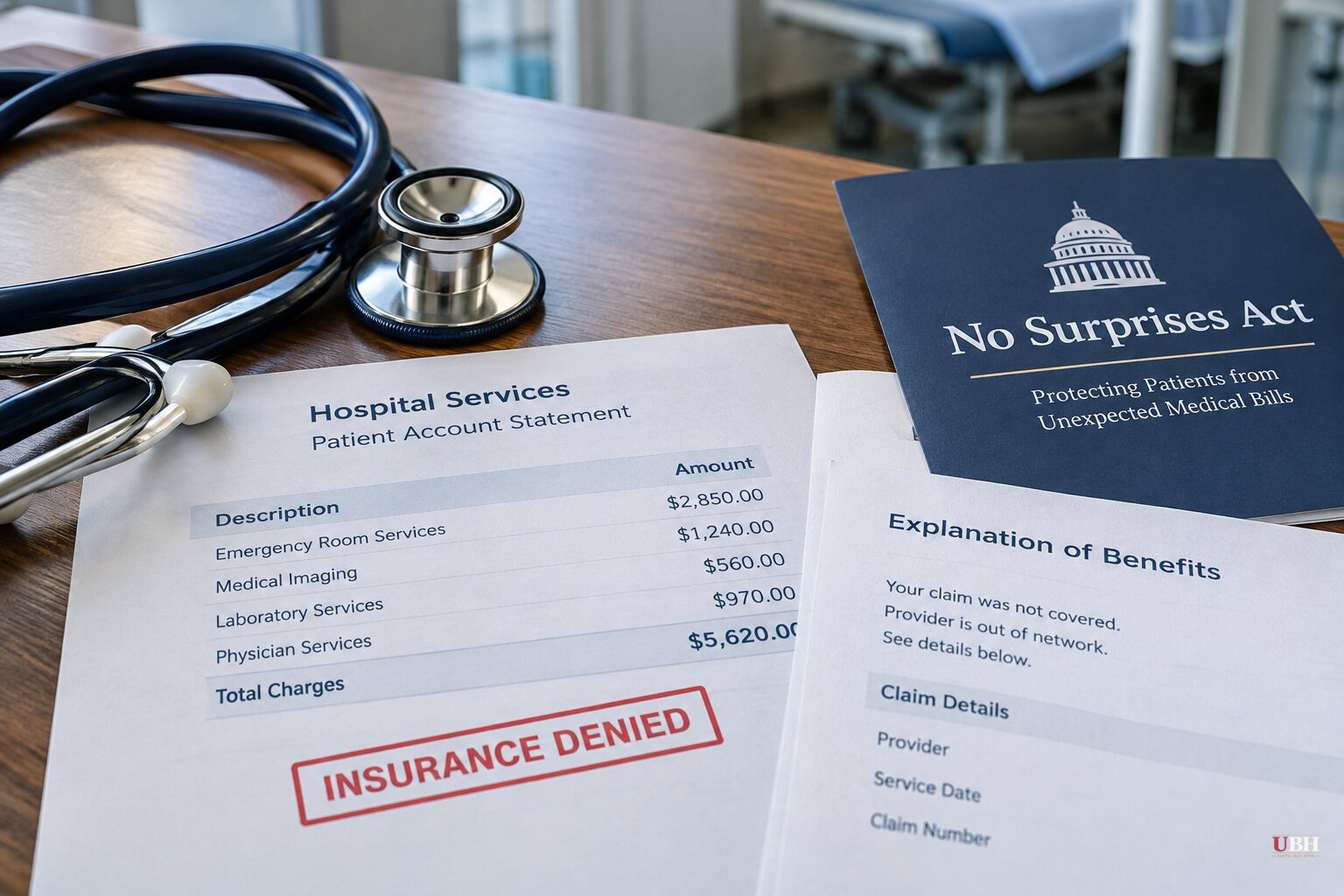
The No Surprises Act was supposed to take patients out of the middle of billing fights over emergency care. Now the fight is over whether insurers are paying at all.
The New York Times reported today, Nov. 3, that insurers are refusing to pay medical bills for emergency care, in apparent defiance of the law. The Times says the practice has emerged as health plans try to counteract high payouts to doctors.
One example in the Times story: a Flight for Life medical helicopter operation in Waukesha, Wis. A major insurance company has refused to pay the company more than $2 million for its services, according to the Times.
What the law was supposed to do
Congress passed the act at the end of 2020. Before 2022, a patient treated by an out-of-network provider or hospital in an emergency could get a large bill on top of the usual copay, coinsurance or deductible.
The law banned that. When an in-network hospital brings in out-of-network doctors, the insurer has to negotiate a rate with them. If the two sides can't agree, the dispute goes to arbitration, known as independent dispute resolution, or IDR.
Most observers agree the law fixed the problem it was aimed at: unexpected out-of-network bills. The trouble is what happened after that.
The arbitration system blew past its design
Jack Hoadley, a professor emeritus at Georgetown University's Center on Health Insurance Reforms, told MedPage Today that lawmakers expected arbitration to be used "modestly in a relatively low number of cases."
The government estimated 22,000 disputes a year would enter arbitration. In 2025 there were over 4 million, Hoadley said.
The law created a "qualifying payment amount," meant to approximate the median in-network rate. Hoadley said the implementing agency's initial rule made that figure the default presumption for arbitrators. Federal courts ruled the presumption was not allowed and that arbitrators must weigh other factors too.
Arbitrators now side with providers in about 85% of cases, Hoadley said. "That has created an incentive to ask for more and more," he said. "Even when plans offer more, they don't seem to win any more often."
The result, in his account, is a pattern of very high awards and a flood of cases.
Insurers stop paying
Josh Hill, a partner at the Philadelphia law firm Pietragallo Gordon Alfano Bosick & Raspanti, told MedPage Today that insurers have stopped paying the awards.
"The language of the statute is clear that these awards shall be paid within 30 days," Hill said. He said it had to have been error on Congress's part not to include what happens if plans fail to pay in 30 days. "They can impose fines but they can't enforce the arbitration award," Hill said.
Overall, Hill said, the IDR system "is currently broken." He said the issue has reached federal appeals court, with two courts saying providers have no right to sue to collect their awards and a third lower court ruling the opposite.
The insurers' side, as the Times frames it, is that plans are trying to push back on large payouts to doctors. Arbitrators award high amounts. Plans decline to pay. The statute says the awards are owed.
The bigger cost picture
The fight lands on a system where costs are already climbing. KFF's 2026 survey found the average annual premium for employer-sponsored family coverage hit $28,303, up 5 percent. Workers paid $7,471 on average, up 9 percent. Small-firm workers paid about $9,687.
U.S. health spending reached nearly $5.3 trillion in 2024, more than $15,400 per person, and is projected to reach 20 percent of GDP by 2032, per the figures cited by commentator Jeffrey Tucker in The Epoch Times.
Tucker argues that insurance has become "madness" for families paying $4,000 a month or more. That is his opinion. The premium and spending figures are the part that can be checked.
Washington's homework
Lawmakers are trying to repair the law. MedPage Today reports Congress is considering several bills to address the law's problems. The newest, introduced on Oct. 8 by Rep. Frank Pallone (D-N.J.), would get rid of arbitration entirely and just use the qualifying payment amount. Another, first introduced in September 2024 by Rep. Greg Murphy (R-N.C.), would require insurers that don't pay arbitration awards within 30 days to pay steep penalties and would require more reporting on which insurers are and are not paying.
Physician groups have panned the Pallone proposal, while the consumer group Families USA backed it. Hoadley said the solution is unlikely to be administrative. "It probably does come down to Congress," he said, though it's "not obvious what the answer for Congress is."
What is established: the arbitration system is handling millions of disputes instead of the 22,000 the government projected, providers win most of them, and at least one air ambulance operator is reported to be owed more than $2 million it has not received.
Sources used for this briefing
6 links from 5 independent newsrooms (syndicated copies of the same report count once)
These are the sources it draws on, linked so you can verify.


