
Unbiased headlines. Facts, not spin.
Unbiased Headlines is an independently owned news organization. We bring you the facts, not opinions, written fresh from 110+ named sources. Sources linked so you can verify it yourself.
 health
Notable (5/10)
Event date: October 31, 2026 ·
Postpartum Bleeding Kills at Least 70,000 Women a Year. A Roughly 80-Cent Plastic Drape Is Used to Catch It Early in Nigerian Wards
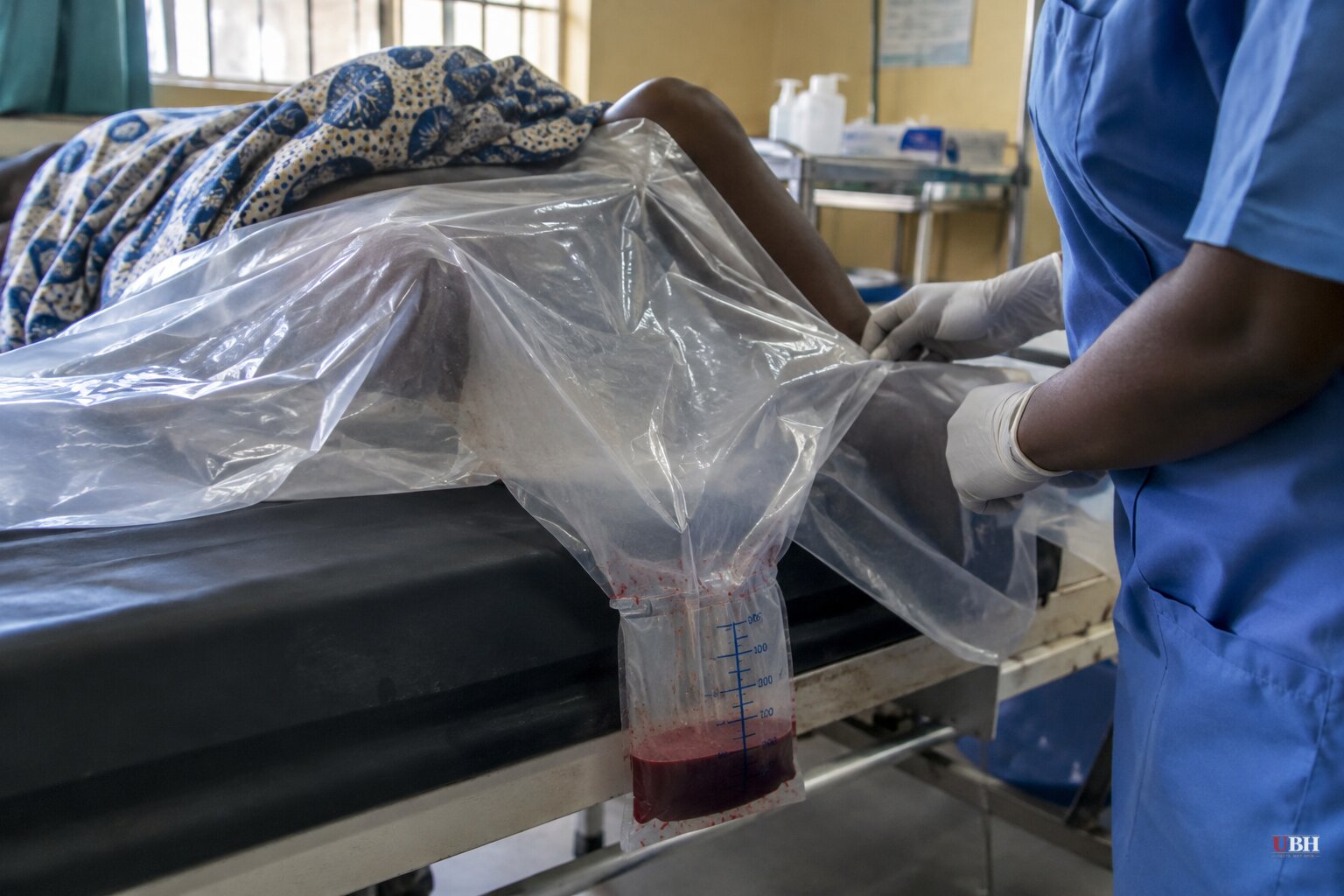
Postpartum hemorrhage is the leading cause of maternal death around the world. One in every 10 women who give birth experiences it, and at least 70,000 women die from it each year. Almost all of those deaths are in low-income countries.
Nigeria carries the heaviest burden. More women die giving birth there than in any other country.
The problem is knowing when bleeding is too much
After a baby is born, the placenta separates and leaves hundreds of blood vessels open. In a normal delivery, the uterus contracts quickly and the pressure closes them. If the contraction is slow or absent, or if pieces of placenta remain, blood keeps flowing. A woman can die in as little as 10 minutes.
Some bleeding is normal. The hard part is judging when it has crossed the line. Estimating blood loss by eye is surprisingly unreliable, even for trained staff.
The standard fixes have always depended on skilled people: midwives and obstetricians who spot risk and step in fast. There is no cheap or simple way to produce them, or to keep them in rural areas when they can earn more in cities or abroad.
A plastic sheet with a pouch
In a crowded delivery ward in Kano, in northern Nigeria, that gap is being narrowed by a piece of thin green plastic about the size of a cookie sheet. It is called a maternal drape. It lies under the woman during delivery, and a pouch at the end hangs off the bed.
The pouch is marked at 300 milliliters, about 10 ounces. That is the danger line.
Husaina Balarabe, a 26-year-old optometrist, gave birth to a boy she named Aabid in that ward. Her midwife watched blood run into the pouch and pass the 300 mL mark. The midwife called for help and pulled a cart stationed in the middle of the ward.
The response was fast and routine. A nurse injected oxytocin through an IV to make the uterus contract. She added tranexamic acid to promote clotting. She massaged Balarabe's abdomen to encourage more contractions, while a second nurse started IV fluids to restore blood volume.
The bleeding slowed, then stopped within a couple of minutes. Balarabe did not know her life had been at risk until later.
The approach, as described in Kano, does not replace a clinician. It gives the clinician an unambiguous trigger and a cart of drugs within arm's reach. The drape is made of plastic and costs roughly 80 cents.
Where hospital devices fit
When drugs and massage are not enough, hospitals can turn to intrauterine tamponade balloons. The best-known brand is the Bakri balloon, made by Cook Incorporated.
The FDA classifies the device category as Class II under product code OQY. The Bakri Essential Postpartum Balloon is cleared for temporary control or reduction of postpartum uterine bleeding when conservative management is warranted. The FDA's 510(k) record, K223098, carries a decision date of October 28, 2022.
The record describes a double-lumen silicone balloon catheter with a stopcock. It has a 24 Fr shaft, an overall length of 58 cm and a maximum inflation volume of 500 mL. It is supplied sterile, is intended for one-time use, and ships five to a carton.
The FDA reviewed it in its Division of Reproductive, Gynecology and Urology Devices. Its predicate was the earlier Bakri Postpartum Balloon, K170622.
Bakri is one brand among several. As of an October 30, 2026 check of the FDA's open 510(k) data, 11 clearances are listed under OQY, and Bakri accounts for two of them.
The FDA ties the balloon to postpartum bleeding when conservative management is warranted. That makes it a temporary measure inside a wider treatment pathway, not a stand-alone cure.
What the WHO says
The World Health Organization published its recommendation on uterine balloon tamponade for postpartum hemorrhage on April 15, 2021. It limited the recommendation to settings where standard PPH treatment protocols are available and implemented.
That condition separates the two tools. The drape and drug cart are built for wards that may be short on specialists. The balloon guidance assumes a system with baseline protocols already working. A device cleared in the United States does not make up for missing basics elsewhere.
What remains unsettled
The Kano account describes one woman, one ward and one good outcome. It shows how the approach works in practice. It does not by itself show how many deaths it prevents across Nigeria.
The larger question is whether hospitals in the poorest regions can reliably stock oxytocin and tranexamic acid, keep trained staff on every shift, and apply a 300 mL trigger every time. Maternal mortality remains one of global health's hardest problems because the old solution, more skilled personnel, cannot be mass-produced cheaply.
As of today, November 3, 2026, 70,000 deaths a year is still the floor.
Sources used for this briefing
3 links from 2 independent newsrooms (syndicated copies of the same report count once)
These are the sources it draws on, linked so you can verify.


