
Unbiased headlines. Facts, not spin.
Unbiased Headlines is an independently owned news organization. We bring you the facts, not opinions, written fresh from 110+ named sources. Sources linked so you can verify it yourself.
 tech
Major Story (7/10)
Event date: October 23, 2026 ·
Nvidia's Huang Says US Export Curbs Accelerated China's Chip Self-Reliance, Dismisses 2029 Memory Glut Fears
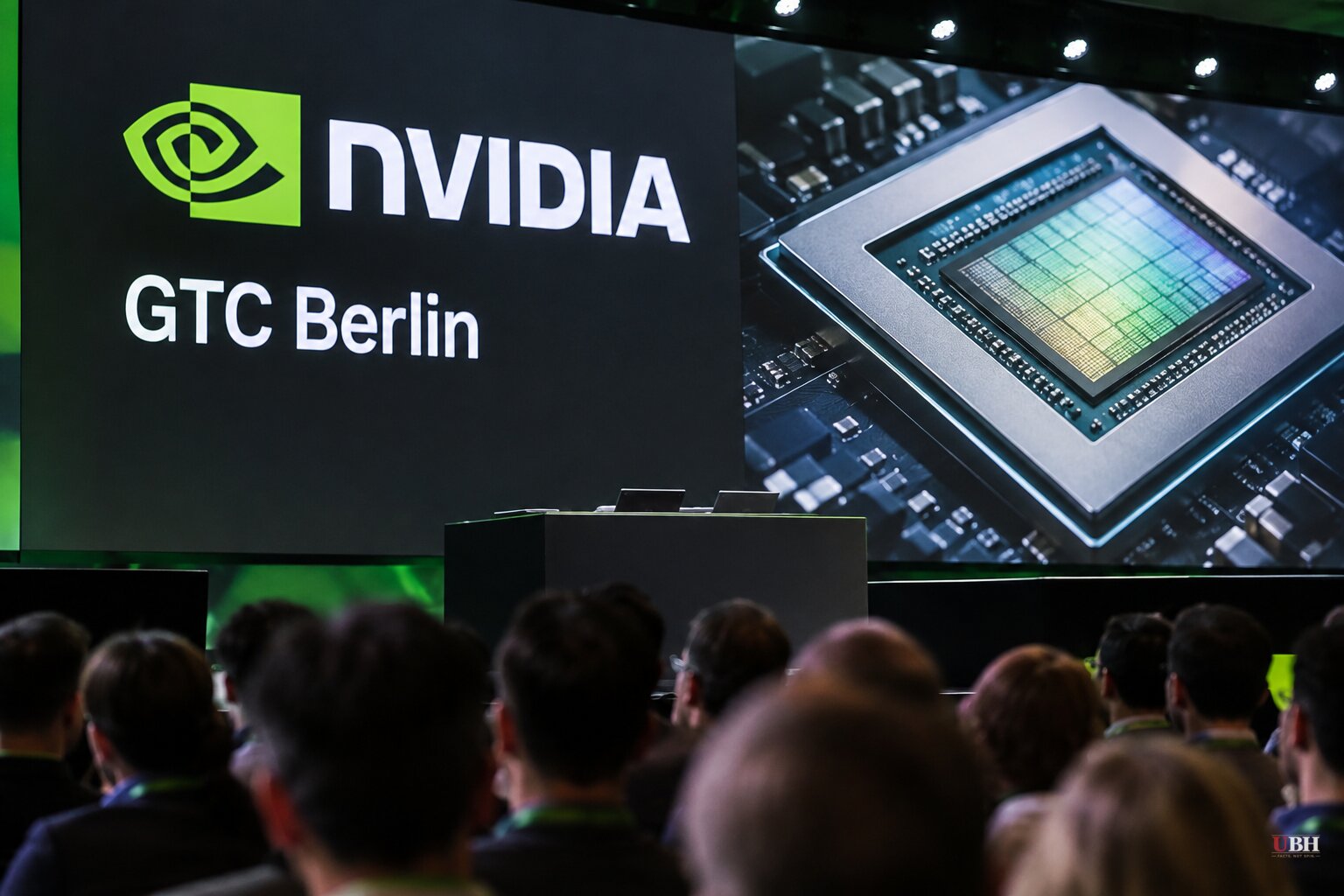
Since Nvidia opened GTC Berlin this week, CEO Jensen Huang has used a string of interviews to say two things the chip industry is arguing about: US export controls have not slowed China, and the memory boom has years left to run.
Huang made the remarks to CNBC on Oct. 22 and to Yahoo Finance's Deirdre Bosa on Wednesday, Oct. 21.
Huang on the export curbs
Current US rules bar exports of advanced processors, including Nvidia's top AI GPUs, to China. Huang said those restrictions pushed Beijing to move faster.
"We've definitely accelerated China's initiatives, its nationalization of semiconductor manufacturing capabilities, and all of the industrial support that has been put into that sector, and so there's no question we've accelerated that," Huang told CNBC.
Reports have claimed that several Chinese entities still reach restricted computing power through third-party data centers in Southeast Asia. Nvidia has not been charged with anything in connection with those reports, and none of the interviews included a response from Washington.
Huang also told Bosa the US must treat China "seriously." "If there's one country that could manufacture things at scale," he said, it is China. He credited Beijing with producing chips, open AI models and AI researchers in large numbers. "We've got to recognize that we have very, very serious competition," he said.
He added that American frontier labs, computing systems and infrastructure remain the strongest in the world. He said US policymakers have helped American companies operate in Africa and Central Asia, and that Nvidia wants to compete in Brazil and Egypt.
What the market data shows
Nvidia still leads China's AI accelerator market, but the margin is shrinking. An IDC analysis earlier this month put Nvidia at 34% of the market in the first half of 2026, against 28% for Huawei.
Nvidia shipped 678,000 accelerators in China in that period. IDC said that was down 44% from the same period a year earlier.
Huang is also on record that Washington should not ban Chinese AI models. He has called them "excellent" and said there is "zero possibility" that Chinese AI drives American firms out of the market. He argues open-source models widen AI adoption without threatening closed providers such as OpenAI and Anthropic.
Former Google CEO Eric Schmidt has said otherwise, at least on the long game. In a podcast interview, Schmidt said China trails the US in AI by about six months but could still win because its products are free. He said cheap and open-weight Chinese models could take hold in developing economies that cannot afford costly Western alternatives.
The memory debate
Asked by CNBC whether memory could be oversupplied in 2029, Huang answered, "I don't think so." He said, "The real advantage of memory is that the more you have, the better."
He said Nvidia will keep using high-bandwidth memory (HBM) for years. He also said it will keep expanding its use of LPDDR, the low-power memory common in phones. Nvidia was the first company to bring LPDDR into data centers, he said, and that delivered twice the energy efficiency of any other product.
The question has teeth because shares of Samsung Electronics, SK Hynix and Micron have fallen sharply in recent weeks. Concerns were raised in South Korea this month that the memory market could be oversupplied by 2029, and some analysts argue that would end the current supercycle.
Elon Musk has pushed the opposite view on China's role. "China will produce a huge amount of RAM in 2028," Musk said.
Changxin Memory Technologies (CXMT), the Chinese memory maker, has added to the unease. It recently announced a new design structure it says can raise production efficiency, which has fed fears it could take share from the three incumbents.
Open to Chinese memory
Huang did not rule out buying from CXMT. Asked about it, he said he was "open" to the idea.
"We work with Chinese companies, and almost every company in the world works with Chinese companies somewhere in its supply chain," he said. "China has remarkable capabilities in foundational technologies." He added that no country surpasses China in manufacturing when measured by overall national capability.
Nvidia has announced no purchase agreement with CXMT. Any such deal would run into the same Washington export-control and China-risk questions that Huang spent the week discussing.
The stock
Nvidia shares traded at $215.92 on Thursday, Oct. 22, down 2.73% on the day, according to Benzinga Pro data. The stock was up 15.78% year to date at that point. U.S. markets are closed for the weekend and reopen Monday.
Two checkable numbers will test Huang's claims. One is whether Nvidia's China shipments keep falling while Huawei closes the 6-point gap in IDC's market share data. The other is whether memory prices hold as CXMT and other Chinese producers add capacity toward the 2028 and 2029 window Musk and the South Korean analysts are pointing to.
Sources used for this briefing
7 links from 7 independent newsrooms (syndicated copies of the same report count once)
These are the sources it draws on, linked so you can verify.


