
Unbiased headlines. Facts, not spin.
Unbiased Headlines is an independently owned news organization. We bring you the facts, not opinions, written fresh from 110+ named sources. Sources linked so you can verify it yourself.
 tech
Notable (5/10)
Federal Magistrate Allows Discovery of Some Rabbi Shmuley Boteach AI Chats in Fontainebleau Hotel Defamation Case
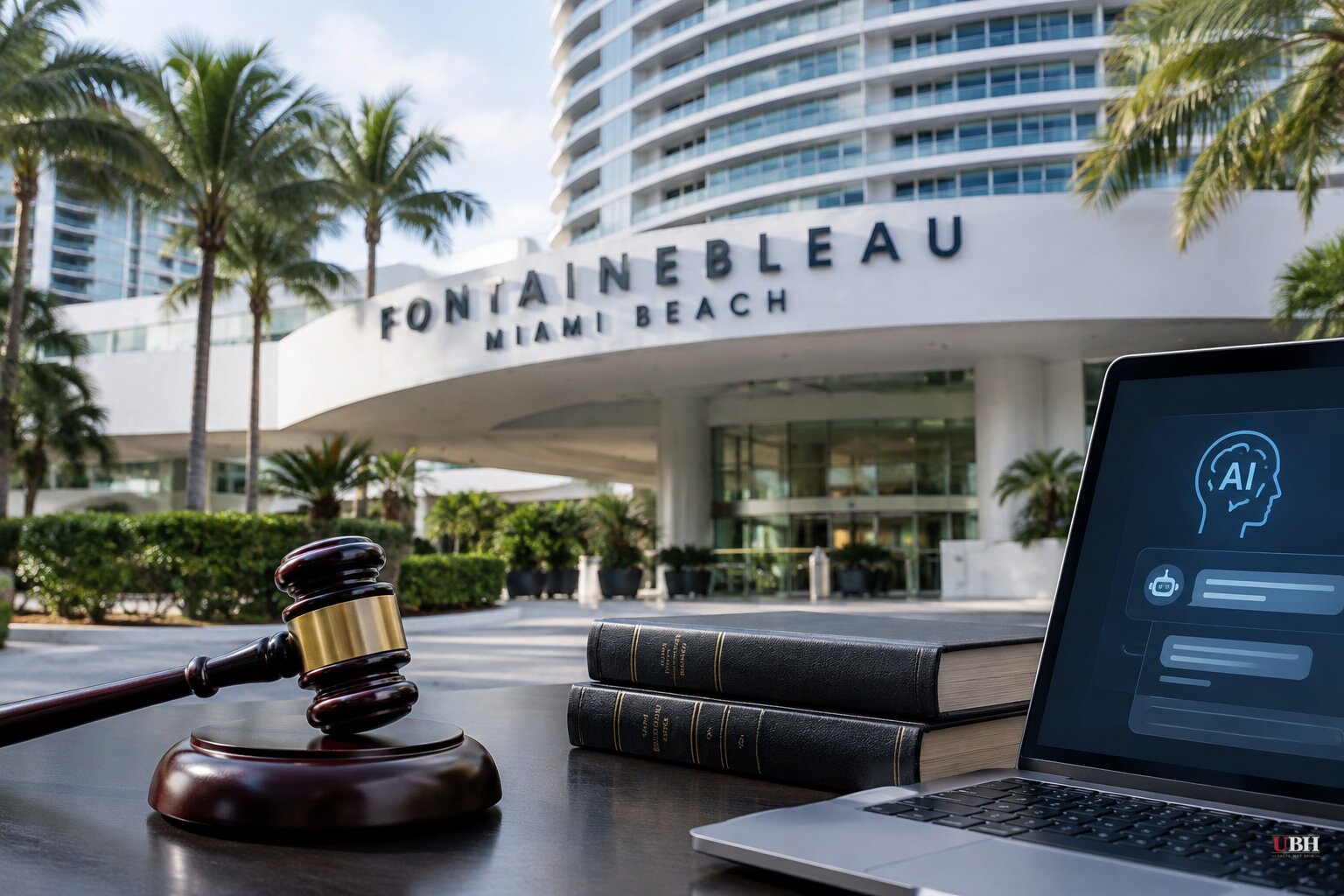
Since the court ordered expedited supplemental briefing on whether AI-related material falls inside the damages-only discovery it had authorized, Magistrate Judge Marty Fulgueira Elfenbein has now ruled: some of defendant Shmuley Boteach's communications with AI platforms are fair game.
The decision, issued Wednesday, Oct. 21, is in Fontainebleau Florida Hotel, LLC v. Botach in the Southern District of Florida. It is cited as 2026 WL 3151630.
What the hotel asked for
The plaintiff served four subpoenas on AI providers and a Seventh Request for Production on the defendant. They seek his AI communications since December 3, 2024, in six categories:
- The Fontainebleau Hotel
- This litigation
- The hotel's counsel
- Any employee, owner or representative of the hotel
- Any court order entered in the case
- Judge K. Michael Moore or the magistrate judge herself
The subpoenas to the AI providers add a seventh category: AI communications on those topics that have since been deleted.
The hotel's argument, per the court's summary, is that the chats may show the extent of Boteach's alleged malice, the intent behind his conduct, and evidence relevant to punitive damages. That includes whether an exception to Florida's statutory cap applies.
Why intent matters here
Under Fla. Stat. § 768.73(1)(c), the cap on punitive damages lifts entirely if the fact finder determines the defendant had a specific intent to harm the claimant when the injury occurred.
The hotel's supplemental brief, filed last week, put it bluntly. "The AI data will provide an unrivaled view into the mind of a defendant," the plaintiff argued. It said Boteach "methodically engineered his attacks—drafting, refining, and iterating for painful effect," and that "the prompts and chats are his mental state reduced to writing."
Those are the plaintiff's characterizations. No court has found them to be true.
What the court actually held
The judge relied on Federal Rule of Civil Procedure 26(b)(1), which allows discovery of nonprivileged, relevant and proportional material, whether or not it would be admissible at trial. The district court's order at ECF No. 261 limits current discovery to damages. So the question was whether the AI chats relate sufficiently to the damages issues.
She found they can. Reprehensibility, intent and the circumstances of the conduct are relevant to a punitive award, the order says. If Boteach used AI to generate, revise or refine statements about the plaintiff, its counsel or its representatives, those exchanges "may reveal not merely the final content" of the statements but "the purpose for which the statements were created, the instructions Defendant supplied, and the effects he sought to achieve."
The court added a limit on its own ruling. It said it "does not determine that those communications will establish malice or specific intent to harm." It decided only that they bear enough relationship to the disputed damages issues to warrant discovery.
The defense position
Boteach's side objected on several fronts. One argument is that alleged hostility does not necessarily prove constitutional actual malice, which in a defamation case means knowledge of falsity or reckless disregard for the truth, and so should not drive the punitive-damages question.
The court did not accept that framing. It distinguished actual malice from the reprehensibility inquiry and from the specific-intent exception in § 768.73(1)(c), both of which look at the defendant's culpability and intent to harm the claimant.
The defense also raised blanket objections to the AI subpoenas. It argued the requests risk exposing work-product material, including AI-assisted litigation preparation, legal research, draft analyses and communications about defense strategy. The defendant relies principally on Warner v. Gilbarco, Inc.
AI use is not a shield or a target
The work-product ruling may travel furthest beyond this case. The court wrote that "a party's communications with and use of AI does not automatically establish either discoverability or protection."
The analysis, it said, turns on the ordinary requirements of Rules 26(b)(1), 26(b)(3) and 26(b)(5). Judges must "examine the purpose and circumstances of the particular communications rather than presume protection from the medium through which they were created."
In practice, a chat with an AI tool gets no special privilege just for being a chat. It also does not become open season just because a lawyer is suing. Litigation-prep exchanges can still be shielded if they meet the work-product test.
Practitioner commentary on the ruling described it as a partial approval of the subpoenas with guardrails. The order draws on work-product decisions including Heppner and Warner and their progeny.
What comes next
The ruling decides what may be sought. It does not put any chat log into evidence, and it does not decide whether Boteach acted with intent to harm. That question belongs to the fact finder, and the punitive cap stays in place unless it finds specific intent.
Still open is how the guardrails play out in practice. The AI providers must respond to the subpoenas as narrowed, and each contested communication faces a work-product and privilege review. The defendant could also seek review of the magistrate's order by District Judge Moore, who authorized the damages-only discovery in the first place.
Sources used for this briefing
5 links from 3 independent newsrooms (syndicated copies of the same report count once)
These are the sources it draws on, linked so you can verify.


