
Unbiased headlines. Facts, not spin.
Unbiased Headlines is an independently owned news organization. We bring you the facts, not opinions, written fresh from 110+ named sources. Sources linked so you can verify it yourself.
 tech
Major Story (7/10)
Event date: October 22, 2026 ·
Nvidia's Supplier Build-Out Sits on $279 Billion in Commitments, but Optics and Packaging Targets Come Without Unit Volumes
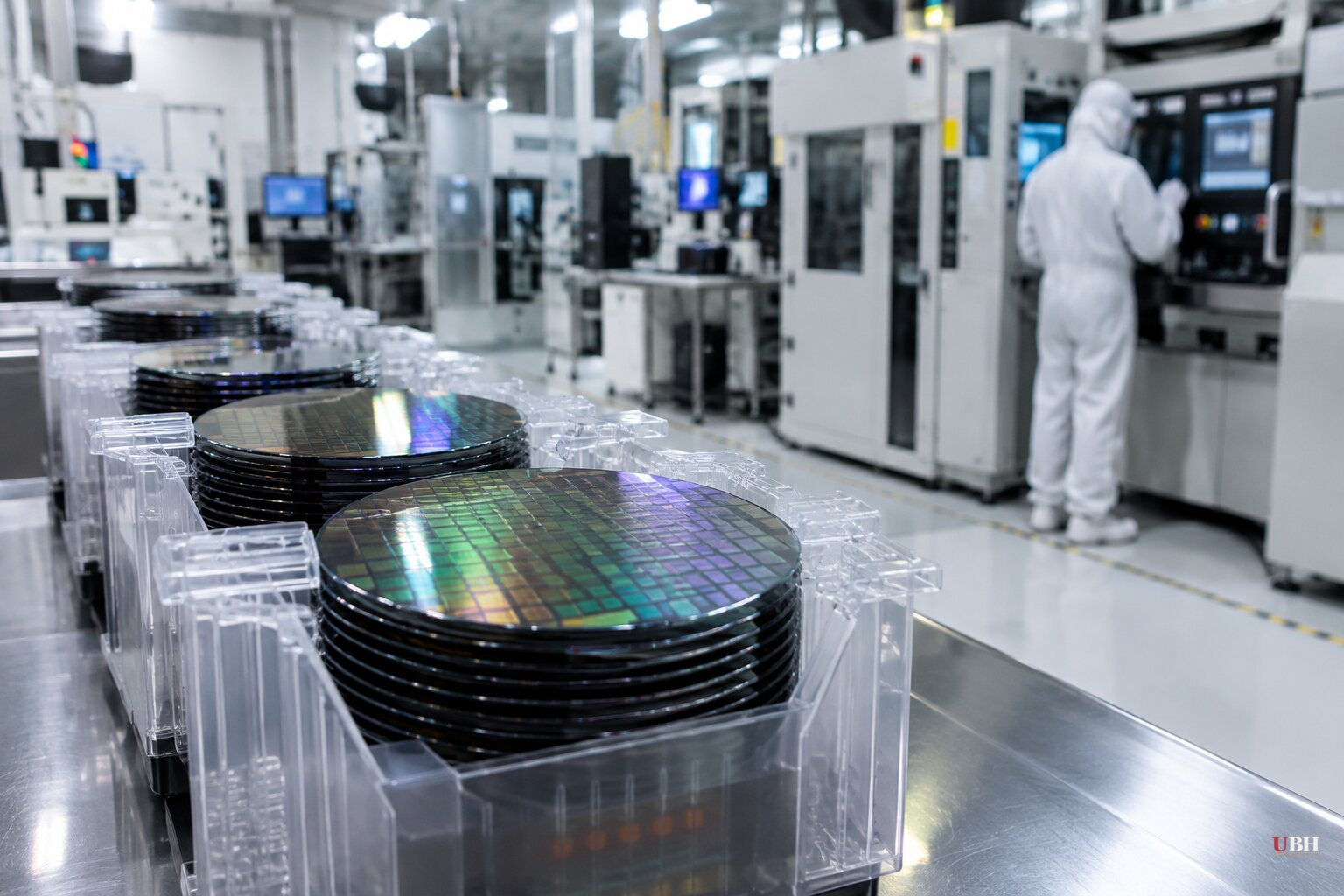
Since Nvidia named six manufacturing partners at GTC Berlin on Wednesday, Oct. 21, the money and the schedule behind those agreements have come into sharper focus. The multiples are large. The dollar commitments are larger.
The financial backdrop
Nvidia's Q2 FY2027 10-Q shows supply and capacity commitments totaling $279 billion as of July 26, 2026. A quarter earlier the figure was $119 billion.
Each GTC Berlin agreement is a named piece of that aggregate. Nvidia has not disclosed its total advance-payment exposure across the six partners.
Two cash figures are public. Nvidia is advancing $1.1 billion to King Yuan Electronics (KYEC) as a capacity reservation payment for new testing facilities and equipment in the United States, with high-volume production targeted for April 2027. Taiwan News reported the advance as NT$35.8 billion. It had reported on Oct. 14 that KYEC secured a Nvidia prepayment tied to a NT$45 billion U.S. expansion.
IBIDEN is getting a multibillion-dollar advance to triple capacity at its Ono Plant in Japan, with added production ramping in the first quarter of 2028. Nvidia has not put a number on that one. The IBIDEN arrangement was revealed earlier this year.
What the targets say
The capacity targets, as Nvidia laid them out:
- Optics: Siliconware Precision Industries (SPIL) is targeting a 15x increase in optical-engine capacity for co-packaged optics in Taiwan by mid-2027, followed by a further doubling by the end of 2028.
- Packaging: Amkor plans to raise interposer wafer capacity in South Korea by more than 300% by the end of 2028.
- Testing: Total testing capacity is set to double from 2026 to 2027, with expansions in the United States, Taiwan and Singapore.
- Substrates: Agreements with IBIDEN, Samsung Electro-Mechanics and Unimicron are expected to deliver a 2.5x substrate capacity increase over the next three years.
Unimicron's expansion in Taiwan is expected to start adding capacity in the second quarter of 2027 and reach full capacity by mid-2028. Samsung Electro-Mechanics is delivering immediate capacity from its current South Korean operations and adding facility upgrades and new plants in Sejong and Busan.
An earlier Amkor agreement for $1.5 billion dates to July 2026, according to AI Weekly's coverage cluster. These are deepened relationships, not first contacts.
The caution on the numbers
The multiples have limits, and Converge Digest spelled them out. It described the figures as supplier capacity targets rather than confirmed shipment volumes or production commitments allocated exclusively to Vera Rubin. The disclosed multipliers also do not specify absolute unit volumes or achieved yields.
That is especially true for optics. A 15x increase on an undisclosed base is still an undisclosed number. Scaling co-packaged optics requires optical assembly, packaging, testing and integration to all work at adequate production yield, Converge Digest noted.
SPIL has shown it is spending. The company has put roughly NT$200 billion (US$6.1 billion) into new facilities in Taiwan over the past two years. Vice Chair Chang Yen-chun said at the groundbreaking for its Yunlin plant that the spending reflects confidence in demand for advanced packaging over the next five years.
Nvidia's Ian Buck, vice president and general manager of hyperscale and high-performance computing, said: "We're very excited about bringing co-packaged optics to the AI data center and working with SPIL and others to expand our capacity."
Why optics
In a traditional pluggable-transceiver design, electrical signals travel 15 to 30 centimeters along PCB traces before reaching the optical module, and a DSP retimer has to regenerate the signal. In co-packaged optics the optical engine sits inside the same package as the switch ASIC, cutting the electrical path to millimeters. Tech Times put the resulting power reduction at approximately 70% versus pluggable alternatives.
The Spectrum-6 switch line was formally unveiled in July and comes in copper and CPO versions. Nvidia describes the CPO version as a key building block for scale-out networking in Vera Rubin DSX AI factories.
The Times of India, citing an SDxCentral report, noted that Nvidia has also signed optics supply deals this year with Corning, Lumentum and Coherent, amid ongoing capacity concerns related to electro-absorption modulated lasers.
Where the plants are
The geography is concentrated in Asia. Substrates come from Japan, South Korea and Taiwan. Advanced packaging is in South Korea. Co-packaged optics come out of Taiwan. Testing is in Singapore, starting February 2027, and in the United States.
The KYEC facilities are the U.S. testing piece named in the announcement. The partnerships are meant to reinforce the resilience and redundancy of Nvidia's international supply chain.
Trade analyst Mark LaPedus has flagged that TSMC is not among the six, reading that as a sign packaging has displaced wafers as the constraint. That is his interpretation, not Nvidia's.
What comes next
The schedule gives the first verifiable tests. Singapore testing is set to reach high-volume production by February 2027. KYEC's U.S. facilities target high-volume production in April 2027. SPIL's 15x optical-engine milestone is due by mid-2027, and Unimicron's added substrate capacity begins in the second quarter of 2027.
Whether those dates hold is the open question, and the commitments figure, now at $279 billion, is the number to watch.
Sources used for this briefing
7 links from 7 independent newsrooms (syndicated copies of the same report count once)
These are the sources it draws on, linked so you can verify.


