
Unbiased headlines. Facts, not spin.
Unbiased Headlines is an independently owned news organization. We bring you the facts, not opinions, written fresh from 110+ named sources. Sources linked so you can verify it yourself.
 tech
Notable (6/10)
NASA Says Artemis III Will Fly Next Summer, Docking With Test Versions of SpaceX and Blue Origin Landers
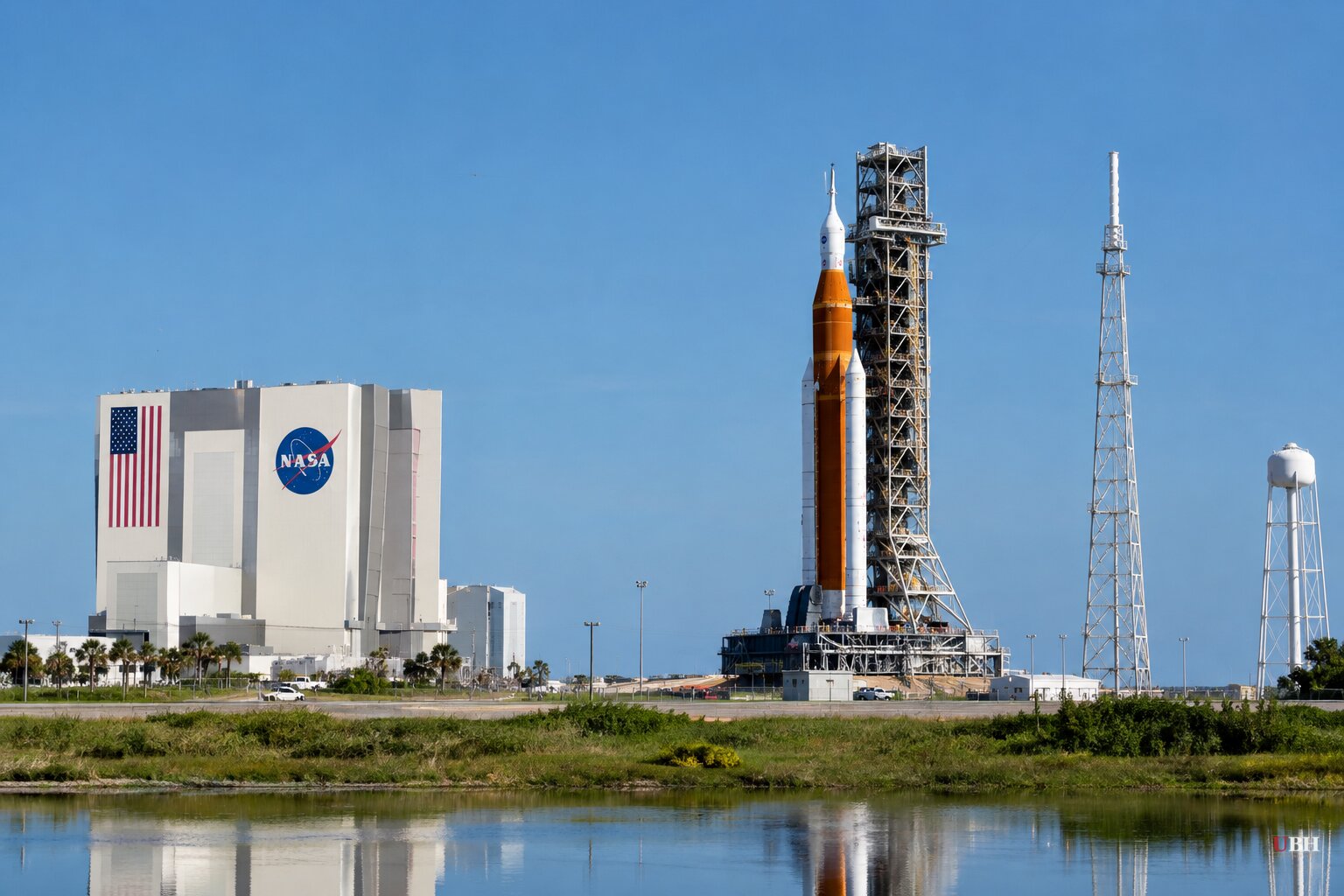
NASA Administrator Jared Isaacman said Friday, Oct. 23, that Artemis III is still on track to launch next summer. It will not go to the moon. It will fly four astronauts in low Earth orbit to practice docking with test versions of the landers built by Elon Musk's SpaceX and Jeff Bezos' Blue Origin.
Isaacman spoke at a news conference at Kennedy Space Center, six months after the Artemis II crew flew around the moon.
What Artemis III will do
NASA's mission plan puts astronauts Randy Bresnik, Frank Rubio and Andre Douglas aboard the Orion capsule, along with Luca Parmitano of the European Space Agency. The planned flight lasts 14 days.
The mission requires three launches on three different rockets in a short window. NASA says it has never tried that.
Blue Origin goes first. It will put a test version of its Blue Moon Mark 2 lander into a circular orbit about 273 miles up. NASA says the vehicle can stay there up to 30 days, which gives the schedule some slack.
Orion launches on NASA's SLS rocket from Florida only days later, once the lander test article is confirmed healthy. Orion then maneuvers to rendezvous and dock with the Blue Moon vehicle. After that, it docks with SpaceX's Starship in a slightly lower orbit.
"Every piece of this mission in Earth orbit is designed to reduce risk before we put astronauts back on the Moon," said Jeremy Parsons, NASA's Artemis program manager.
Amit Kshatriya, NASA's associate administrator, was more casual. "As a rocket nerd, it's going to be pretty awesome," he said.
The schedule shuffle
This is not the Artemis III NASA planned originally. The agency overhauled its Artemis architecture in February. Artemis III had been the first crewed landing. It was moved up a year and turned into a lander test in orbit.
The first moon landing by astronauts since Apollo moved to Artemis IV, which NASA targets for 2028. Space.com's account of a presentation by Steve Creech, acting manager of NASA's Human Landing System program, puts the target in early 2028.
Creech laid out that timeline Oct. 5 at the International Astronautical Congress in Antalya, Türkiye. Both companies have more than a dozen test demonstrations and vehicle milestones ahead of them. They include orbital refueling and uncrewed lunar landing tests through early 2028.
The schedule depends on testing going right. Both SpaceX and Blue Origin have already dealt with delays on their lander programs.
Two landers, one seat
NASA has not picked a lander for Artemis IV. Officials said the agency will keep both options open as long as possible. What happens in orbit next summer will inform the decision.
That is a competitive setup, and it puts a deadline on two contractors that have both slipped before. It also gives taxpayers a hedge. If one vehicle stumbles, the other may still carry astronauts.
The China clock
Isaacman framed the program as a race with China, as the Soviet Union was the rival in the Apollo era. He said that race will be "much closer than it ever needed to be" because of slow progress in past years.
He said the agency is now cutting "endless meetings and bureaucratic inertia" and adding workers. SpaceX, Blue Origin and other companies are working around the clock, he said.
He rejected the idea that this is a Silicon Valley fad. "It's about our own history," Isaacman said. "It's a playbook this agency knows really well, the same playbook that went from Apollo 7 splashdown to Apollo 11 in just nine months."
Apollo flew 24 astronauts to the moon between 1968 and 1972, and 12 of them walked on it.
Moon base and spacesuits
NASA's planned moon base is at the lunar south pole, far from the equatorial Apollo sites. Officials said the first launch for it should come by the end of this year.
The Pittsburgh company whose first lunar landing mission failed in 2024 will try again. This time it is aiming for the south polar region with a rover and other experiments.
More landers, rovers and orbiters are meant to follow. Officials said so many are planned that the first Artemis moonwalkers will find their moon car already waiting for them.
To cut risk and save time, the first moonwalkers will wear a lighter, less complex spacesuit. Axiom Space is still developing a more capable suit for longer excursions on later missions.
What comes next
The first test comes before the crewed flights. The south pole lander mission is due to launch by the end of 2026. If it fails again, the surface infrastructure that Isaacman says will be in place before the 2028 landing will start behind schedule.
The Artemis IV lander decision is deliberately deferred. It will not be made until after the Artemis III docking tests in summer 2027.
Sources used for this briefing
7 links from 5 independent newsrooms (syndicated copies of the same report count once)
These are the sources it draws on, linked so you can verify.


