
Unbiased headlines. Facts, not spin.
Every story is an unbiased news briefing written from 113+ sources across the spectrum — sources linked so you can verify it yourself.
 tech
Notable (6/10)
October 4, 2026 at 04:50 PM
tech
Notable (6/10)
October 4, 2026 at 04:50 PM
Nvidia-Backed Startup Reflection Preps Open-Weight AI Model to Take On China's DeepSeek and Qwen
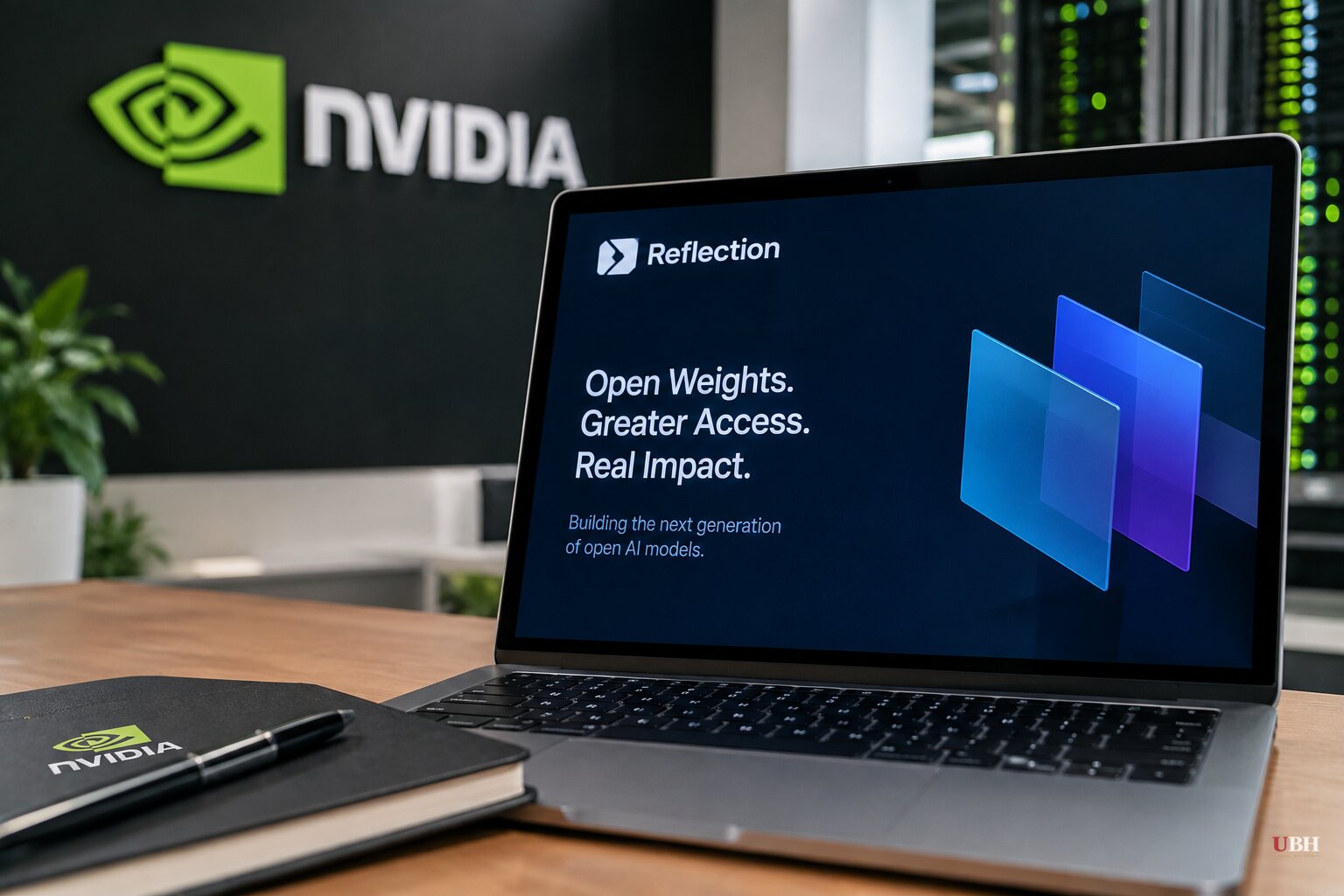
A startup most people have never heard of is about to matter a lot in the AI race.
Reflection, an AI company backed by Nvidia, is preparing to release an open-weight model aimed at challenging both Chinese open-source leaders and the closed systems sold by OpenAI, Anthropic and Google, according to Axios, which first reported the story. No firm release date has been confirmed.
Open-weight models are published for anyone to download, inspect and customize. Closed models like ChatGPT and Claude are not. Axios reports that the most powerful open-weight models right now are almost uniformly built in China, think DeepSeek and Qwen. Reflection wants to change that with an American-made, Nvidia-powered alternative.
Not trying to beat the best, yet
Axios reports Reflection's model is expected to initially lag behind the most advanced U.S. systems. Instead, the target is parity with top Chinese open-weight models. Reflection CEO Misha Laskin has indicated it will take time for the company's models to reach the most advanced capabilities, according to Axios.
This contrasts with how The News International framed the story. That outlet reported Reflection's model is "set to outperform other open-weight models from Western players this month" and described the system as pairing "retrieval-augmented generation" with company data. Neither claim appears in the original Axios reporting or in Yahoo Finance's follow-up, which instead describes Reflection's model as merely being "joined by" other Western open-weight releases this month, not beating them.
The real product: the "AI factory"
According to Yahoo Finance's reporting on the Axios scoop, Reflection's actual ambition goes beyond the model itself. The company wants to pioneer what it calls the "AI factory," letting institutions combine Reflection's open model with their own proprietary data and their own computing power to build customized, cheap AI systems in-house.
Yahoo Finance reports hedge funds and trading firms are already circling this idea, since they guard their data closely and don't want it running through a third-party API. Reflection has already tested the concept, announcing a sovereign AI factory partnership with South Korea's Shinsegae Group, per Yahoo Finance.
This is also Nvidia CEO Jensen Huang's vision, and he's been pushing it for years: pair Nvidia hardware with open-source models so enterprises keep ownership of their own data instead of handing it to a closed-model vendor, according to Axios.
Why open models matter for the China fight
Axios notes open models are harder to monitor and regulate than closed frontier systems from the Big Three American labs. Supporters argue that wide availability and transparency actually strengthen security, since more eyes can inspect the code. Critics of open-weight proliferation worry about exactly the opposite: less centralized oversight of powerful AI systems.
An open American alternative reduces U.S. dependence on Chinese open-source models that developers worldwide have been adopting by default. That's a real national-security upside. It also means a more powerful AI system circulating with fewer guardrails than what OpenAI or Anthropic keep behind an API. Reasonable people can weigh that trade-off differently, and the sourcing here doesn't resolve it either way.
Axios reports Reflection has spent recent weeks briefing officials in Washington on the model release and how the AI factory concept will work, suggesting the company is trying to get ahead of regulatory scrutiny before launch rather than after.
What's still unknown
A Reflection spokesperson declined to comment when asked by Yahoo Finance. No specific launch date, benchmark scores, or parameter count has been published in any of the current reporting. Yahoo Finance notes that in actual enterprise spending, where companies pay for API access and corporate billing, open-weight models currently account for only a small share of usage despite surging popularity on consumer-facing platforms.
The open question is whether Reflection's model, once it actually ships, closes that enterprise gap, or whether it ends up another open-weight entry that wins download charts but not corporate contracts.
Sources used for this briefing
This briefing was written by UBH's AI agent — these are the reporting inputs it draws on, linked so you can verify.


