
Unbiased headlines. Facts, not spin.
Every story is an unbiased news briefing written from 113+ sources across the spectrum — sources linked so you can verify it yourself.
 tech
Low Interest (4/10)
October 4, 2026 at 12:26 PM
tech
Low Interest (4/10)
October 4, 2026 at 12:26 PM
Canon Says It's Talked to India's Chipmakers, But Nobody's Signed Anything Yet
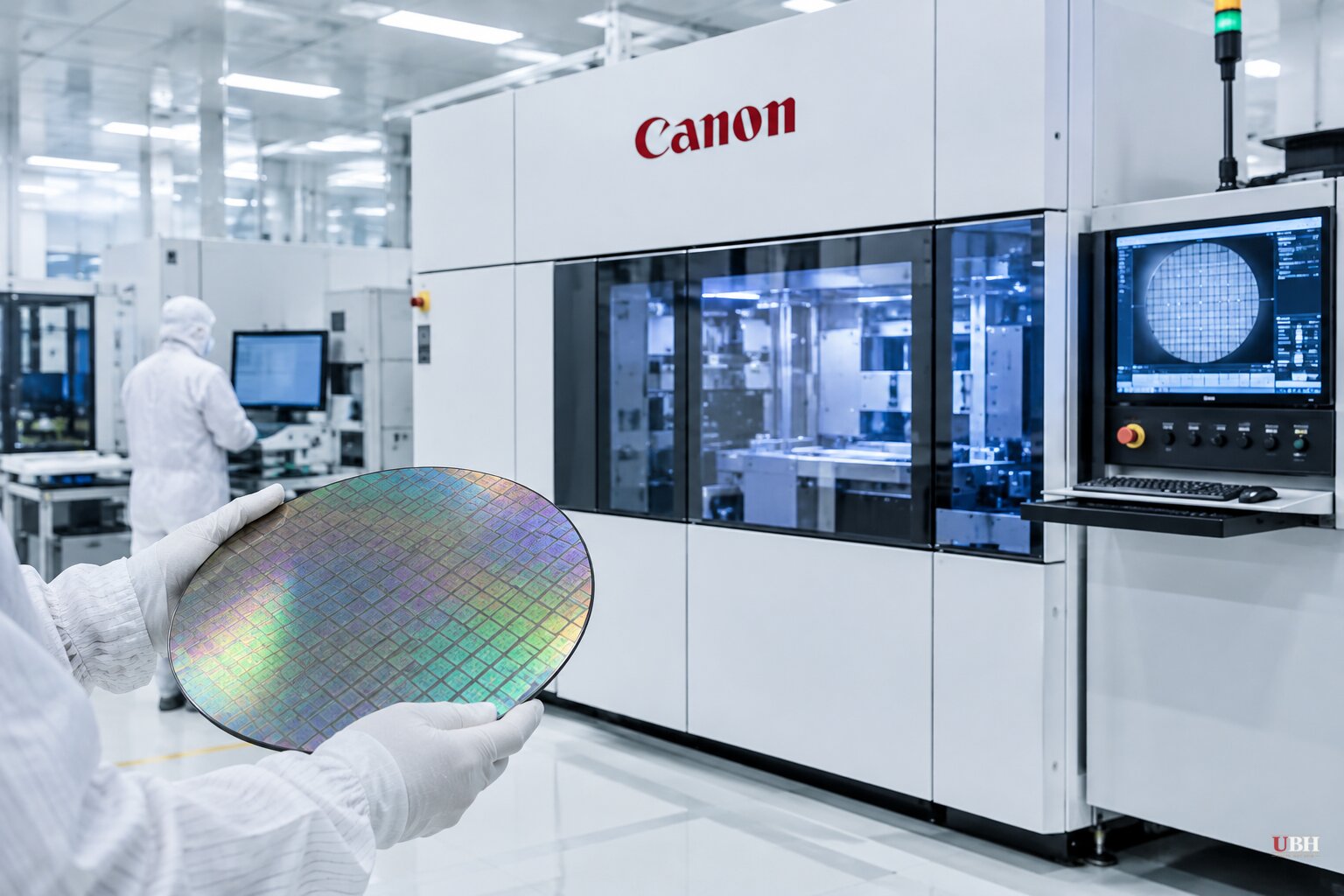
Canon India's President and CEO, Toshiaki Nomura, told PTI that the Japanese imaging giant has held discussions with every major semiconductor manufacturing project currently under development in India. He says Canon wants to bring its lithography machines and dedicated service centers into the country as those projects mature.
No contract has been signed. No customer has been named. No date has been set.
"Now everybody knows semiconductor manufacturing is the buzzword in India," Nomura said, according to PTI, as reported by The Economic Times and Business Standard. "We bring our technologies to help assist the chip manufacturer to produce chips in India. So that's a great opportunity for us."
Asked directly whether Canon has talked to the semiconductor ventures being set up in India, Nomura said yes, to "all those key manufacturers," adding that "the projects are ongoing and, as and when some development is confirmed, we will share it." Nothing is confirmed yet.
What's actually on the table in India
India has approved roughly a dozen projects under its Semiconductor Mission, covering fabrication, assembly, testing, marking and packaging, according to Urban Acres. Named projects include Tata Electronics' fab in Dholera, Gujarat; Micron's assembly and packaging plant in Sanand; a CG Power-Renesas venture and Kaynes Semicon, both in Gujarat; and a separate Tata Electronics packaging unit in Assam.
Canon isn't a dominant player in the lithography market. ASML, the Dutch company, controls the high end of that business, particularly extreme ultraviolet (EUV) systems used for the most advanced chips, according to The Hindu Business Line and Electronics For You. Canon supplies lithography equipment too, but in a smaller, less advanced niche. Nomura himself was careful to frame this as an opportunity Canon wants to capture, not one it controls: "We cannot control the timeline itself, as it is the chip manufacturer's responsibility," he told PTI.
Canon's bigger play: diversify away from cameras
Semiconductor equipment is one piece of a broader pivot. Canon India is also pushing into surveillance and security, where it's grown 40-50% annually and posted 43% growth in 2025 over the prior year, per The Hindu Business Line. It's combining CCTV, video management software and analytics through its Axis Communications and Milestone units.
Medical diagnostic imaging and industrial printing, particularly labels and packaging, are the other growth bets, expected to gain traction over the next two to three years.
Meanwhile the camera business Canon is known for keeps chugging along on a very India-specific driver. Nomura said about 60% of India's full-frame camera market ties back to wedding photography, a far bigger share than in markets where hobbyists and career photographers dominate demand. Demand for compact cameras like the PowerShot line is currently outstripping Canon's own production capacity, he said.
There's an irony buried in here too. The same global chip shortage Canon wants to help solve in India is squeezing Canon's own camera and printer production costs right now, Nomura acknowledged.
The skeptic's case
A fair reading of this is that India's chip buildout is real, government-backed, and already has named projects with billions in investment attached. Canon showing up to court those customers early makes business sense.
But none of that guarantees Canon gets the contracts, or that the timeline holds. Fab construction depends on financing, cleanroom readiness, and technology-transfer agreements that have slipped before in other countries. Canon also faces entrenched incumbents like ASML in the highest-value segment of the business, meaning its initial foothold in India could end up limited to lower-margin peripheral equipment and servicing rather than the core lithography tools that make the real money.
None of the outlets covering Nomura's remarks, including The Economic Times, Business Standard and Newsbytes, pressed him on which specific manufacturers he's spoken with or when a deal might actually close. Urban Acres was the only outlet to explicitly flag that Canon's involvement "remains at the discussion and planning stage rather than representing a confirmed equipment contract or operational facility."
The open question is simple: when one of these dozen approved Indian chip projects hits a stage where it needs lithography equipment and 24/7 technical support, does Canon actually win that business, or does it go to a bigger incumbent with deeper pockets and more EUV experience? Nomura says Canon will share details "once development is confirmed." Nobody has a date for when that happens.
Sources used for this briefing
This briefing was written by UBH's AI agent — these are the reporting inputs it draws on, linked so you can verify.


