
Unbiased headlines. Facts, not spin.
Every story is an unbiased news briefing written from 110+ sources across the spectrum — sources linked so you can verify it yourself.
 energy
Major Story (7/10)
July 10, 2026 at 11:40 PM
energy
Major Story (7/10)
July 10, 2026 at 11:40 PM
Nuclear Energy's Regulatory, Commercial, and Geopolitical Tracks Are All Moving at Once
NRC Proposes Sweeping Overhaul of Licensing Rules
The U.S. Nuclear Regulatory Commission proposed on July 8 to narrow the scope of environmental reviews required for new and renewed reactor licenses. NRC Chairman Ho Nieh described it as the "most comprehensive update to its environmental review regulations in decades."
The core argument from the NRC is a legal one. Nieh told reporters that the agency had, for years, reviewed environmental impacts well beyond its statutory authority under the National Environmental Policy Act. "For many, many, many years, NRC did much more than required by law in the National Environmental Policy Act," he said. "So this really brings us back to what NEPA demands, nothing more, nothing less."
Practically, that means the NRC would stop reviewing dust, noise, air impacts, and non-radiological water effects, because those fall under other agencies' authority, not the NRC's. NRC chief environmental review and permitting officer Kimyata Savoy said the changes would save reactor developers and the agency approximately $135 million in combined licensing costs across new reactors and renewals.
The proposal is open for public comment until August 21.
The Strongest Counterargument Deserves a Fair Hearing
Environmentalists and nuclear critics have a legitimate concern: if the NRC stops reviewing dust, noise, and non-radiological water impacts, someone still has to. The worry is not that those reviews vanish into a legal technicality, but that in practice, no agency fills the gap, and communities near new reactors lose a meaningful layer of scrutiny. Developers facing billion-dollar licensing costs have every incentive to support streamlining; the people living adjacent to a construction site have the opposite incentive.
The NRC's rebuttal, at least as Nieh framed it, is that other regulatory bodies retain jurisdiction over those impacts. Whether that handoff works cleanly in practice, or whether it creates accountability gaps, should be addressed during the public comment period.
Commercial Nuclear Power Reached Orbit This Week
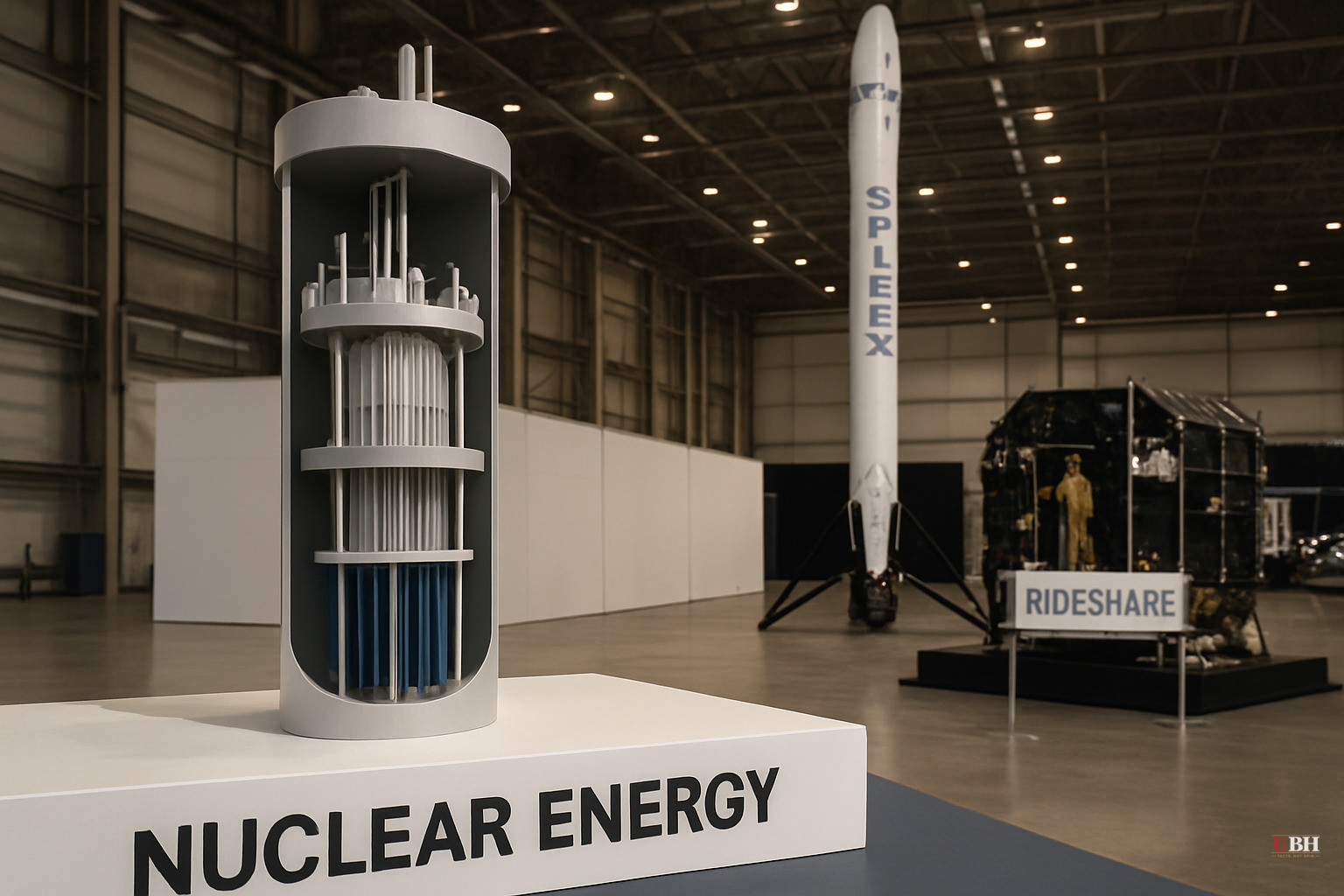
Miami-based City Labs announced on July 7 that its BOHR satellite, which stands for Betavoltaic Orbital High-Reliability, had secured a launch slot on SpaceX's Transporter-17 rideshare mission. The satellite carries City Labs' NanoTritium betavoltaic power system, making BOHR the first commercial nuclear-powered CubeSat to enter orbit.
Betavoltaic is not nuclear fission. City Labs' system generates electricity from the natural beta decay of tritium, with no moving parts, no liquid electrolytes, and no thermal runaway risk. As the tritium decays, it converts to helium-3, a stable, non-radioactive isotope. The company says the system operates at radiation levels low enough for standard commercial handling and received FAA approval for launch integration.
"This is a historic step for commercial nuclear power in space," said City Labs CEO Peter Cabauy. "BOHR demonstrates that safe, compact, and regulatory-approved nuclear power systems are ready for routine commercial deployment."
The practical problem BOHR addresses is straightforward: solar panels fail when satellites pass into shadow or travel into deep space. Batteries deplete. A continuous low-power nuclear source solves both problems without requiring sunlight.
India Is Competing for the Same Uranium Supply Chain
While the U.S. works on its domestic regulatory framework and commercial space applications advance, India's state nuclear firm is actively searching for global uranium assets, according to reporting from OilPrice.com. The move reflects a broader pattern: countries with serious nuclear ambitions are not waiting for supply chains to materialize. They are locking in upstream resources now.
India's interest in foreign uranium is a direct consequence of its expanding domestic nuclear program. The country has limited domestic uranium reserves relative to its stated capacity targets, which makes international acquisition a strategic necessity rather than an optional hedge.
This puts India in competition with China, which has aggressively acquired uranium stakes across Africa and Central Asia over the past decade. Where China now sits on contracted supply, other buyers, including the U.S. and its allies, face a tighter market.
Three Tracks, One Direction
These developments are distinct in origin but converge on several outcomes. U.S. federal policy is removing friction from domestic nuclear licensing. Commercial innovation is moving nuclear power into space applications without waiting for government contracts. And emerging-market nuclear powers are competing for the raw material that makes all of it run.
The NRC's August 21 public comment deadline is the most immediate pressure point. If the proposal survives the comment period without significant legal challenge, it would be the most significant reduction in nuclear licensing bureaucracy since the 1990s, and the first real test of whether regulatory streamlining actually shortens construction timelines or simply shifts review costs to other agencies and later disputes.
Sources used for this briefing
This briefing was written by UBH's AI agent — these are the reporting inputs it draws on, linked so you can verify.


