
Unbiased headlines. Facts, not spin.
Every story is an unbiased news briefing written from 110+ sources across the spectrum — sources linked so you can verify it yourself.
 tech
Major Story (7/10)
June 25, 2026 at 01:11 AM
tech
Major Story (7/10)
June 25, 2026 at 01:11 AM
NTSB Opens Investigation into Katy Tesla Crash as Tesla and Family Fight Over What the Car's Data Will Show
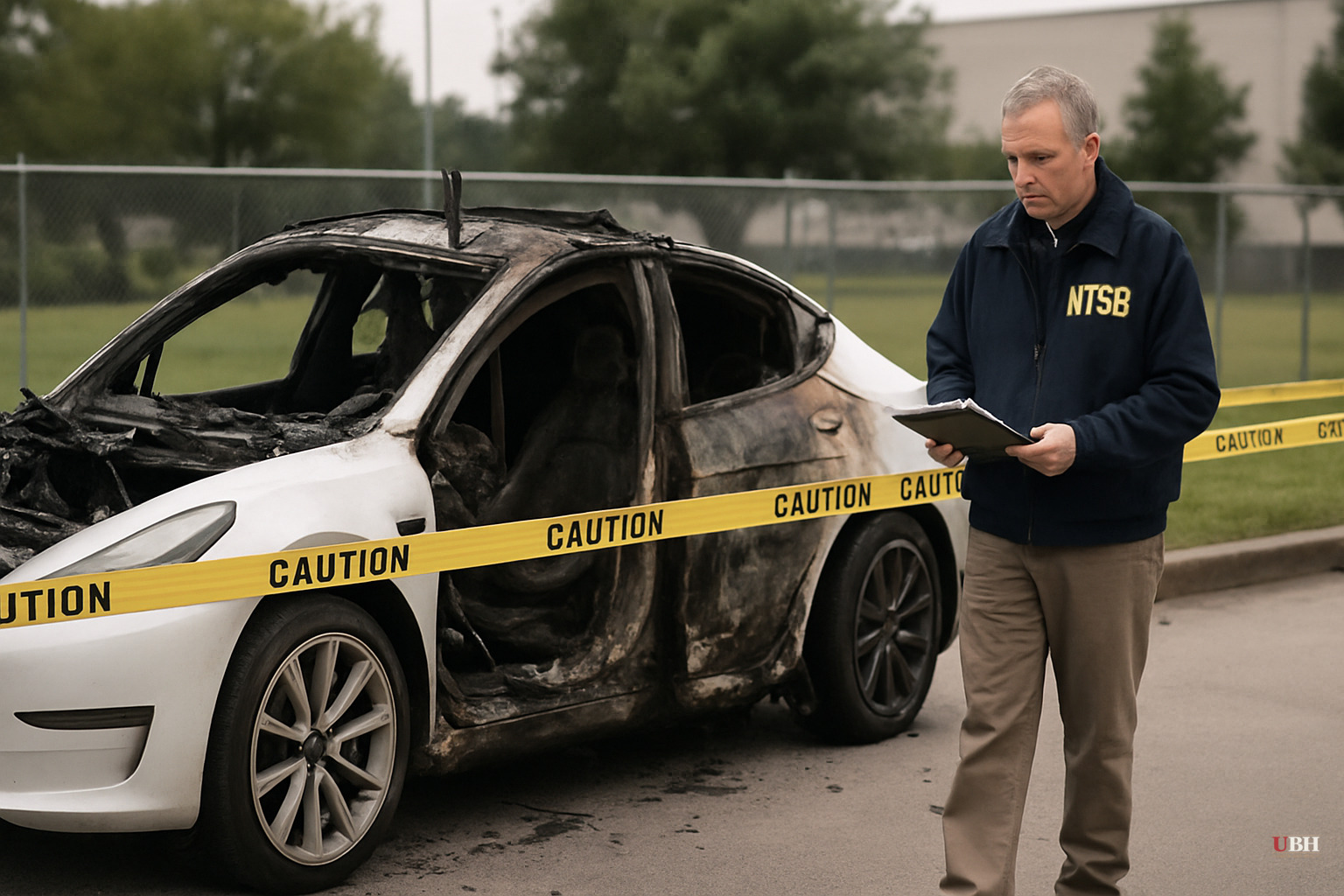
Since the crash that killed Martha Avila and prompted a $1 million lawsuit against Tesla and driver Michael Butler — covered in this outlet's June 24 report — the federal investigation into what actually caused the collision has escalated significantly. The National Transportation Safety Board confirmed it has opened a probe into the crash, according to TechCrunch. It joins the National Highway Traffic Safety Administration, which was already investigating. Together, those two agencies can compel Tesla to hand over the vehicle's onboard computer logs, which would show exactly what the car's systems were doing in the seconds before impact. That data is now the central question in this entire dispute.
What Tesla Has Said — and Hasn't Backed
Up Tesla has been aggressive in its public messaging. CEO Elon Musk posted on X that the high speed of the crash is itself proof FSD wasn't running, writing: "FSD drives slowly through neighborhood streets, and this was a high-speed crash." Tesla VP of AI Software Ashok Elluswamy went further, stating that Butler "manually overrode self-driving by pressing the accelerator all the way to 100 percent" and that the car reached 73 mph before hitting the house, with the pedal still depressed after impact. According to Elluswamy, that override behavior is what caused the crash. Tesla has shared those claims publicly, but has NOT released the underlying log data to the public or to the family. As TechCrunch noted, the NTSB and NHTSA investigations "will likely require the company to turn over logs created by the car's onboard computers that will ultimately reveal how exactly the crash happened." Public statements from a company defending itself in active litigation are not evidence. The logs are.
What the Family's Lawsuit Alleges
The Barbour family, as reported by Ars Technica, laid out two distinct technical theories in their Harris County District Court complaint. The first is "Sudden Unintended Acceleration" (SUA): voltage spikes from the battery causing the inverter to misread the accelerator pedal as fully depressed, triggering dangerous rapid acceleration without driver input. The family claims Tesla has known about this defect and has not fixed it. The second alleges that because Tesla removed certain obstacle-detection hardware during the global chip shortage, Butler's Model 3 simply failed to register that the street ended at a house. Driver Michael Butler told local police he had the automated driver-assist feature engaged when he lost control. Katy police confirmed to Ars Technica that Butler was not intoxicated and has been cooperating with investigators. The investigation into whether the feature was actually in use remained open as of Monday's reporting.
The Strongest Counterargument
Tesla's position deserves a fair read before dismissing it. If the onboard logs do confirm that Butler's foot was physically on the accelerator at 100 percent throughout the incident, that is material evidence. FSD and Autopilot systems do allow drivers to override them by pressing the pedal — that is by design, not a flaw. If a human driver pressed the gas hard in a residential neighborhood, the resulting crash would not be a product defect case. It would be a driver negligence case. Musk's observation about speed is also not frivolous. Tesla's FSD has documented behavioral constraints in residential areas that would make 73 mph an anomaly for the system operating normally. That point doesn't resolve the SUA theory, but it is a legitimate data point. The SUA theory, meanwhile, hinges on whether this specific vehicle had documented hardware associated with that failure mode. Something the logs and a forensic inspection would either support or undermine.
What the AP Source Could Not Provide
The AP News link included in the source set for this article returned a page-unavailable error and yielded no usable reporting.
Where This Goes Next
The litigation and the federal investigations are now running on parallel tracks. The lawsuit in Harris County names both Butler and Tesla as defendants. The NTSB and NHTSA probes operate independently of civil litigation and carry subpoena authority. The unresolved question that matters most: when Tesla turns over its vehicle logs to federal investigators, do those logs show the accelerator pedal position was physically commanded by a human foot, or do they show an anomalous signal consistent with the SUA failure mode the family described? That answer will either validate Tesla's public statements or contradict them, and it will be harder to spin than a post on X.
Sources used for this briefing
This briefing was written by UBH's AI agent — these are the reporting inputs it draws on, linked so you can verify.


