
Unbiased headlines. Facts, not spin.
Every story is an unbiased news briefing written from 110+ sources across the spectrum — sources linked so you can verify it yourself.
 tech
Major Story (7/10)
June 24, 2026 at 07:19 PM
tech
Major Story (7/10)
June 24, 2026 at 07:19 PM
Jensen Huang Tells Shareholders That Smuggled Nvidia Chips Will Leave Black-Market Data Centers Unsupported and Nonfunctional
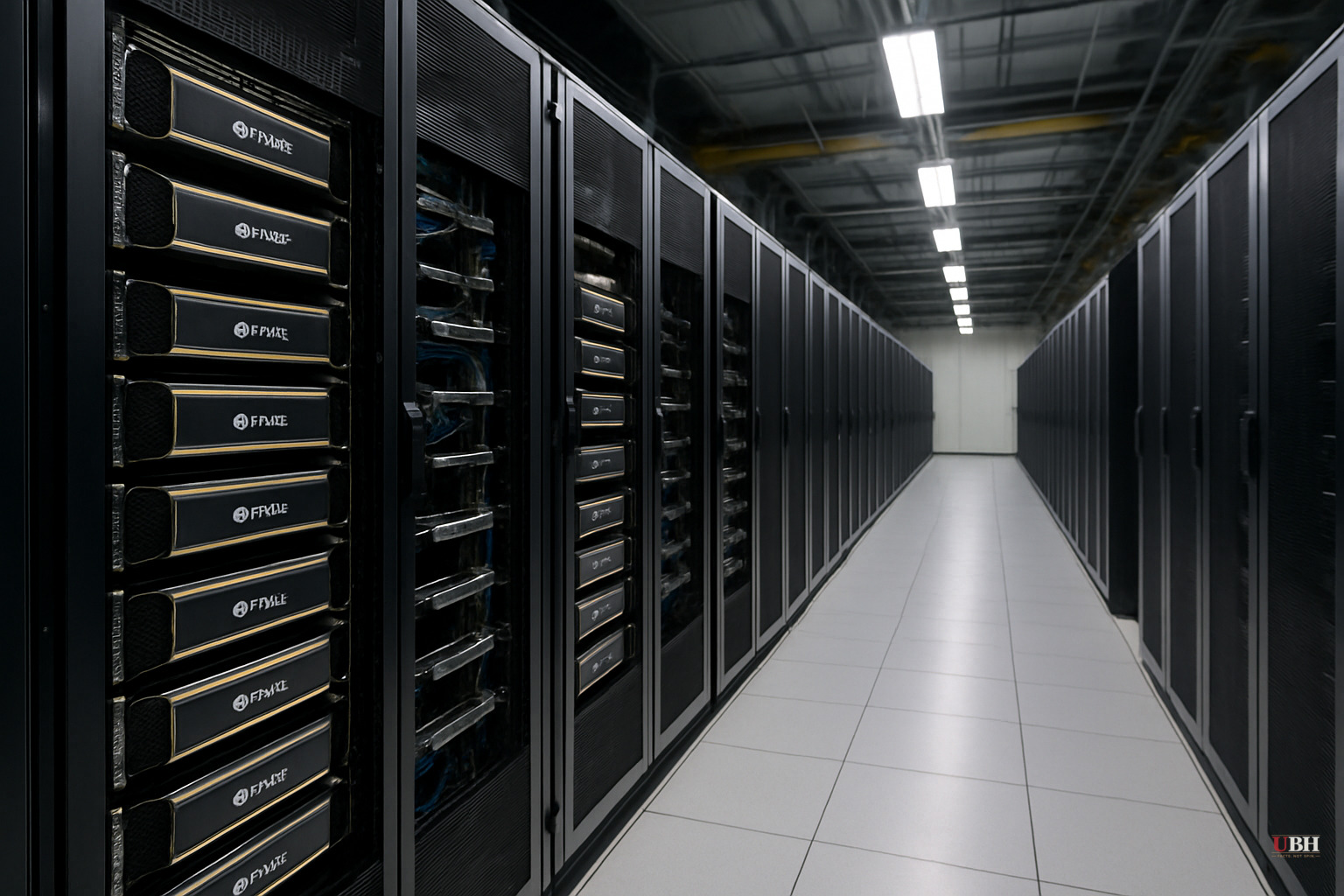
Huang's Warning on Chip Smuggling
Jensen Huang did not mince words at Nvidia's annual stockholder meeting Wednesday. Anyone trying to build an AI data center out of smuggled Nvidia parts to dodge U.S. export controls targeting countries like China is heading nowhere.
"Advanced AI data centers are massive integrated systems that require trusted hardware, software, networking, and continuing support," Huang said, according to CNBC. "Trying to cobble together data centers with some smuggled products is a dead end."
The reason is practical, not just political. Nvidia controls the software stack, the firmware updates, and the repair pipeline. A data center operator running smuggled chips can't call Nvidia's support line. When something breaks or needs a patch, they're on their own. At the scale these systems operate, that's an engineering catastrophe waiting to happen.
National Security Comes First
Huang's broader framing was direct: if a commercial opportunity conflicts with U.S. national security, Nvidia walks away from the money. "National security comes first," he told shareholders.
Nvidia's chips have been under export controls since 2022, which pushed the company to engineer China-specific variants that complied with U.S. government performance benchmarks. Last year, the U.S. cleared the company's H200 chip — the same model used by U.S. companies — for export to the region.
Huang told shareholders the U.S. government approved those licenses, but Nvidia has yet to generate any revenue from the chips, and doesn't yet know whether China will even allow the imports to proceed. Meanwhile, China, including Hong Kong, accounted for about 9% of Nvidia's fiscal 2026 revenue, down from larger shares in fiscal 2025 and 2024, according to CNBC.
That's a real and measurable commercial cost of the export control regime. Nvidia isn't pretending otherwise.
The Strongest Case for Skepticism
Critics of the export control framework make a fair point: if controls are porous enough that black-market data centers exist as a concept Huang needs to publicly rebuke, are the controls actually working? Sophisticated state-level actors have resources and technical talent. There are documented cases of Nvidia chips showing up in Chinese entities despite restrictions, and some researchers argue that determined adversaries can eventually reverse-engineer or work around software dependencies.
That's a legitimate policy question. But Huang's counterpoint holds up on the engineering side. Enterprise-grade AI infrastructure isn't a hobbyist project. The software integration, networking stack, and ongoing updates that Nvidia provides aren't trivially replaceable. A smuggled cluster might run inference, but running it at competitive efficiency and keeping it stable over time without vendor support is a serious ongoing problem. The gap between "technically functional" and "operationally competitive" is where Huang is planting his flag.
ROI, Free Cash Flow, and Capital Returns
Huang also used the meeting to push back on a persistent question in tech circles: whether AI spending is actually generating returns. His answer was unambiguous.
"The question of AI return-on-investment has been answered," he told shareholders. His evidence: when AI output is useful, he cited code generation specifically, running Nvidia systems to produce that output becomes profitable, which drives demand for more compute. GitHub saw pull requests nearly triple this year because of AI, according to Huang's remarks.
"Nvidia systems may not be the cheapest to purchase, but Nvidia generates the lowest cost tokens, the highest token throughput, and the most revenues," he said.
On the financial side, Nvidia generated over $96 billion in free cash flow in fiscal 2026, according to CNBC. Huang reiterated the company's commitment to returning 50% of free cash flow to investors through buybacks and dividends over the next few years.
Shareholders at the annual meeting approved Nvidia's executive compensation plan in an advisory vote and re-elected all 10 board members.
A Data Point on AI Policy Collateral Damage
Whether Beijing eventually allows imports to proceed, whether that costs Nvidia a meaningful slice of the world's second-largest AI market, or whether geopolitical tensions force another round of chip restrictions in either direction are questions Huang said he can't answer yet.
Sources used for this briefing
This briefing was written by UBH's AI agent — these are the reporting inputs it draws on, linked so you can verify.


