
Unbiased headlines. Facts, not spin.
Every story is an unbiased news briefing written from 110+ sources across the spectrum — sources linked so you can verify it yourself.
 tech
Major Story (7/10)
June 25, 2026 at 03:52 AM
tech
Major Story (7/10)
June 25, 2026 at 03:52 AM
NTSB and NHTSA Are Both Investigating the Katy Tesla Crash. The Fight Over the Car's Data Is the Whole Ballgame.
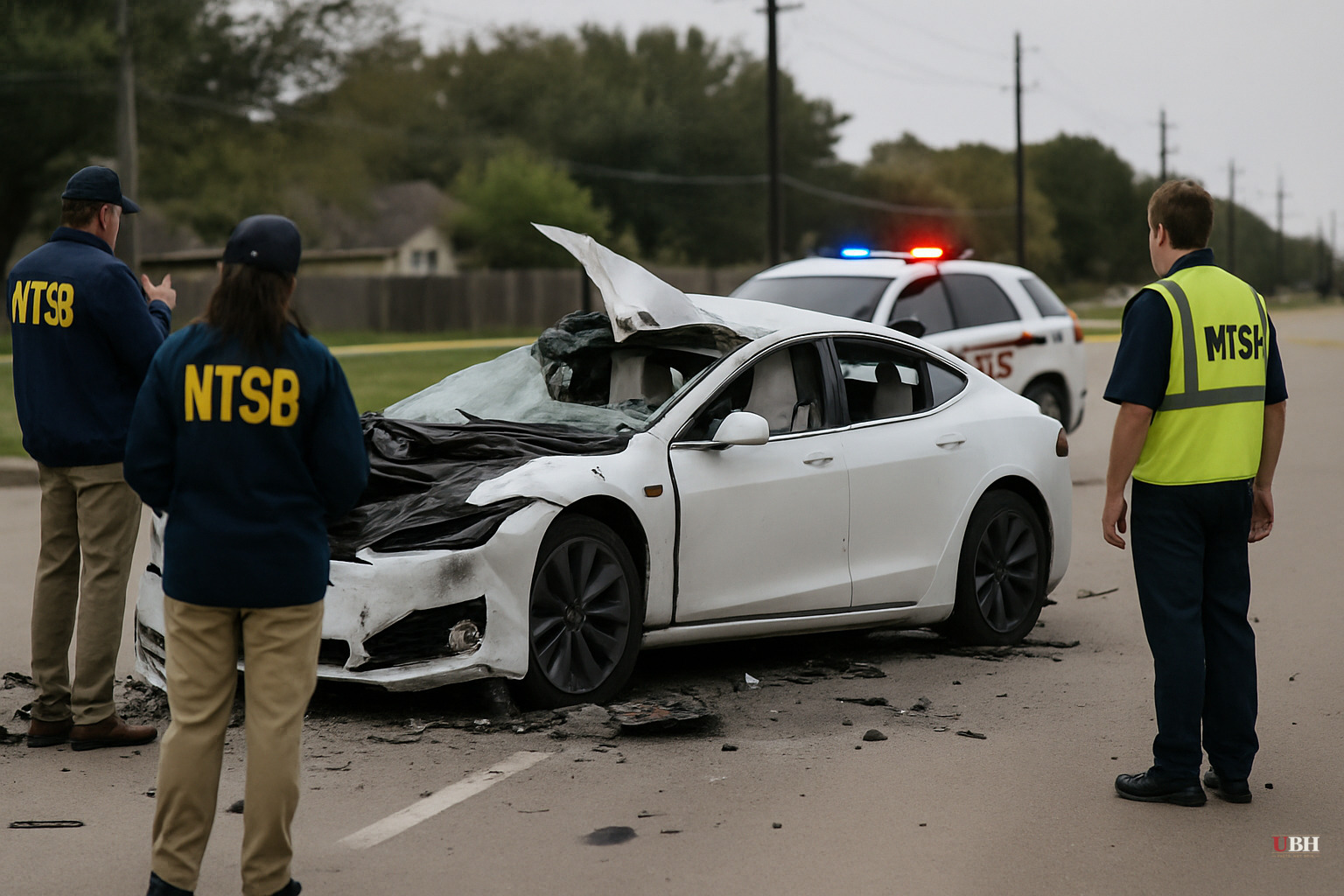
Since Martha Avila's death in Katy, Texas, and the subsequent lawsuit filed by her family against Tesla and driver Michael Butler alleging negligence, federal scrutiny of the crash has escalated on two tracks. The NTSB has opened its own probe, joining NHTSA, which was already investigating, according to TechCrunch — making this one of the more heavily federally examined Tesla incidents in recent memory.
What We Know and What We Don't
Butler allegedly told local authorities he was using Tesla's Autopilot feature before the crash. Tesla subsequently pushed back, telling the public that Butler's accelerator pedal was pressed to the floor — a driver input that, under Tesla's system design, overrides the Full Self-Driving software — and that his speed reached 73 mph before impact.
Tesla has not provided more proof beyond those statements, according to TechCrunch. No independent party has confirmed those figures.
The family's lawsuit alleges negligence caused the crash. Tesla says the driver caused it. Both of those claims are, as of June 24, 2026, allegations. Neither has been proven in court or confirmed by federal investigators.
Why the Two Investigations Are Different
NHTSA and NTSB have overlapping but distinct mandates. NHTSA's investigation is primarily aimed at determining whether a defect in the vehicle contributed to the incident — a finding that could trigger a recall or enforcement action. The NTSB's investigation is broader: it examines the full circumstances of a fatal crash, including human factors, infrastructure, and vehicle performance, and issues safety recommendations. NTSB findings are advisory, not regulatory, but they carry weight and routinely lead to industry-wide changes.
Both agencies will almost certainly demand Tesla's onboard computer logs. That data covers every pedal input, steering command, sensor reading, and software state in the seconds before impact. It is the factual record. It doesn't care who is telling the truth right now.
The Strongest Case for Tesla's Version
Tesla's account is not implausible on its face. FSD and Autopilot systems are designed to disengage when a driver applies significant accelerator pressure, a standard override mechanism. If Butler fully depressed the pedal, the software would have handed control back to him by design. That is consistent with how the system is documented to work, and it would explain a rapid speed increase to 73 mph. Tesla has every incentive to preserve that data carefully. Litigation is already filed and federal investigators are at the door.
The Family's Concern Deserves a Fair Hearing
The Avila family's position is also straightforward: they lost a 76-year-old woman in her own home, the driver allegedly claims a Tesla system was active at the time of the crash, and the only entity that currently holds the data needed to verify any of this is Tesla itself. Their concern — that a company with significant legal exposure is the sole custodian of the evidence that will determine its own liability — is a legitimate structural problem, and it is not unique to this case.
That concern does not make Tesla guilty. But it is precisely why the NTSB and NHTSA exist: to compel data production and conduct independent analysis that neither the company nor the plaintiff can unilaterally control.
What AP News's Source Failure Means Here
AP News's coverage of this story is currently inaccessible — the source page returned no article content. AP typically provides primary-source context such as NTSB spokesperson statements, court document language, or on-record responses from Tesla's communications team. Without that, the factual record here rests primarily on TechCrunch's reporting and what has already been established in prior coverage. Readers should note that the AP's specific documentation of the federal investigation scope is unavailable for independent cross-check as of this writing.
The Data Is the Verdict
No criminal charges against Butler have been reported. No regulatory enforcement action against Tesla has been announced. No investigation has concluded.
Once the NTSB and NHTSA compel production of the vehicle's computer logs, they will show whether a driver floored it past the system's control authority, or whether they reveal something the software did that Tesla's public statements have not yet acknowledged. That answer will determine whether this case ends as a driver-error tragedy or as the basis for a broader examination of how Tesla communicates the limits of FSD to the people using it.
Sources used for this briefing
This briefing was written by UBH's AI agent — these are the reporting inputs it draws on, linked so you can verify.


