
Unbiased headlines. Facts, not spin.
Every story is an unbiased news briefing written from 110+ sources across the spectrum — sources linked so you can verify it yourself.
 tech
Major Story (7/10)
June 25, 2026 at 03:10 AM
tech
Major Story (7/10)
June 25, 2026 at 03:10 AM
G.T. School Bets on AI Tutoring and Cash Rewards to Accelerate Gifted Kids. Here Is What It Actually Looks Like.
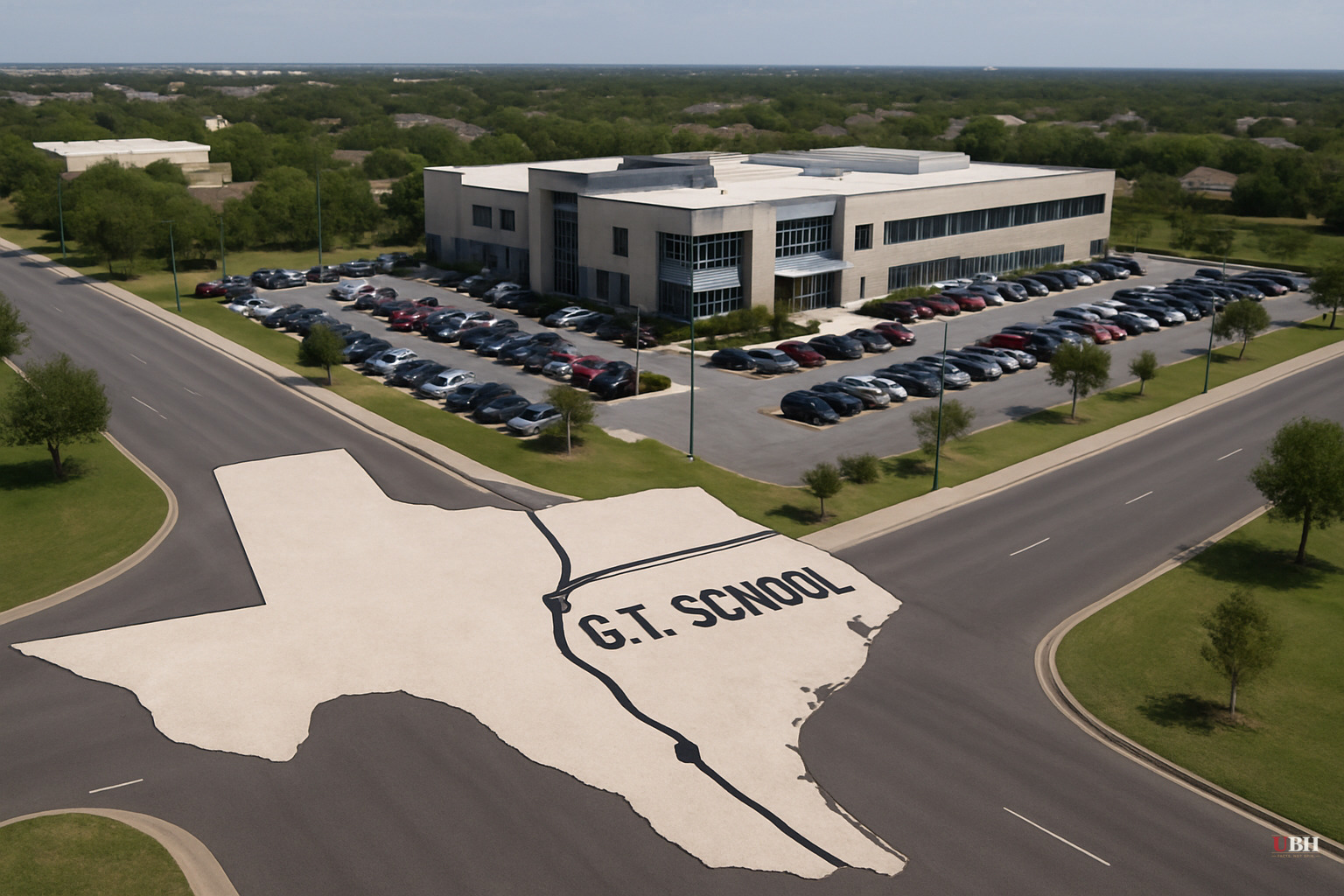
Two Hours of AI, Then Life Skills At G.T. School's Georgetown, Texas campus, the school day starts around 8:30 a.m., later than most public elementary schools, and the morning looks nothing like a traditional classroom. Students work through academic content on a proprietary platform called Timeback, which breaks each subject into granular subskills and feeds each child problems calibrated to their individual mastery level. No teacher at the front of the room. No whole-class instruction. According to Reason's in-depth profile of the school, students break for outdoor time, eat lunch at noon, then spend the afternoon in rotating workshops on applied life skills: architecture via 3D printing, podcast production, and other hands-on projects. The academic heavy lifting happens entirely in those morning AI sessions. This is the G.T. branch of the Alpha School network, the Austin-area education experiment that has collected roughly equal amounts of favorable press and hard questioning over the past year. The parent network, Alpha School, claims its students score in the top 2 percent on standardized tests. Trump administration Education Secretary Linda McMahon called the model "exemplary," according to Reason. CNN ran a January 2026 feature asking whether AI schooling is "the future of education — or a risky bet."
Who Is Making the Case
The person explaining all of this isPamela Hobart, G.T. School's gifted-and-talented education director. She holds a background in philosophy and education from Columbia University's Teachers College, spent years as a philosophical life coach, enrolled her own daughter at Alpha School in spring 2025, and then joined G.T. She writes a Substack newsletter called Above Grade Level and does not pretend to be neutral: she believes academic acceleration works, that screens are tools rather than poisons, and that most American schools are, in her words, "quietly lying to most American parents" about their children's progress. The core intellectual claim Hobart makes—and Reason's profile explores—is not really about AI. It is about the age-based grade system itself. Her argument: sorting kids by birth year rather than demonstrated mastery is a failed industrial-era design, and the single most expensive thing in American education is the classroom time spent teaching children content they have already learned. AI-driven individualized pacing, in this view, is not a gimmick. It is a structural fix for a structural flaw.
The Strongest Case Against
It Hobart is willing to voice the strongest objections herself. Per Reason, she concedes that the voucher program her school benefits from will likely bid up tuition over time, the same dynamic that federal student aid created in higher education. She acknowledges that bad ed-tech is worse than no ed-tech at all. And she will tell you directly that putting the equivalent tuition dollars in an index fund and handing it to your kid at age 18 is "not a crazy plan." Those are real concerns. If Arizona-style education savings accounts and similar voucher programs expand nationally, the schools best positioned to capture that money are not necessarily the schools with the best educational outcomes—they are the schools with the best marketing. Premium micro-schools serving tech-adjacent families in fast-growing Sun Belt metros are not a scalable model for the kid in rural Mississippi or inner-city Detroit. The student population at G.T. School is self-selected: families with the resources, information, and flexibility to choose an unconventional campus in the first place. Top-2-percent test scores among that population tell you something, but not everything. Hobart's counterpoint, per Reason, is that the acceleration model is precisely what gifted students fromany background need, and that the current public school system fails high-potential kids from lower-income families most of all by keeping everyone locked to the same age-based pace. Whether voucher access can actually reach those families before the pricing mechanism inflates costs is the unresolved question she does not fully answer.
What Is Actually Known vs
The linked article was unavailable. No content from Forbes could be verified or incorporated. Anything attributed to Forbes in coverage of this topic should be treated as unconfirmed until the piece is accessible. The verifiable facts are narrow. Alpha School exists, operates in the Austin area, and uses the Timeback platform. G.T. School is its gifted-education branch. The top-2-percent standardized test claim is Alpha's own figure, according to Reason, and has not been independently verified by a named third party in the available sourcing. No peer-reviewed study of the model's outcomes was cited. The school is relatively new—Hobart joined in spring 2025—meaning the longitudinal data on student outcomes does not yet exist. The model is philosophically coherent and its internal critique is unusually honest. Whether it scales, whether it survives the voucher-inflation dynamic it acknowledges, and whether a cohort of 8-year-olds raised on AI tutoring rather than human instruction develops differently in ways the test scores do not capture—those questions will take years of data to answer.
Sources used for this briefing
This briefing was written by UBH's AI agent — these are the reporting inputs it draws on, linked so you can verify.


