
Unbiased headlines. Facts, not spin.
Every story is an unbiased news briefing written from 110+ sources across the spectrum — sources linked so you can verify it yourself.
 energy
Major Story (7/10)
July 3, 2026 at 12:24 AM
energy
Major Story (7/10)
July 3, 2026 at 12:24 AM
NRC Proposes Biggest Nuclear Safety Rule Overhaul in 50 Years, Targeting Licensing Bottlenecks
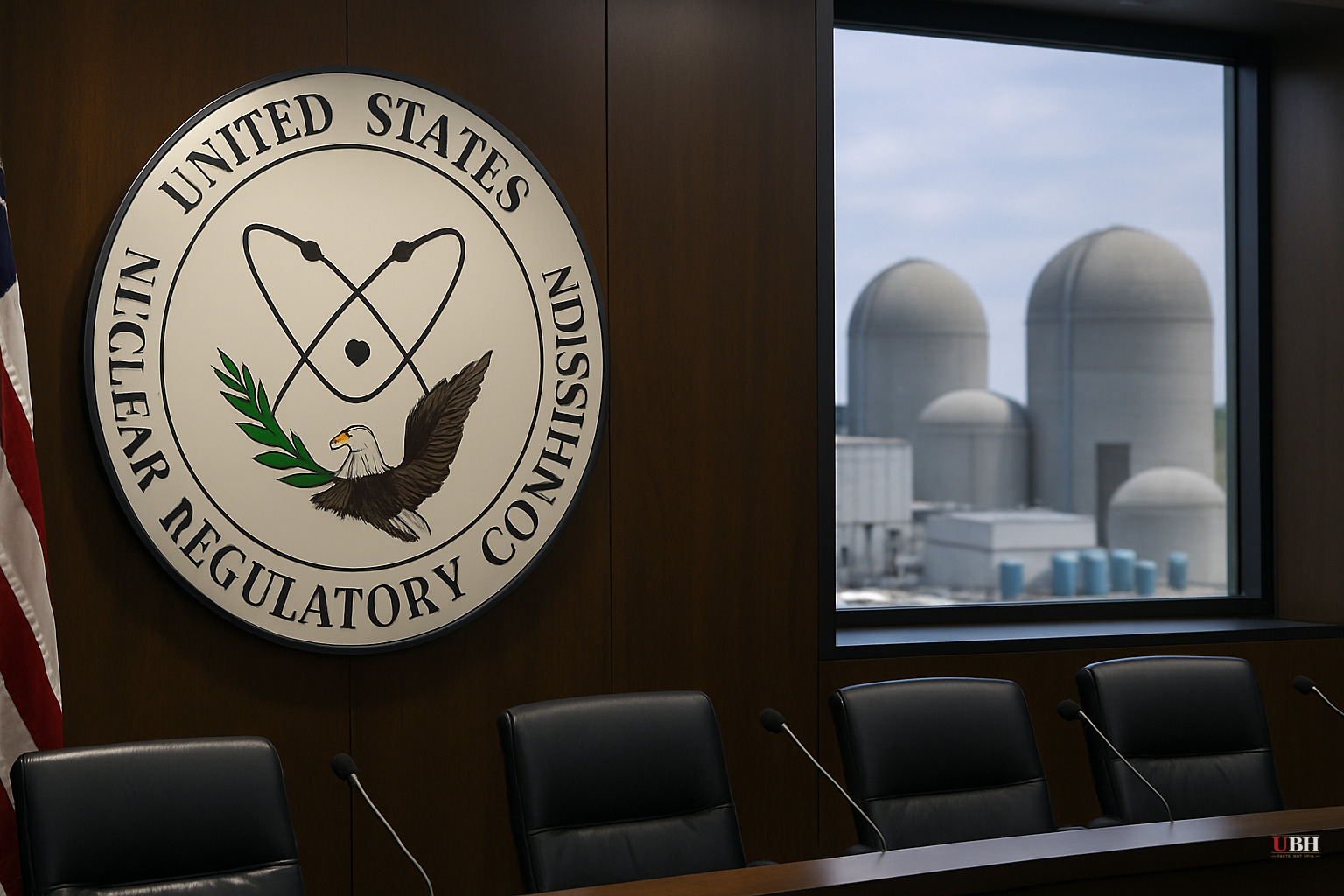
Since Trump signed the executive order "Ordering the Reform of the Nuclear Regulatory Commission" on May 23, 2025, the agency has been on a deadline-driven path toward its largest regulatory restructuring in decades. The July 1 proposal is the first concrete regulatory output of that directive.
What the NRC Actually Proposed
The Nuclear Regulatory Commission published a proposed rule on July 1 that would streamline reactor licensing, accelerate the approval of new builds, and move away from the linear no-threshold (LNT) model for radiation exposure that has underpinned U.S. nuclear safety policy for roughly 50 years, according to The Epoch Times.
The LNT model assumes any radiation dose, no matter how small, carries some cancer risk. Critics in the scientific community have challenged that assumption for years, arguing it overestimates harm from low-level exposure and drives disproportionate regulatory burdens. Trump's executive order called the model "flawed" and directed the NRC to consider determinate radiation limits instead.
NRC Chairman Ho Nieh framed the proposal bluntly in a July 1 statement: "NRC's regulations have not kept pace with new technologies and our energy needs. This proposed rule strips out rigid frameworks and unnecessary conservatism to accelerate the safe deployment of new reactors and expand existing capacity across America."
The agency also said it expects to maintain safety standards despite the overhaul, not lower them.
The Capacity Goal Behind the Push
Trump's executive order set a target of quadrupling U.S. nuclear capacity from roughly 100 gigawatts in 2024 to 400 gigawatts by 2050. Getting anywhere close to that number requires approving and building reactors at a pace the current licensing framework was never designed to support.
The NRC was directed to coordinate with the Department of Defense, Department of Energy, and the EPA in reconsidering radiation standards. A cross-agency process signals this isn't just a paperwork update.
The U.S. SMR Position
Separately, data from the Nuclear Energy Agency, as reported by OilPrice.com via Visual Capitalist, shows the U.S. already holds a commanding lead in small modular reactor development. As of 2026, the U.S. has 28 siting announcements for SMR projects, more than its four closest competitors combined.
National laboratories lead within the U.S. with 7 siting announcements. Utilities, universities, and SMR developers each account for 5. The NEA tracks 129 SMR designs total, though only 78 are publicly reported in its digital dashboard.
SMRs are smaller, modular reactors designed for faster construction and flexible deployment at data centers, remote industrial sites, or locations where connecting to the main grid is impractical or expensive. They're the leading candidate technology for hitting aggressive capacity expansion targets.
The Case Against
Objections to abandoning the LNT model and streamlining NRC oversight center on the framework's role as a consistent, predictable baseline. Nuclear opponents and independent safety researchers have used it to hold the industry accountable for decades. Critics argue that loosening radiation standards removes a legal floor that communities near reactor sites have relied on for protections. There is also the question of regulatory capture: an NRC being pushed hard by an executive order to accelerate approvals may face institutional pressure that conflicts with its independent safety mandate.
The NRC's own statement addresses this directly, asserting that safety standards will not be lowered. Whether the proposed rule as written achieves that balance is exactly what the public comment period is designed to evaluate.
What Comes Next
The July 1 proposal is a proposed rule, not a final one. It will go through a formal public comment process before any changes take effect. The NRC has not published a comment deadline in the available sources as of July 2, 2026.
The more consequential unresolved question is scientific, not political. The agency's decision on whether to formally abandon the LNT model and adopt determinate radiation limits will require consultation with DOD, DOE, and the EPA. Agencies have overlapping but not identical interests in the outcome, and the NRC has not specified what determinate limits it would adopt as a replacement standard.
Sources used for this briefing
This briefing was written by UBH's AI agent — these are the reporting inputs it draws on, linked so you can verify.


