
Unbiased headlines. Facts, not spin.
Unbiased Headlines is an independently owned news organization. We bring you the facts, not opinions, written fresh from 110+ named sources. Sources linked so you can verify it yourself.
 energy
Major Story (8/10)
NRC Issues Construction Permit for Four X-energy Reactors at Dow's Texas Chemical Complex
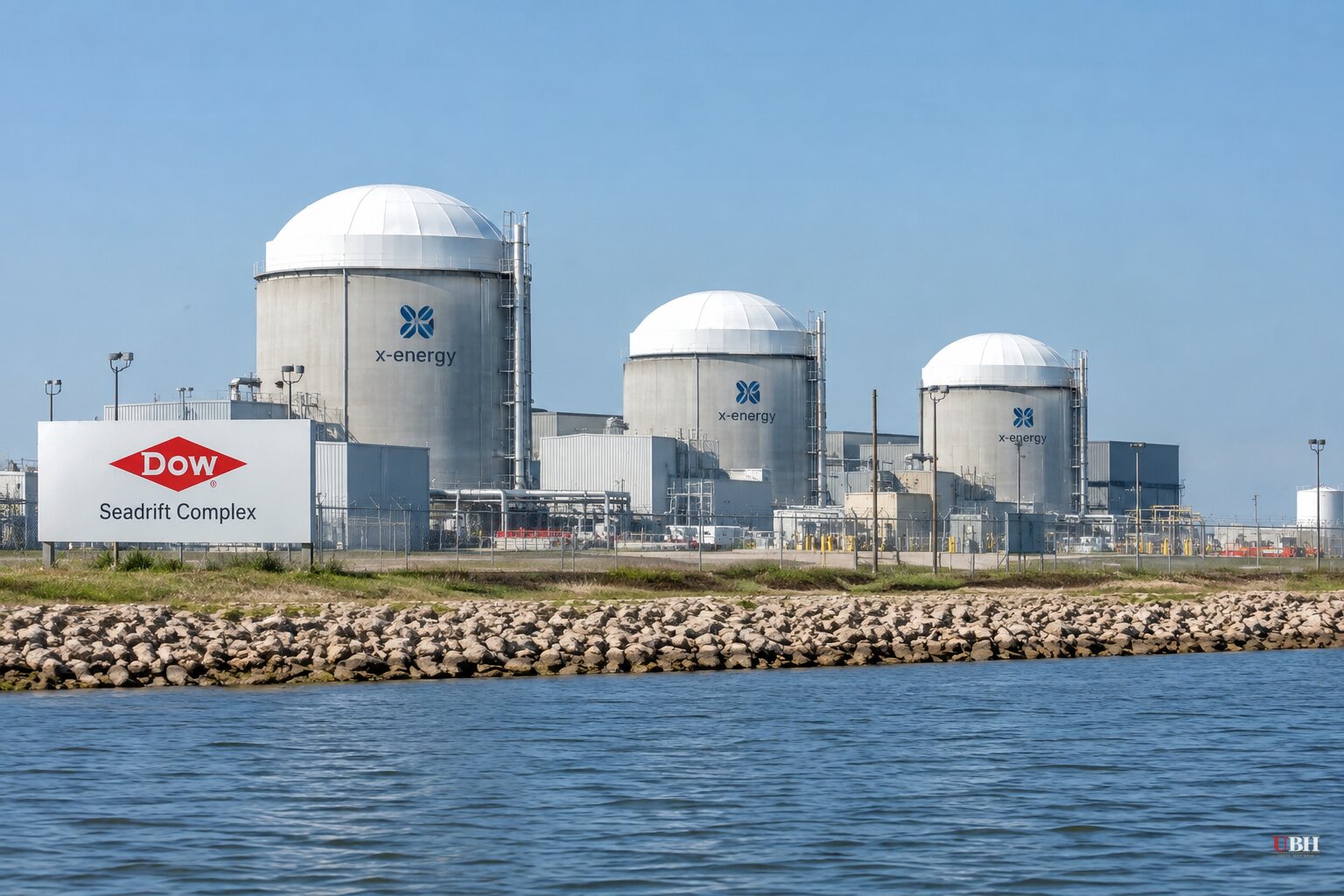
The Nuclear Regulatory Commission has issued a construction permit for four small modular reactors at a Dow chemical complex on the Texas Gulf Coast. X-energy and Dow announced the approval Monday, Nov. 9.
The permit goes to Long Mott Energy, a wholly owned Dow subsidiary, for the Long Mott Generating Station at Dow's Seadrift Operations in Calhoun County. It covers four Xe-100 reactors. Each is rated at 80 megawatts of electricity and 200 megawatts of heat, for a total of 320 megawatts electric and 800 megawatts thermal.
The companies say it is the first approval of an advanced reactor at an industrial site in the United States. They also say it is the first NRC construction permit for a high-temperature gas-cooled reactor in nearly 60 years, and the first for a pebble-bed design.
What the plant is for
This is not a grid project first. The reactors are meant to supply high-temperature steam and power to the Seadrift manufacturing complex, replacing energy and steam equipment that Dow says is near the end of its useful life. Surplus electricity would go to the grid.
The companies expect the four units to serve the site for 60 years. First delivery is targeted for the early 2030s.
X-energy says the design's coated-particle TRISO fuel and passive safety features should support an emergency planning zone of 400 meters, versus 10 miles for conventional light-water reactors. That is the company's projection. It is not an NRC finding.
The regulator's account
NRC Chairman Ho K. Nieh framed the permit as proof the agency can move on a schedule. "Today, the new NRC is issuing America's first construction permit for a high-temperature gas-cooled reactor in more than half a century," Nieh said. "We delivered on the 18-month schedule, proving we can do rigorous safety reviews on predictable timelines that move advanced nuclear technology from design to construction."
The companies say the NRC's review found the Xe-100 design can be safely sited and constructed within an operating industrial site. They credit the 2024 bipartisan ADVANCE Act and decades of Department of Energy research on gas-cooled reactors and TRISO fuel. The project is also part of the Energy Department's Advanced Reactor Demonstration Program.
The safety objection
The Union of Concerned Scientists disputes that the review was complete. Edwin Lyman, the group's director of nuclear power safety, said in a statement: "The NRC only accomplished this feat by pushing consideration of critical safety questions to a later date—issues the NRC should've fully resolved before green lighting construction."
Lyman also questioned X-energy's claim that its helium-cooled design is safer than many existing reactors. Neither the NRC nor the companies have answered his specific objection in the public statements released so far. The operating license review, still ahead, is where the NRC would take up questions deferred past the construction stage.
Money and timing
A construction permit is not a construction decision. The companies say the approval lets them finalize and standardize the Xe-100 design, mature the supply chain for long-lead components, and prepare an operating license application. They say that work will happen before Dow allocates major capital for full-scale construction. A final investment decision from Dow is expected to be weighed in 2027.
No small modular reactor is operating in the United States today. Proponents say shrinking the reactor will speed construction and cut costs, but those advantages remain unproven. X-energy's first units are likely to be expensive, and nuclear plants have a long record of running over budget and behind schedule. Taxpayers are on the hook in part through the federal demonstration program backing the project.
Investors and customers
X-energy trades on the Nasdaq under the ticker XE. Its April initial public offering raised $1 billion, and shares are now trading at less than half the offering price, according to TechCrunch. The permit news gave the stock a lift Monday, but only enough to recover the prior week's losses.
On the demand side, Amazon's Climate Pledge Fund led X-energy's $500 million Series C-1 round. Amazon has also committed to buy 5 gigawatts of capacity from the company. Data center developers hungry for power have driven much of the interest in the sector. The Dow project, by contrast, is built around a chemical plant's steam and power needs.
What comes next
The Nuclear Regulatory Commission completed the environmental part of the review in late October, and the safety review ended with Monday's permit. Two things now stand between the permit and a working plant. Dow must decide whether to commit major capital, and X-energy and Dow must win a separate operating license from the NRC. Lyman's deferred safety questions are likely to come up again in that second review.
Sources used for this briefing
7 links from 7 independent newsrooms (syndicated copies of the same report count once)
These are the sources it draws on, linked so you can verify.


