
Unbiased headlines. Facts, not spin.
Every story is an unbiased news briefing written from 110+ sources across the spectrum — sources linked so you can verify it yourself.
 defense
Low Interest (3/10)
July 26, 2026 at 01:10 PM
defense
Low Interest (3/10)
July 26, 2026 at 01:10 PM
Nottingham Installs Anti-Vehicle Barriers at Summer Beach Event, Citing Counter-Terrorism Advice
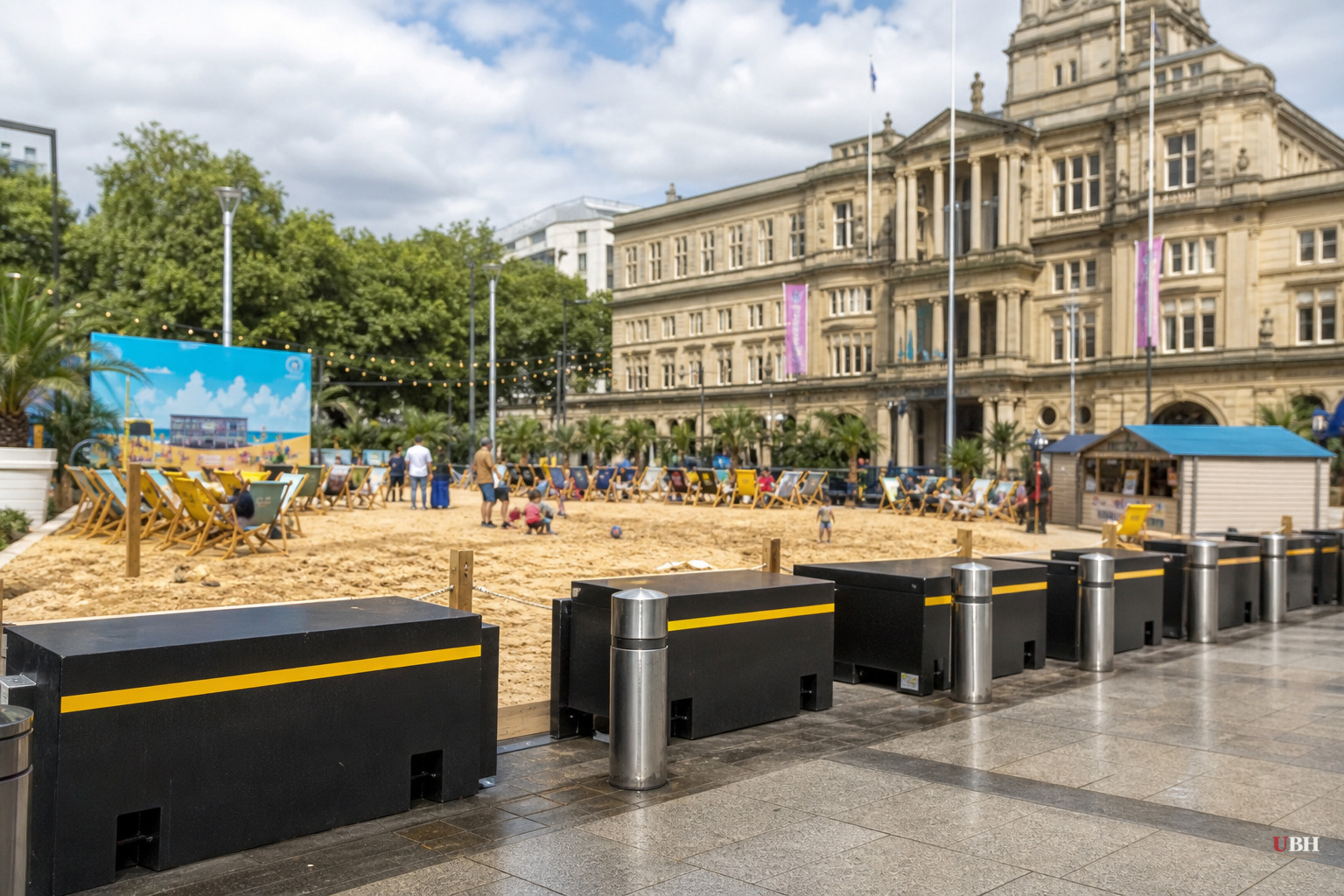
Nottingham's annual "Nottingham Beach" event, a temporary pop-up attraction in the city's Market Square, opened this week behind a line of portable steel barriers. Roughly 15 of the units, made by manufacturer Husson and known as H-Stop barriers, now block the square's four main entrances.
The barriers work by tipping upward on impact. That design is meant to change a vehicle's trajectory and generate enough friction to stop a vehicle weighing up to three and a half tonnes traveling at 30 mph, according to manufacturer specifications cited in coverage of the rollout.
Councillor Neghat Khan, leader of Nottingham City Council, said the barriers were installed as an "additional safety measure" following advice from the "multi-agency events safety advisory group, which includes counter-terrorism colleagues." That group's involvement means the decision wasn't made by council staff alone, but in consultation with police and security officials who assess risk at large public gatherings.
Event organizer James Mellors was direct about the tradeoff. "I don't think they look very pretty," he said. "But the Market Square is a very high footfall area. It's not always about how things look, it's about keeping people safe." A regular visitor to the event, Amanda Hose Hawley, said she wasn't surprised by the barriers and called them "a sign of the climate we live in."
Why Cities Are Doing This
Vehicle-ramming attacks against pedestrians are not hypothetical. Europe has seen a string of them over the past decade, including attacks in Nice, Berlin, Barcelona, and London where vehicles were deliberately driven into crowds. British cities have steadily added anti-ram infrastructure at markets, festivals, and other high-footfall public events since those attacks, and counter-terrorism police routinely advise event organizers on physical security measures as a standard part of public safety planning.
That context matters. Installing barricades at a crowded public square isn't a radical new policy. It's a continuation of security practices British and European authorities have applied broadly for years, at events ranging from Christmas markets to New Year's celebrations to summer festivals. Local authorities describe these barriers as precautionary infrastructure, not a response to a specific, imminent threat against this particular event.
The Argument Being Made Online
ZeroHedge's coverage of the Nottingham barriers, drawing on social media posts including one from an account calling itself "Concerned Citizen" and another from a user named Edward Oakenfull, framed the barriers as evidence that mass immigration has made British public spaces unsafe. Oakenfull's post, quoted in that coverage, argued "before uncontrolled mass immigration we did not need diversity barriers."
The people making this argument are pointing to a genuine pattern. A series of vehicle-ramming attacks in Europe over the past decade have been carried out by Islamist extremists, some of whom were migrants or the children of migrants, and they're asking why publicly funded barricades are now considered normal infrastructure at community events.
But the sourcing here doesn't establish who the anticipated threat actually is for the Nottingham event specifically. Nottingham City Council's own statement doesn't name a specific threat, ideology, or nationality behind the decision. It cites general counter-terrorism advice for high-footfall public events, the same kind of advice British police give for concerts, sporting events, and holiday markets regardless of the population served. Vehicle-ramming as a terror tactic isn't unique to any one ideology either. It has been used by attackers across different motivations and backgrounds internationally, including domestic extremists in the U.S. and Europe with no connection to Islamist terrorism.
Attributing the barriers specifically to "open borders" or diversity policy, as ZeroHedge's framing does, goes beyond what the council's own justification supports. No named source in this reporting, including the council leader or event organizer, attributed the decision to immigration policy. The justification given was generic terrorism risk assessment applied to a large public gathering, which is standard practice across Britain regardless of a city's demographics.
What's Actually Unresolved
Nottinghamshire Police have not published a specific threat assessment tied to this event, and no arrests, plots, or named suspects have been connected to the decision to install these barriers. The councils involved describe this as routine precaution, consistent with the advisory group's standing role in vetting public event security across the city, not a response to intelligence about a planned attack.
What remains an open question is how normalized this kind of hardened public infrastructure has become in the UK, and whether that shift, whatever its cause, is something residents broadly accept as the cost of public safety or resent as a visible marker of a problem policymakers won't name directly. Nottingham City Council has not indicated the barriers are temporary. They remain up for the duration of the summer event.
Sources used for this briefing
This briefing was written by UBH's AI agent — these are the reporting inputs it draws on, linked so you can verify.


