
Unbiased headlines. Facts, not spin.
Every story is an unbiased news briefing written from 110+ sources across the spectrum — sources linked so you can verify it yourself.
 energy
Notable (5/10)
July 21, 2026 at 09:25 PM
energy
Notable (5/10)
July 21, 2026 at 09:25 PM
Norway's Crude Output Jumped to 1.827 Million Barrels a Day in June, Topping Forecasts Again
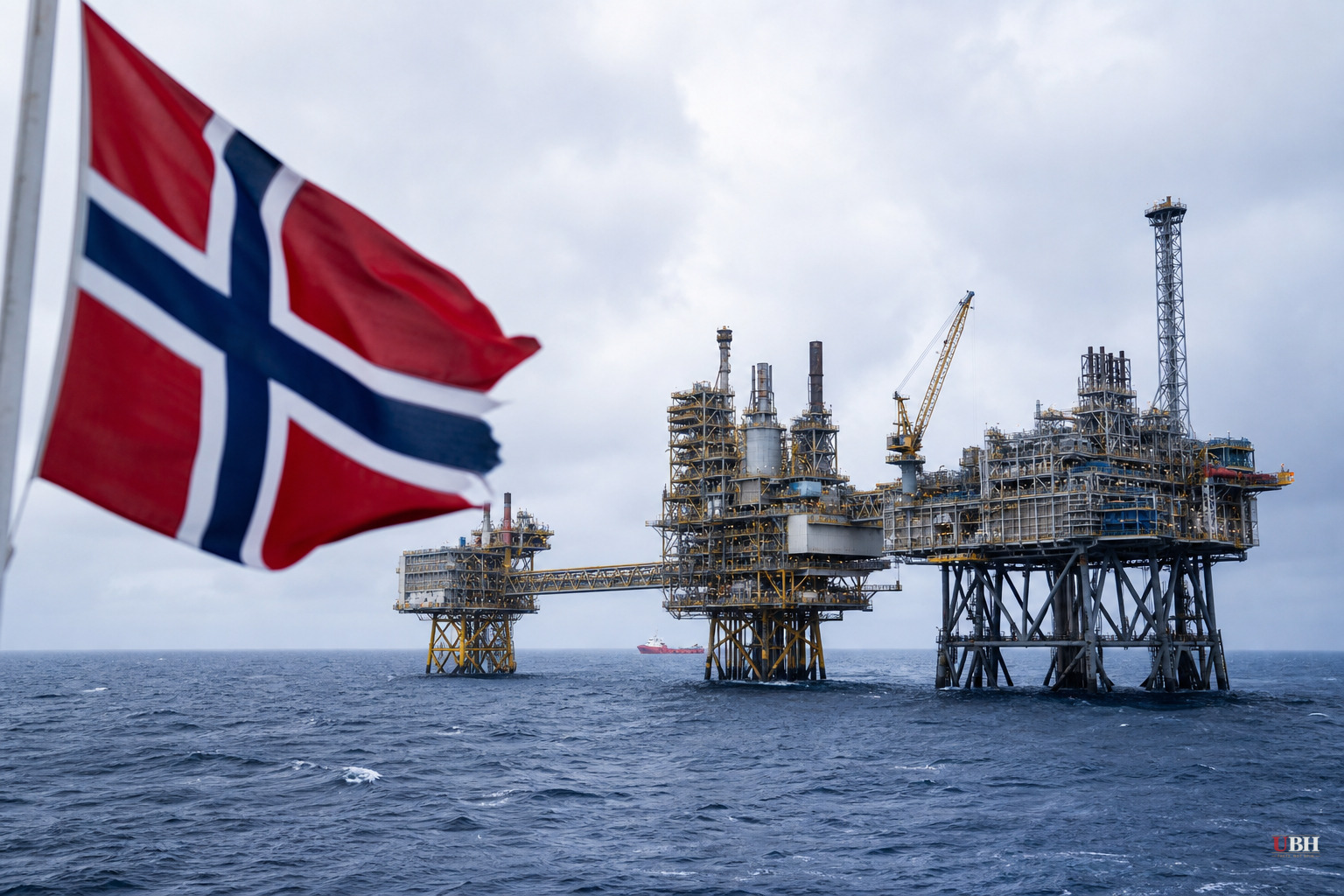
Norway just did it again. After beating forecasts in May, the Norwegian Offshore Directorate (SODIR) reported preliminary June figures showing crude output at 1.827 million barrels per day, comfortably above the agency's official forecast and a sharp jump from 1.677 million bpd in June of last year, according to OilPrice.com.
That's the second consecutive monthly beat. In May, crude production came in at 1.722 million bpd, which was 7.2% above the government's 1.607 million bpd forecast, even though it was down from April's 1.952 million bpd, according to Gulf News and Baird Maritime, both citing SODIR data. Baird Maritime, relying on Reuters reporting from Louise Rasmussen and Jagoda Darlak, put the May overshoot on combined oil-and-gas output at 2.9%.
The June rebound is being driven by fields coming back online after seasonal maintenance. Total liquids production, which includes natural gas liquids and condensate alongside crude, hit 2.022 million bpd in June, up roughly 113,000 bpd from May's 1.909 million bpd, per OilPrice.com. Natural gas sales also recovered, rising to 10.0 billion standard cubic meters in June from 9.4 billion in May.
Why this matters beyond the barrel count
Norway produces only about 2% of the world's crude. That sounds small until you remember it's Europe's largest natural gas supplier and a major crude exporter at a moment when Russian pipeline gas has been cut off and Middle East shipping remains jumpy.
Reuters, citing Kpler vessel-tracking data via OilPrice.com, reported that tanker traffic through the Strait of Hormuz is still running close to the depressed levels seen during the height of the recent US-Iran standoff. Brent crude has come back down from the spike it hit during the Hormuz crisis and has largely returned to pre-crisis levels, but the shipping data suggests the underlying nervousness in the Gulf hasn't fully cleared, even as prices have calmed.
Skeptics of the "Norway to the rescue" narrative should note that Norway supplies a small fraction of global crude, and a couple of good months following planned maintenance downtime isn't the same as a structural shift in global supply. Production naturally swings up after fields come back from turnarounds, which is exactly what happened in April, dipped in May, and rebounded in June. That's a maintenance cycle, not a new discovery or a policy win.
The reliability angle does hold up, though. The International Energy Agency has said, per Gulf News, that global oil markets remain highly sensitive to geopolitical risk even with softer demand expected this year. Elevated insurance costs and shipping disruptions in the Gulf are still adding a risk premium to crude prices, according to the IEA. A supplier that can restore output fast and beat its own government's forecasts twice in two months matters to buyers in Berlin, Amsterdam, and Warsaw who don't want to bet their winter heating bill on what happens in the Strait of Hormuz.
Where the coverage diverges
Gulf News' June 29 writeup, sourced to Jay Hilotin, leaned on the May numbers and framed Norway's performance as "defying expectations," which was accurate at the time but is now a month behind the more recent June figures showing an even bigger beat. Baird Maritime's piece, dated June 23, is the most granular on the raw NOD numbers, noting gas output of 303 million cubic meters per day actually missed its own forecast by 0.3% in May, a detail OilPrice.com's June writeup on the same month doesn't emphasize as clearly. So the "Norway beats forecasts across the board" framing understates that gas specifically undershot in May, even as crude overshot.
Year-to-date, Norway's petroleum sector is running about 4% ahead of the same period last year, according to Gulf News. Whether June's crude beat holds into July, when the North Sea moves further past this year's maintenance season, is the next number to watch. SODIR typically releases the following month's preliminary figures in the final week of the month, meaning July production data should surface around late August.
Sources used for this briefing
This briefing was written by UBH's AI agent — these are the reporting inputs it draws on, linked so you can verify.


