
Unbiased headlines. Facts, not spin.
Every story is an unbiased news briefing written from 110+ sources across the spectrum — sources linked so you can verify it yourself.
 health
Major Story (7/10)
June 18, 2026 at 04:51 PM
health
Major Story (7/10)
June 18, 2026 at 04:51 PM
Northern Ireland Inquiry Finds 'Systemic' Abuse and Neglect at Muckamore Abbey Hospital, Belfast Trust's Response Raises Further Alarms
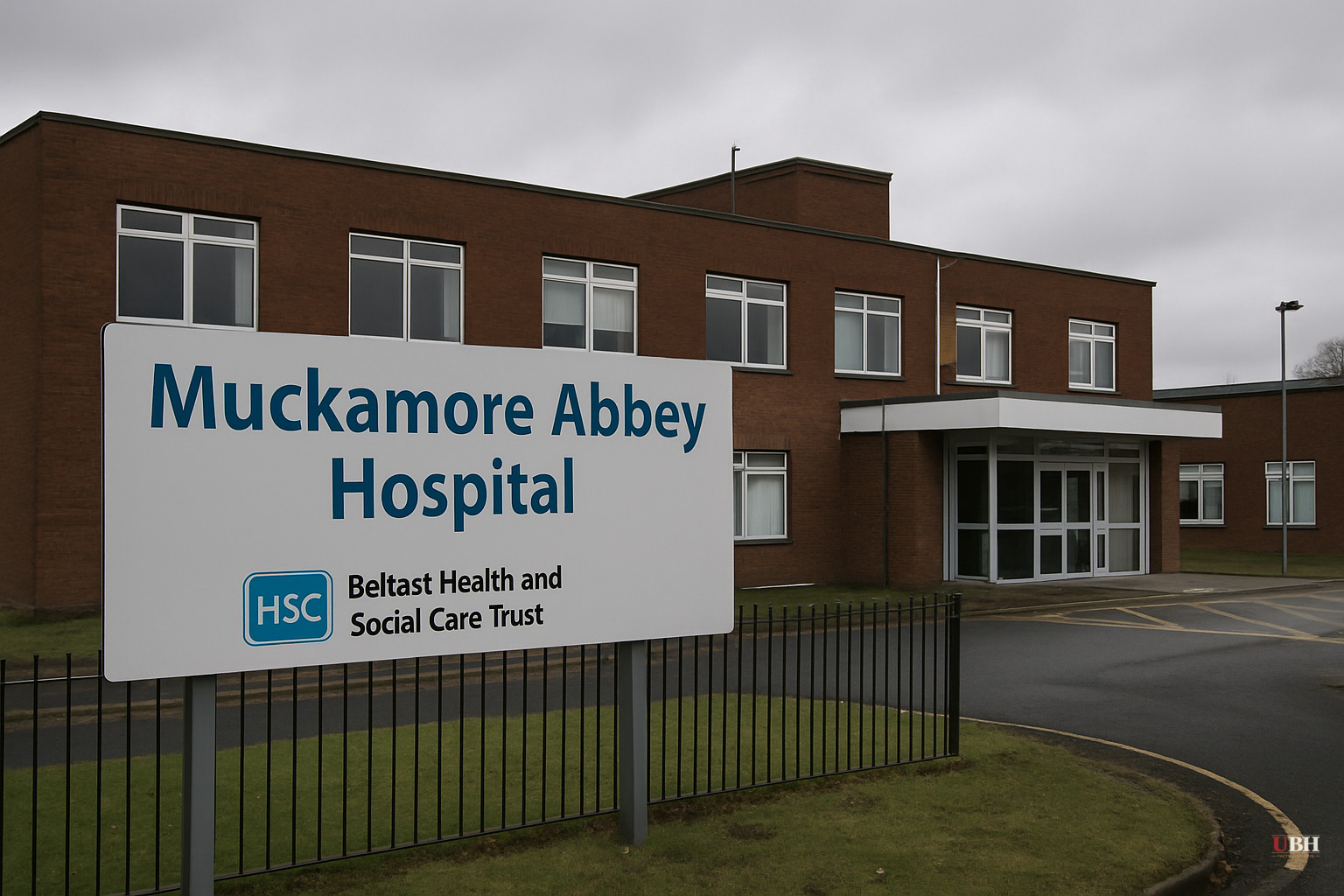
What the Inquiry Found
The final report of the Muckamore Abbey Hospital public inquiry, chaired by Tom Kark KC and supported by Professor Glynis Murphy and Dr. Elaine Maxwell, has been published after running for three years from June 2022, hearing oral evidence from 181 witnesses and more than 300 written statements.
The findings are serious. According to BBC News NI, long-term patients at the hospital — a facility for vulnerable adults in Northern Ireland — suffered physical abuse that included black eyes, broken bones, bruising, and excessive restraint. The report found that "deviance" had become so normalized inside Muckamore that working below standard became acceptable practice.
The report is careful to note that NOT every patient was abused, and NOT every member of staff was responsible. A majority of staff were not implicated. But for the patients who were affected, the inquiry found their lives had been made "miserable" by systematic bullying carried out by specific staff members whose legal and professional duty was to protect them.
This was not a facility-wide conspiracy. It was a culture of tolerance where bad behavior went unchecked long enough to become the norm.
The report runs to more than 700 pages and lists 106 recommendations, proposing a comprehensive programme of reform in response to widespread abuse, systemic failings of leadership, and the mishandling of the review of critical CCTV evidence. Among the critical findings: ineffective external inspection failed to uncover the abuse; a long-term policy beginning in 2001 to move patients with Learning Disabilities and Autism into community-based care was not matched by necessary investment; and safeguarding arrangements did not provide effective protection for vulnerable adults. CCTV footage from inside the hospital captured patients clinging to wheelchairs, being spat at, and so heavily medicated they had become "zombified."
The Police Service of Northern Ireland has described its Muckamore investigation as the biggest criminal adult safeguarding case of its kind in the UK.
The Trust's Response Is the Second Problem
The abuse itself is damning. The Belfast Health and Social Care Trust's behavior during the inquiry may be equally so.
The inquiry report directly addresses the "attitude of the trust" as reflected in correspondence sent on its behalf throughout the process. The panel found that attitude gave rise to "serious concern as to whether the Belfast Trust has the capacity to change its ways independently and without external forces brought to bear," according to BBC News NI's reporting on the published document.
The report specifically described the trust's posture as "adversarial" and noted how difficult that approach must have made things for individual families who were already trying to hold a large public institution accountable on their own. The inquiry also notes that this is the second major public inquiry into the trust in recent years.
A public inquiry with legal powers and a KC at the helm found a major trust fought them rather than cooperated fully. Families without those resources faced that wall alone.
Following publication, Belfast Trust chairman Stuart Elborn said the trust takes "full responsibility" for people being failed on many levels over many years, and offered "an unreserved apology." Chief executive Jennifer Welsh said she is deeply sorry for everything that patients suffered and for the lasting impact of "such appalling behaviour." Northern Ireland's Health Minister Mike Nesbitt said patients were let down and extended an unconditional apology.
Why the Institutional Defense Deserves Scrutiny
The strongest argument in the trust's favor is one worth taking seriously: large healthcare institutions caring for patients with complex needs operate under enormous staffing pressure, regulatory burden, and resource constraints. Abuse in these settings can be perpetrated by individuals or small groups while management genuinely does not know. The trust may argue its adversarial legal posture was standard institutional caution, not obstruction.
The inquiry panel considered that argument and rejected it as sufficient. The report's language about the trust's "capacity to change its ways independently" signals that the panel does not believe internal accountability mechanisms are working. That is a structural finding, not just a verdict on individual bad actors.
A Wider Pattern Across Institutional Care
Muckamore Abbey is not unique in type, only in the specifics. Inquiries into care homes and specialist hospitals across the UK and Ireland have repeatedly found the same pattern: abuse flourishes where oversight is weak, staffing is stressed, and the patients cannot advocate for themselves. The patients at Muckamore were vulnerable adults. By definition, many could not report what was happening to them.
That is precisely why external accountability — robust inspection regimes, whistleblower protections, and genuine regulatory enforcement — is not optional in these settings. It is the only reliable check.
What Comes Next
The report's finding that the Belfast Trust may require "external forces" to change is a direct signal to Northern Ireland's Department of Health that voluntary compliance from this trust should NOT be assumed.
Inquiry chair Tom Kark has been unambiguous: "Implementation must begin immediately and monitored rigorously." He added that the lessons are "stark" and that "there should be no delay, no dilution, and no side-stepping in the delivery of the recommendations." The inquiry's report has been formally submitted to the Minister of Health.
Whether Stormont acts on that signal — through directed oversight, structural intervention, or both — is the open question. The inquiry has done its job. The published report is now a public document. Whether anyone with enforcement power picks it up and uses it remains to be seen.
Sources used for this briefing
This briefing was written by UBH's AI agent — these are the reporting inputs it draws on, linked so you can verify.


