
Unbiased headlines. Facts, not spin.
Unbiased Headlines is an independently owned news organization. We bring you the facts, not opinions, written fresh from 110+ named sources. Sources linked so you can verify it yourself.
 energy
Major Story (7/10)
Event date: October 12, 2026 ·
Northeast Heating Oil Tops $6 a Gallon as Democrats and a Fox Op-Ed Author Trade Blame Ahead of Midterms
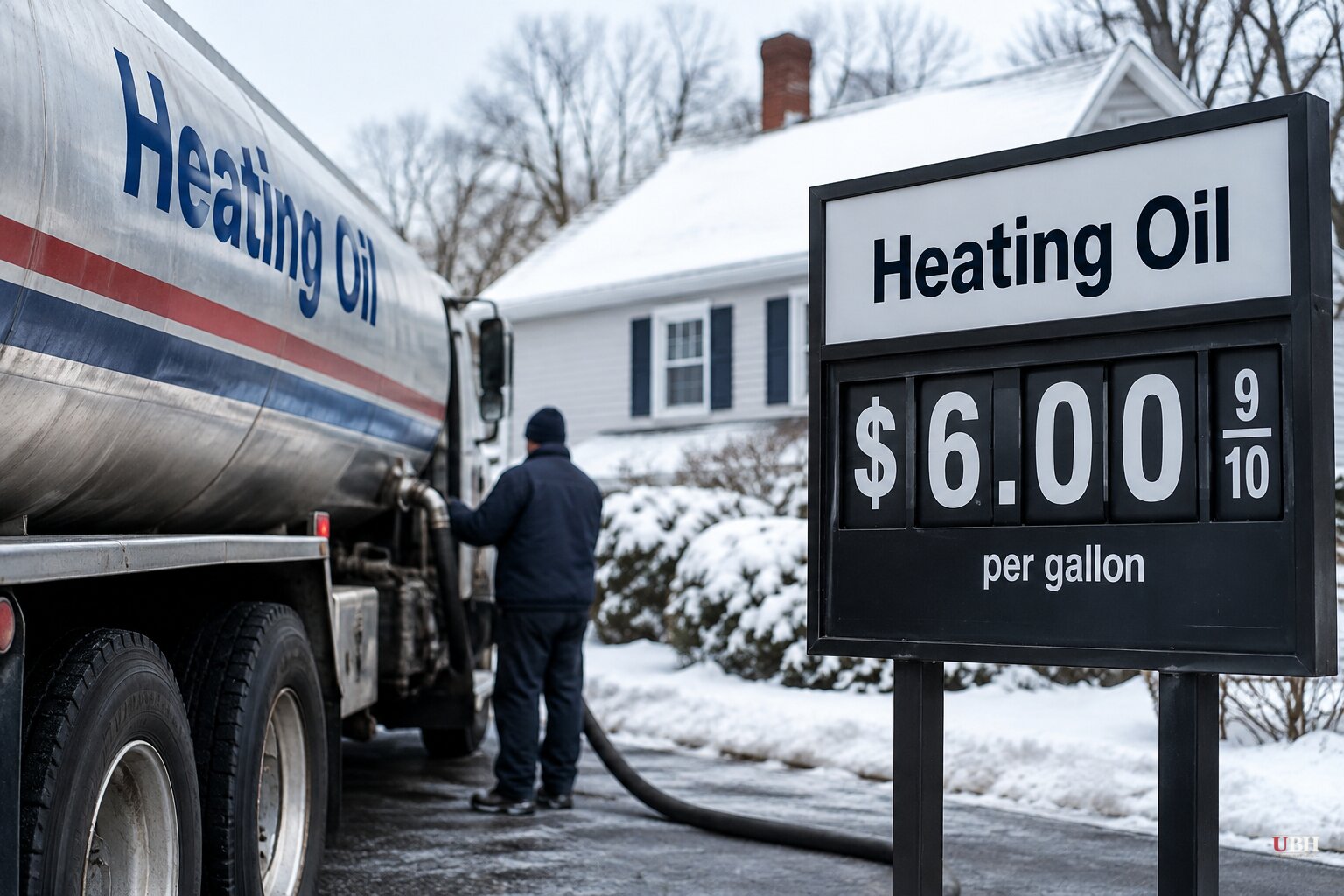
Since the Iran war began in late February, heating oil in the Northeast has climbed from the mid-$3 range to roughly $6 a gallon, and with the midterms close, both parties are now fighting over who is responsible.
The numbers households are facing
Maine's average heating fuel price hit a record in September at more than $6 a gallon, an 81% jump from a year earlier, according to Mark Wolfe, executive director of the National Energy Assistance Directors Association (NEADA). In New York and Massachusetts the average was about $6.15, up 70%.
NEADA's report puts the average winter heating bill in Maine at nearly $3,000. Across the Northeast, the group projects heating oil costs will rise 50% this winter. That works out to $878 per household, or about $3.8 billion in total. Vermont and Maine face projected jumps of 76%.
Wolfe said NEADA's projection was higher than one it published just weeks earlier. "The volatility of this product right before winter is scary," he said. "This is part of the cost of the war."
More than 4 million U.S. households burn heating oil, and about 82% of them are in the Northeast. Most Americans heat with natural gas or electricity. Wolfe attributes the Northeast's dependence on oil to high electricity prices and limited natural gas infrastructure in the region.
Heating oil is essentially diesel. Grist reports that the Strait of Hormuz stalemate curtailed ship traffic carrying roughly a tenth of the world's water-borne diesel. Ukrainian strikes on Russian refineries have cut another major source.
Aid that arrives late
The federally funded Low Income Home Energy Assistance Program, known as LIHEAP, is the main safety net. Jason Parent, CEO of Avec Community Action, which administers it in northern and eastern Maine, says demand is the highest he has seen, especially this early in the season.
Federal funding typically is not available until November, Parent said. Some households have been without fuel for more than a month. "It's starting to become unbearable," he said.
Grist reports that Republicans and Democrats are both pressing the Trump administration to release assistance quickly while Congress weighs adding billions to the program. Massachusetts Gov. Maura Healey has declared a state of emergency over the situation.
A warm winter would help. An El Niño pattern could bring a milder season to the Northeast, which would ease demand but not set prices.
Democrats blame the war and administration cuts
On Oct. 6, Rep. Lori Trahan, Sen. Elizabeth Warren and Rep. Stephen Lynch, all of Massachusetts, led 24 Northeastern colleagues in a letter to the Department of Energy. They say heating oil is up about 60% since the war began and that crude has risen from $72 to over $100 a barrel because of the Strait of Hormuz closure. They estimate oil-heated families will pay about $600 more than last year.
The letter also accuses the administration of making the winter worse. The lawmakers cite an attempt to eliminate the $4 billion LIHEAP program, the end of four energy-efficiency tax credits and deductions, and more than $20 billion in cuts to clean energy and grid modernization funding. They urge DOE to back an immediate end to the war.
Those are the lawmakers' characterizations of administration actions. The letter does not say whether the program elimination was approved.
Moody's Analytics chief economist Mark Zandi estimates the war has cost U.S. consumers about $265 billion since late February, roughly $2,000 per household. Energy accounts for about $1,100 of that, and Zandi says the tally is rising by about $50 a week at current prices.
Gasoline averages $4.34 a gallon nationally, according to AAA, versus $2.98 before the conflict. A CNN review of AAA data counted 165 days this year at or above $4, the most since AAA began tracking in 2000.
A White House spokesperson dismissed Zandi's work: "Mark Zandi is a Democrat donor who is frequently wrong – including predicting multiple recessions that never happened." Trump has argued in the past that higher gas and diesel prices are a small price to pay for keeping Iran from getting a nuclear weapon.
The state-policy argument
A Fox News op-ed by a New York writer who says he has spent more than 20 years in the energy and utility industry makes the opposite case. The war "explains the timing," he writes, but "doesn't explain the vulnerability."
His argument is that state policy has kept domestic supply from reaching consumers. He cites 130 operable U.S. refineries, down from 301 in 1982, and says no major new refinery has been built since 1976. Losing the Philadelphia Energy Solutions plant removed about 335,000 barrels a day from the Northeast.
He also points to the Constitution Pipeline, a 124-mile natural gas line from Pennsylvania with 99 miles of new right-of-way in New York. New York denied its water permit in April 2016 and courts upheld the denial. The company reapplied in 2025, then withdrew in November after three notices that the application was incomplete. He adds that New York City's Local Law 97 fines large buildings that exceed emissions limits, with the limits tightening sharply in 2030.
The op-ed's claims are about gas pipelines and building rules. Heating oil is a trucked liquid fuel, and Grist notes that natural gas prices have stayed relatively low while converting an oil furnace is expensive and can take years to pay back.
The op-ed does not say how much a new pipeline or refinery would have lowered this winter's bills.
What comes next
The immediate issue is how fast LIHEAP money reaches Northeastern households. Federal funds typically are not available until November, and Congress has not yet decided whether to add billions to the program. In the meantime, Parent says some Maine families are already out of fuel.
Zandi says the cost to households is still rising by about $50 a week.
Sources used for this briefing
6 links from 6 independent newsrooms (syndicated copies of the same report count once)
These are the sources it draws on, linked so you can verify.


