
Unbiased headlines. Facts, not spin.
Unbiased Headlines is an independently owned news organization. We bring you the facts, not opinions, written fresh from 110+ named sources. Sources linked so you can verify it yourself.
 energy
Major Story (7/10)
Event date: October 19, 2026 ·
Strong El Niño Linked to Panama Canal Restrictions, Sri Lankan Drought and Floods Along South America's Paraná
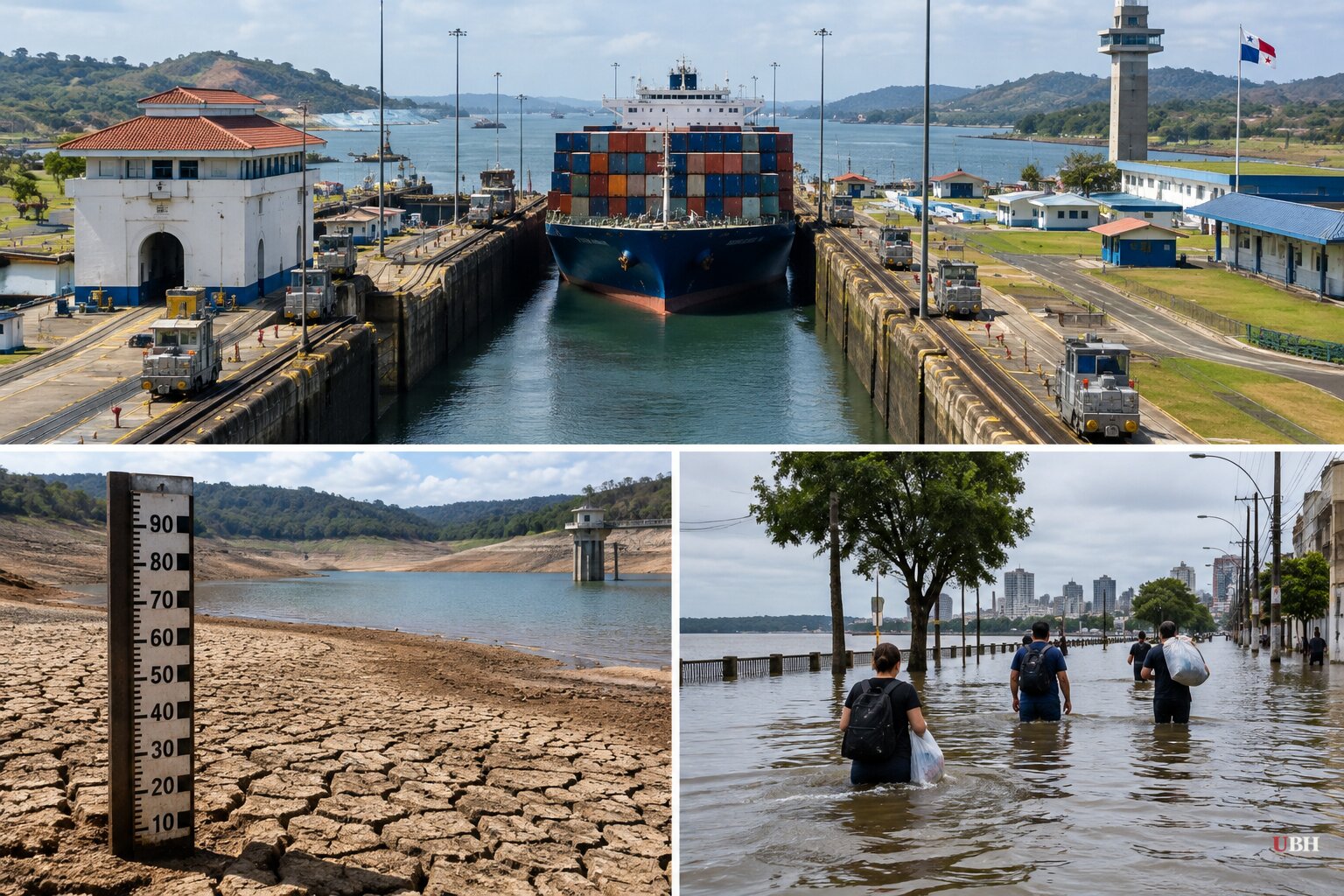
Since Panama declared a national state of emergency in August, a strong El Niño has spread its effects well beyond Central America. Drought, floods and reef damage are now documented on three continents, and the peak is still ahead.
The International Rescue Committee said on Oct. 15 that the event is expected to peak in late 2026 and early 2027. La Niña, its cooler counterpart, is due in 2027.
Panama: the canal and the water supply
Panama's emergency declaration stays in place until June 2027. Authorities forecast rainfall deficits of more than 50% in some regions through December.
In September, low water levels twice triggered limits on daily vessel transits through the canal. Some restrictions have since been lifted, but officials are braced for worse.
The stakes are large. About 5% of global maritime trade moves through the 50-mile waterway, which accounts for up to 7.7% of Panama's GDP. Gatún and Alajuela, the lakes that feed the locks, also supply drinking water to about 2 million people, nearly half the country.
Environment Minister Juan Navarro said the 2023 El Niño cost the canal almost a billion dollars in revenue. "For Panama, this is life or death," he said.
On the ground, the rainy season that normally runs May to December has largely failed in the Azuero region. Cattle rancher Robert Delgado said his milk production has halved. He is selling off high-value animals before the dry season arrives.
El Salvador and Sri Lanka
The Central American Dry Corridor is also hurting. In El Salvador, August temperatures ran 4.3°C above normal. Rancher Antonio Aguilar, 54, pointed to an emaciated cow at a livestock market in Sensuntepeque. "Imagine how thin this little animal is! Why? Because of a lack of grass," he said.
In Sri Lanka, the southwest monsoon normally delivers up to 30% of annual rainfall between May and September. This year there was little rain through late September. The country's 74 reservoirs have hovered around one-third full, and water is rationed in many areas.
In Medirigiriya, rice farmer Samantha Pushpakumara said that without water, "we will have nothing left to live on." Authorities are trucking water to wildlife reserves to refill watering holes.
Floods on the other side of the climate ledger
El Niño does not mean drought everywhere. Rivers swollen by heavy rain linked to it have flooded parts of Argentina, Paraguay and Uruguay.
In Argentina's Corrientes province, the Paraná reached 15.4 feet at Ituzaingó, prompting evacuations. In Ayolas, Paraguay, Mayor Carlos Duarte said more than 2,000 people had fled their homes and the river was at its highest level there in more than four decades.
Park authorities closed the walkway to the Devil's Throat at Iguazú Falls because of the high river. In Uruguay, the Salto Grande dam opened its gates to relieve the Uruguay River, flooding parts of cities downstream. Uruguayan officials warned the northwest will get its heaviest rain of the year in coming months.
How much is climate change, how much is El Niño
El Niño is a natural cycle, and Euronews notes that it typically adds about 0.2°C to global average temperatures. That is a fraction of the warming from human activity.
Navarro argues the link to climate change is direct. "Climate change has undoubtedly increased the frequency and also the gravity of El Niño," he said, adding that scientists point to this one being the worst in history.
Sri Lanka's own weather scientists are more careful. "We cannot say exactly whether it's due to climate change, since we need more evidence," said Gayana Krishanthi Hendawitharana of the country's weather department. Climate experts told the Associated Press the lack of rain is likely due in part to El Niño combined with warming driven partly by human-caused climate change.
Reefs, forests and food
David Obura, chair of the UN's expert nature panel, said the El Niño adds "a terrifying level of additional risk" for coral reefs. He led a reassessment published in Nature that found reef-building species have deteriorated sharply since the last global census in 2008, with 44% threatened with extinction.
The Forest Declaration Assessment found global deforestation slowed last year. It says those gains are unlikely to last as conditions worsen in Central Africa and El Niño raises fire risk across the tropics.
The International Rescue Committee, which is soliciting donations as part of the same appeal, estimates disrupted harvests could push another 49 million people into acute food insecurity by the end of 2027. That would bring the total to 274 million people in 45 countries. The group also says humanitarian food and nutrition funding has fallen nearly 60% since 2022. It cites conflict disrupting shipping through waterways such as the Strait of Hormuz, which raises the cost of moving food, fuel and fertilizer.
The IRC is scaling up cash aid ahead of forecast flooding in Somalia and drought in El Salvador. Floods have already hit Mogadishu and damaged health facilities.
What comes next
Panama's rainfall deficits are forecast to continue through December. Canal authorities have not said whether September's transit limits will return as the dry season begins. If they do, the cost will land on both a national economy and the 5% of world trade that depends on the waterway.
Sources used for this briefing
7 links from 7 independent newsrooms (syndicated copies of the same report count once)
These are the sources it draws on, linked so you can verify.


