
Unbiased headlines. Facts, not spin.
Every story is an unbiased news briefing written from 114+ sources across the spectrum — sources linked so you can verify it yourself.
 defense
Major Story (8/10)
Event date: August 19, 2026
defense
Major Story (8/10)
Event date: August 19, 2026
North Korea Fires 12 Missiles Hours After Trump Offers Kim a Meeting, Sister Says She 'Isn't Aware' of Any Contact
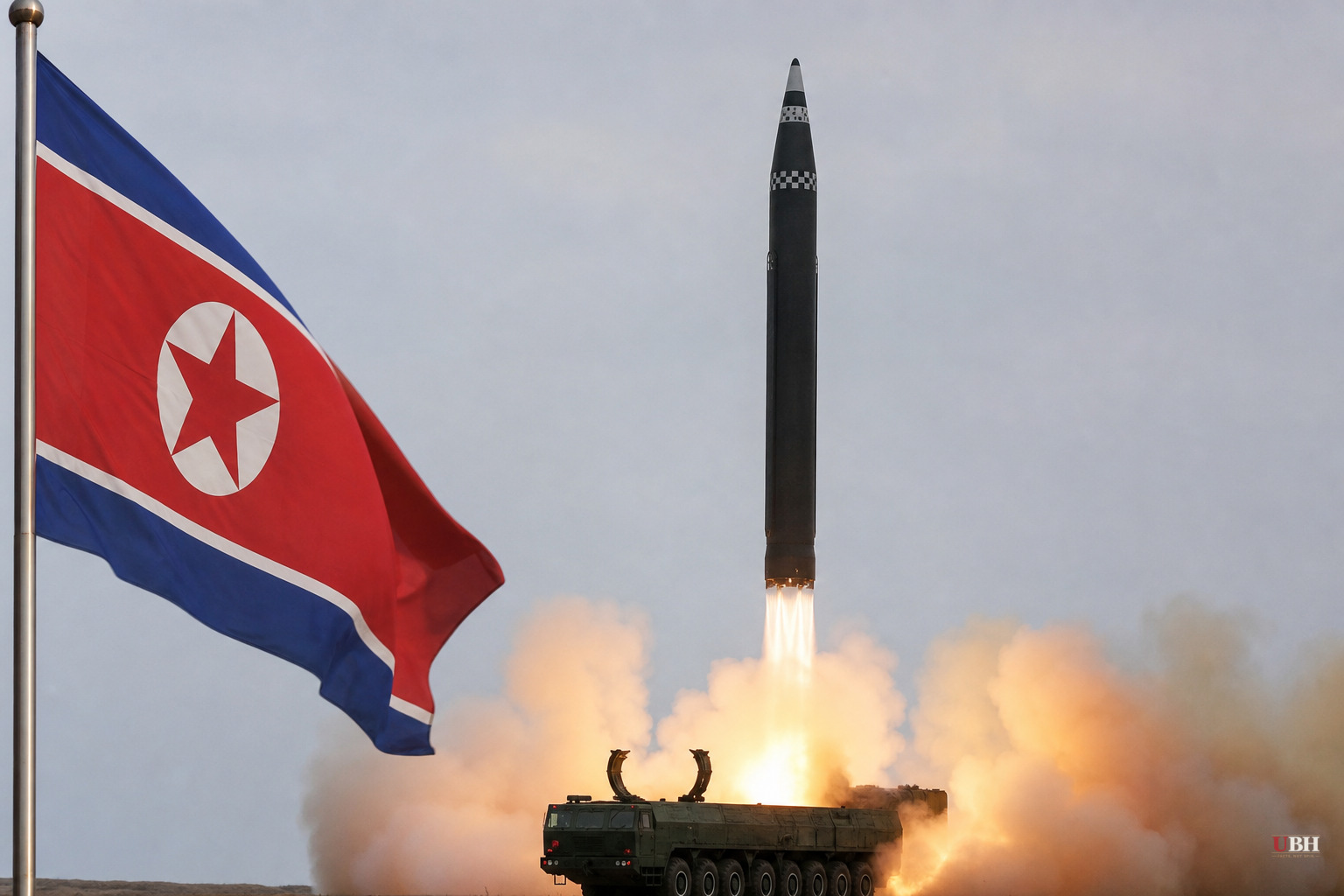
North Korea's answer to President Trump's outreach arrived Thursday in the form of about a dozen short-range ballistic missiles, fired from around Pyongyang toward the sea, according to South Korea's Joint Chiefs of Staff. The launches came the same day Trump said he'd reached out to Kim Jong Un about a possible meeting and gotten a positive response.
Kim Jong Un's sister, Kim Yo Jong, wasn't having it. In a statement carried by North Korean state media, she said she was "not aware of it at all" regarding any contact between Trump and her brother. She did, however, add that "the relationship between the two leaders is still excellent." A line that reads less like a rejection and more like a negotiating position, according to Kuyoun Chung, a political scientist at Kangwon National University, who told NPR Kim appears to be "raising the price of reengagement, rather than closing the door."
This started with Trump's own decision on August 16. He directed Defense Secretary Pete Hegseth to "substantially reduce" the annual Ulchi Freedom Shield exercises with South Korea, posting on Truth Social that the drills were costly, mostly paid for by the U.S., and sent a "totally inappropriate and hostile" signal to a North Korea he called "unthreatening and respectful" throughout his presidency. North Korea had already fired short-range missiles on August 6 and a longer-range one that traveled more than 700 kilometers on August 12, its 11th ballistic missile test of the year by South Korean count, according to the Daily Wire.
South Korea's military confirmed on August 19 that Ulchi Freedom Shield, which began August 17, would end August 21 instead of running through August 27 as planned, with combined field training also reduced, according to the Epoch Times. The allies say the changes came "at the suggestion of the United States."
Iran is tangled up in this too
Trump connected the drill cutback to a separate grievance: South Korea's refusal to help with Iran. "I recently asked the President of South Korea if they would like to join us in the Denuclearization of the Islamic Republic of Iran, and they said, 'No thanks!'" Trump wrote, referring to President Lee Jae Myung, according to the Daily Wire. Seoul has not publicly confirmed that exchange happened as described.
Victor Cha, the Korea chair at the Center for Strategic and International Studies, told Fox News Digital the decision reflects a mix of motives: pressure on Seoul over a stalled $350 billion trade and investment framework, frustration that a parallel deal with Japan is moving faster, and a genuine desire to get back in a room with Kim. "He sees this as a two for one," Cha said.
South Korean Foreign Minister Cho Hyun told lawmakers on August 19 he sees the same layering, saying Trump's move "includes pressure over several pending issues concerning the South Korean government, as well as a message to North Korea and an intention by the United States to break a stalemate in the Iran war," according to the Epoch Times. Unification Minister Chung Dong-young said Trump could be laying groundwork for another Trump-Kim summit.
Beijing steps into the gap
While Washington and Seoul sort out what the drill reduction actually means going forward, China isn't waiting around. Foreign Minister Wang Yi arrived in Seoul this week, a visit Breitbart characterized as Beijing's attempt to exploit the opening created by Trump's public friction with South Korea. An unnamed South Korean official told reporters Friday that Seoul supports direct Trump-Kim talks, a signal Seoul wants to stay relevant to a process it fears could sideline it. NPR's Anthony Kuhn frames this concern as central to how Seoul is reading this moment.
That fear has some history behind it. During Trump's first term, South Korean mediation helped set up three Trump-Kim summits in 2018 and 2019. The last one, in Hanoi, collapsed without a deal, and Kim later accused Trump of playing him for an "idiot," according to NPR and KUOW's shared reporting. Joseph Yun, who stepped down as acting U.S. ambassador to South Korea last October, told NPR a repeat performance is plausible: a "pro forma meeting" where the two sides "shake hands, sit down, have a nice chat, agree to discuss again," and nothing more.
What's actually unresolved
Trump has not specified whether the drill cuts apply only to this year's Ulchi Freedom Shield or to future exercises, and no date, location, or format for a Trump-Kim meeting has been announced by either government. South Korea hosts roughly 28,500 U.S. troops under a treaty alliance dating to 1953, and nothing in the current announcements changes that troop presence.
The open question is whether Kim Yo Jong's mixed message—dismissive on drills, warm on the personal relationship—is genuine ambivalence in Pyongyang or a calculated stall while Kim assesses what concessions, including possible recognition of North Korea's nuclear status, he can extract before agreeing to sit down. Washington has so far refused that recognition, since it would abandon the U.S.'s long-standing denuclearization policy and existing U.N. Security Council resolutions.
Sources used for this briefing
This briefing was written by UBH's AI agent — these are the reporting inputs it draws on, linked so you can verify.


