
Unbiased headlines. Facts, not spin.
Unbiased Headlines is an independently owned news organization. We bring you the facts, not opinions, written fresh from 110+ named sources. Sources linked so you can verify it yourself.
 defense
Major Story (7/10)
Ukrainian Officials Say Hegseth Has Yet to Approve 60 Patriot Interceptors Allies Already Paid For
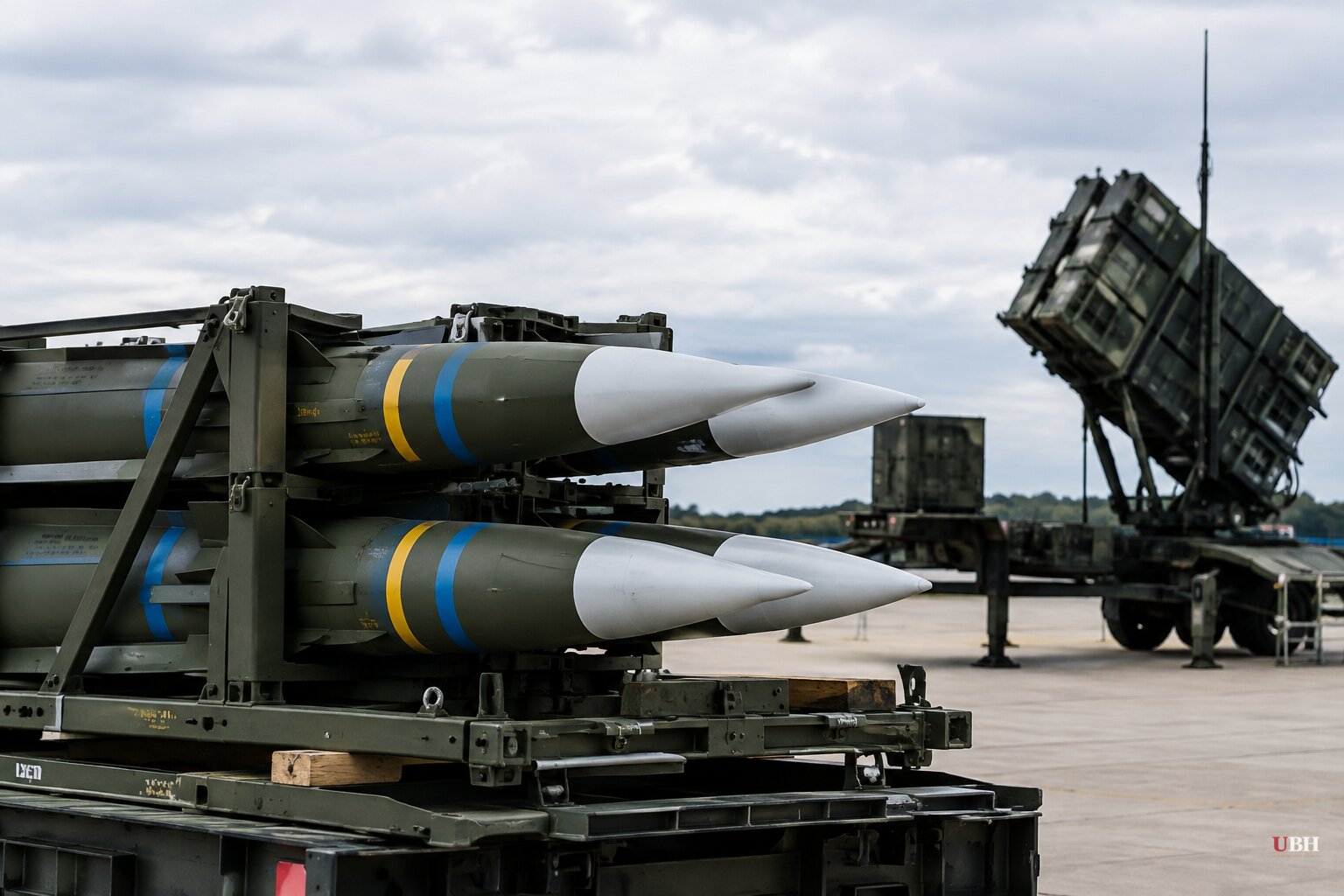
Since Zelenskyy's public appeal on Nov. 22 for Washington to release Patriot missiles that allies have already bought, the picture of what is stuck has gotten much more specific. The Financial Times reported on Nov. 24, citing two Ukrainian officials and another person familiar with the matter, that Defense Secretary Pete Hegseth has not signed off on roughly 60 interceptors allocated to Ukraine.
The Pentagon has not confirmed that account.
What is being held
The hold covers about 40 PAC-3 interceptors and around 20 older PAC-2 missiles, per the FT's sources. PAC-3 is the hit-to-kill version and Ukraine's best option against Russian ballistic missiles.
The PAC-3 deliveries were set for four batches: 8 missiles in September, 10 in October, 10 in November and 12 in December. The sources told the FT that none of the four has been approved for dispatch. That means three of the four scheduled delivery months have already passed or are ending with nothing cleared.
One Ukrainian official said the roughly 20 PAC-2 missiles are also waiting on Pentagon approval.
Some of the missiles sit in European stockpiles. Because Patriot interceptors are American-made, Washington has to authorize any export or re-export, even when the buyer is a European government and the weapons are already on European soil. The money for these missiles comes through NATO's Prioritized Ukraine Requirements List, known as PURL, where allies finance purchases of US weapons for Ukraine. Funding and transfer approval are separate steps, and the FT's sources say the second one is where this is stuck.
The Pentagon's response
A Pentagon spokesperson told the FT there has been "no change" in the department's policy on supporting Ukraine, and declined to comment on the specific missiles. The spokesperson said the department is "pursuing several parallel lines of effort to accelerate transatlantic industrial cooperation on Patriot air and missile defense systems with European partners and Ukraine, and continues that work today."
That statement does not say whether the 60 interceptors have been approved, and it gives no date for a decision.
There is a partial counterpoint in the record. Zelenskyy said on Oct. 26 that Ukraine had waited nearly a month for Hegseth's signature on Patriot and NASAMS missiles. The FT's sources say the NASAMS missiles have since been cleared, and one official said they are "on the way." Radio Free Europe/Radio Liberty reported on Oct. 29, citing an anonymous NATO source, that older PAC-2 deliveries under PURL were still arriving while PAC-3 shipments were delayed. That source said the PAC-3 question was being handled at a high political level.
Production license also stalled
Ukrainian officials also told the FT that a separate effort to let Ukraine build its own Patriot interceptors has stalled. Trump told Zelenskyy in July that he would allow Ukrainian production of US-designed munitions. According to the officials, Hegseth approved the framework agreement, but it then went to Michael Duffey, the Pentagon's acquisition chief, for further review.
Zelenskyy has said Ukraine's anti-ballistic missile program, known as Freyja, would produce missiles before Ukraine receives a Patriot production license.
Why Kyiv is alarmed
Zelenskyy said in October that the US delivered about a dozen Patriot missiles a month to Ukraine this year. With launchers short of interceptors, nearly every Russian ballistic missile fired at Ukraine is now reaching its target, officials told the FT.
On the evening of Nov. 20, two ballistic missiles hit a restaurant parking lot in the center of Kryvyi Rih, Zelenskyy's hometown.
In his Nov. 23 evening address, Zelenskyy said Ukrainian intelligence has information that Russia is preparing new strikes. "Missiles for Patriots are needed here in Ukraine, and we very much expect the necessary decisions from America," he said. He urged the US and other countries able to supply anti-ballistic defenses to act.
Some officials in Kyiv, according to the FT's account, read the hold as part of a wider US push that could pressure Ukraine to concede ground to Russia in a deal. No named official has made that claim on the record, and the Pentagon has offered no reason for the delay. Its only stated position is that policy has not changed.
What comes next
Ukraine says it is working several channels at once: talks with Washington, with European governments, and with other countries holding PAC-2 and PAC-3 stocks. Kyiv has proposed that allies hand over missiles from existing stockpiles and have those arsenals refilled later as new production contracts are delivered.
The open question is whether Hegseth clears any of the four PAC-3 batches before the December shipment of 12 comes due. As of Nov. 24, the FT's sources say none has been cleared, and the Pentagon has not said when a decision will come.
The cost of leaving it open is already visible in the strikes on Ukrainian cities this month.
Sources used for this briefing
7 links from 7 independent newsrooms (syndicated copies of the same report count once)
These are the sources it draws on, linked so you can verify.


