
Unbiased headlines. Facts, not spin.
Unbiased Headlines is an independently owned news organization. We bring you the facts, not opinions, written fresh from 110+ named sources. Sources linked so you can verify it yourself.
 defense
Breaking / Critical (9/10)
IRGC Says 3 Tankers Hit Mines in Hormuz Under US Escort; CENTCOM Has Not Responded
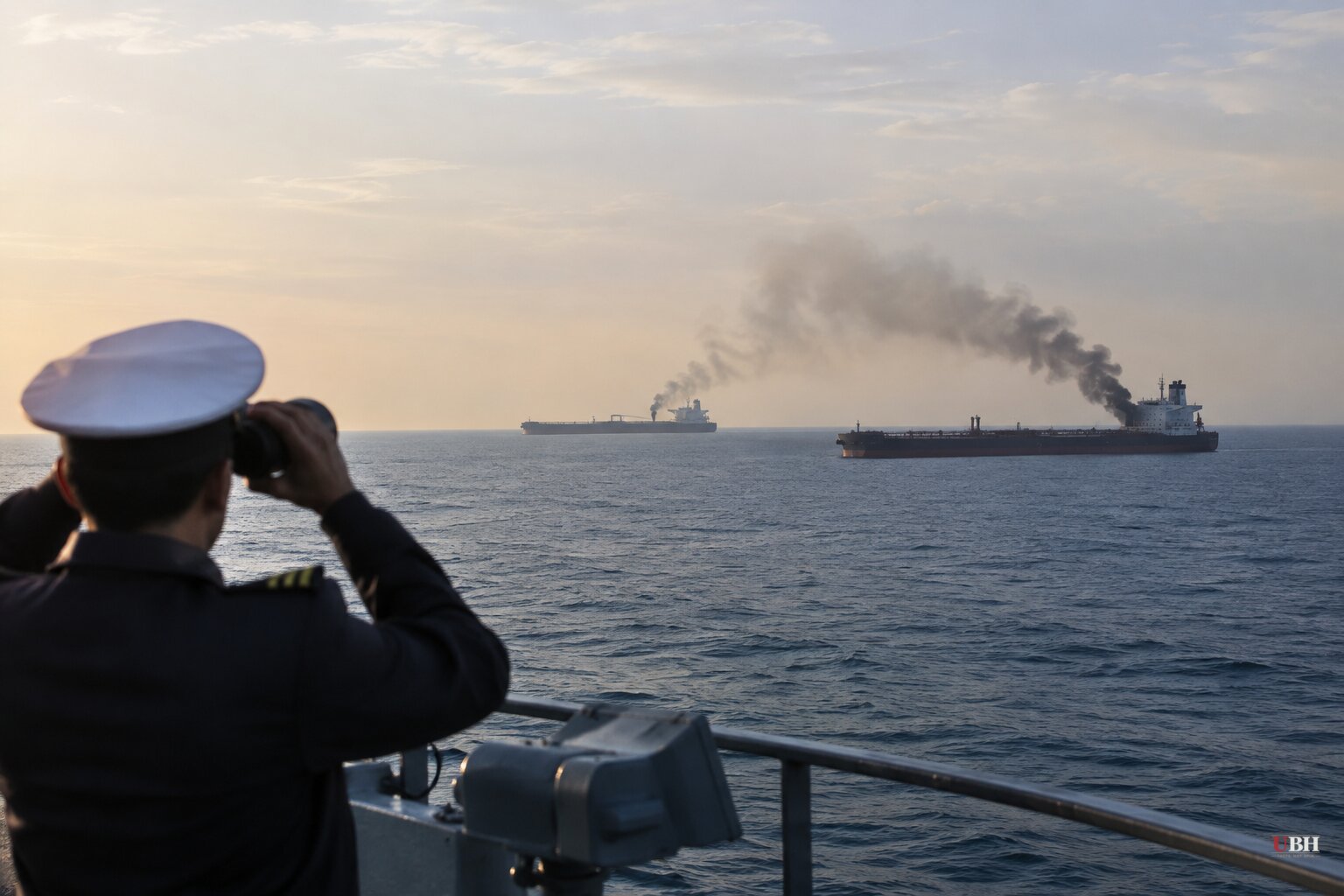
Since the US and Israel launched the war on Iran on Feb. 28, the Strait of Hormuz has been the most contested stretch of water on earth. The latest flashpoint came late Monday, Nov. 23.
The IRGC Navy said three oil tankers it called "violating" vessels suffered "severe explosions and fires after striking naval mines" over the preceding hours. The statement was carried by Iranian state media IRNA.
The IRGC gave no vessel names, flags, owners or crew information. It did not say whether anyone was hurt.
What Iran says happened
The IRGC Navy said two of the tankers were hit in the eastern part of the strait. Iran International's account of the same statement put one tanker near the southern coast and two to the east. The IRGC said all three ships caught fire.
The statement claimed the tankers were under extensive US military air cover and escort. It said that cover "failed to prevent the incidents from occurring." The IRGC Navy said it would release footage of the explosions and fires.
It also issued a warning to the industry. "The Strait of Hormuz is not a place for testing unauthorized routes and ignoring maritime warnings," the statement said. US military escort, it said, "will not serve as a substitute" for complying with directives from the IRGC Navy's Traffic Control Center.
Vessels that ignore those directives will be treated as "cooperating with invading forces," the IRGC said, and "dealt with decisively."
The statement did not say who laid the mines. US Central Command has not responded to the claims.
A pattern of claims and a rising count
This is not the first such claim this month. Last week, Iran's army said three tankers that had switched off their navigation systems struck mines in the eastern strait. The army said the ships were left unable to sail. That claim was also unverified.
Separately, Abu Dhabi National Oil Company said one of its vessels was attacked while transiting the strait. Eleven crew members were injured and one was missing, the company said. ADNOC did not describe the nature of the attack.
The broader numbers back up the trend. The Royal Navy-affiliated United Kingdom Maritime Trade Operations Centre (UKMTO) logged more than 30 reported attacks in the Hormuz, Persian Gulf and Gulf of Oman area in October. That was the first month above 30 since the war began. Before October, the average was about 10 a month.
As of Sunday, Nov. 22, at least 22 attacks had been reported for November, the second-highest monthly figure of the war, according to CNN's analysis of UKMTO data. The International Maritime Organization's figures also point to October as the peak month for confirmed incidents this year.
UKMTO says those figures understate the problem. It counts only incidents verified through primary sources. In a mid-October report it said it was "struggling to accurately report true number of attacks with majority of vessels attacked refusing to report." Many ships are believed to have switched off tracking devices.
Iran's military has claimed near-daily incidents involving commercial ships. It often attributes them to sea mines rather than drones or missiles.
The timeline behind the strait
Iran began trying to halt traffic after the opening US-Israeli strikes. The US responded with a blockade of Iranian ports. Tehran and Washington signed a memorandum of understanding on June 18, but implementation stalled over freedom of navigation through the strait. Iran announced on July 12 that it had closed the waterway after the US resumed strikes.
Tehran says only vessels using its designated routes, with its permission, may transit. The US position, as reflected in the stalled memorandum dispute, is that navigation through the strait should be free. Washington has not accepted the IRGC's traffic control authority.
Gulf producers have found ways to move ships through anyway. Commercial traffic remains below the 2025 baseline, when about a fifth of the world's oil passed through the channel.
Oil prices are falling
The escalation comes while crude prices drop. The International Energy Agency attributes the decline to a recovery in Gulf exports. Prices also fell after the US midterm results, as worries about fresh US military action eased.
"Markets appear to be increasingly assuming that a return to full-scale war is unlikely and that oil supplies will gradually recover," one analyst quoted by CNN said.
Experts cited by CNN say Iran is losing leverage over the waterway as prices fall and its own crude revenue comes under strain. Those experts say Tehran could escalate further to try to force concessions from Washington. That is their assessment, not an established fact. The US sanctions Treasury announced Monday against Iranian shadow-banking networks add to the financial pressure.
What to watch
The open question is whether the IRGC's footage materializes and whether it matches the claim. CENTCOM's silence leaves the location, the ships and any casualties unconfirmed. If US-escorted tankers were in fact hit, that would test Washington's assurances to shippers. If they were not, the IRGC statement still serves as a public warning to any crew considering a route Tehran has not approved.
Sources used for this briefing
7 links from 7 independent newsrooms (syndicated copies of the same report count once)
These are the sources it draws on, linked so you can verify.


