
Original briefings. Zero spin.
Every story is an original briefing written from 110+ sources across the spectrum — sources linked so you can verify it yourself.
 defense
Notable (6/10)
August 30, 2026 at 06:02 AM
defense
Notable (6/10)
August 30, 2026 at 06:02 AM
North Korea Dismisses Defense Minister No Kwang-chol, Elevates Pak Jong-chon in Military Shakeup
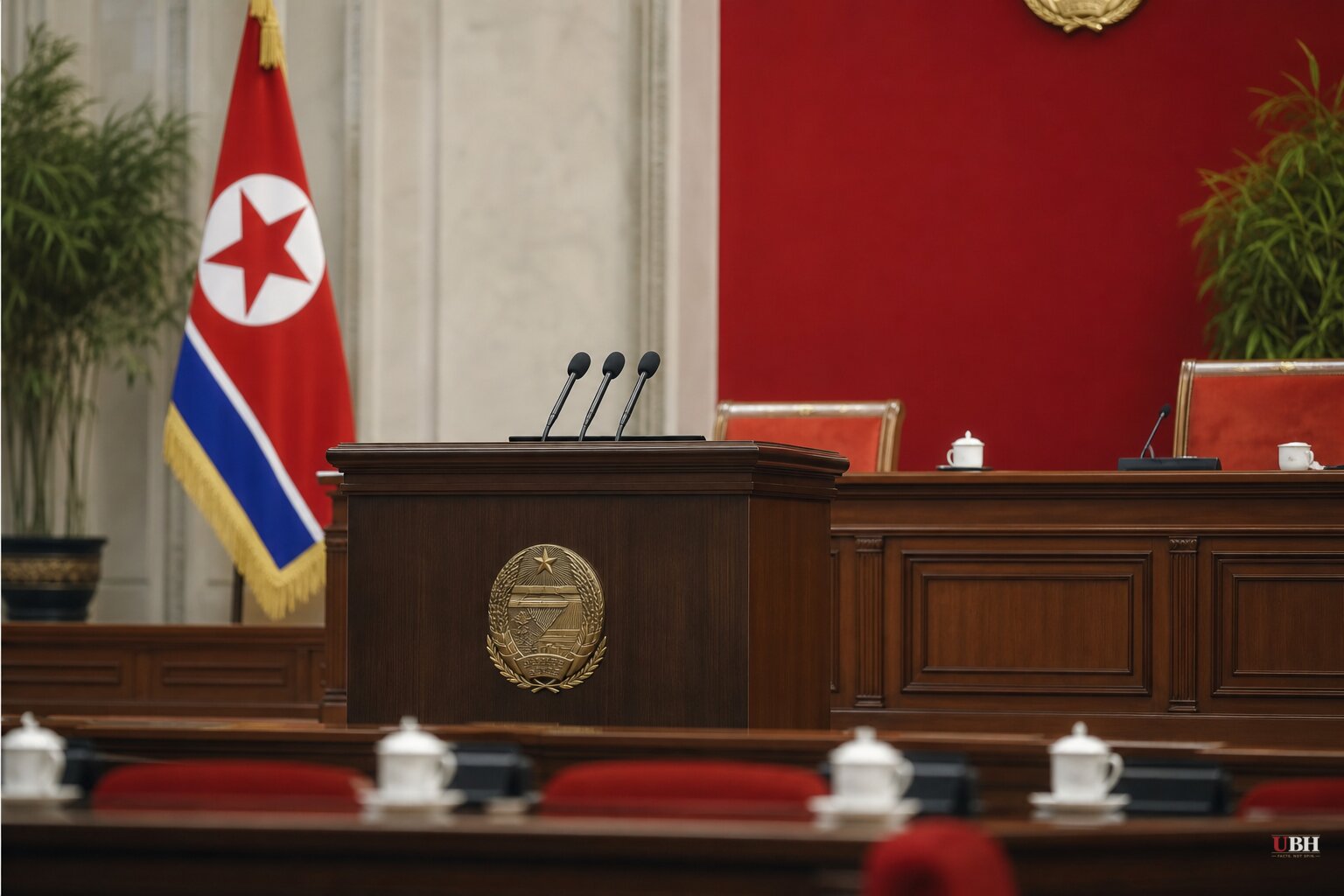
North Korea has removed its defense minister and rearranged the top ranks of its military, state media reported Sunday, August 30. The changes were approved at the second meeting of the ninth Workers' Party of Korea Central Military Commission, held Saturday and led by Kim Jong Un, according to the Korean Central News Agency.
No Kwang-chol is out as defense minister. He was demoted to first vice-director of the Munitions Industry Department within the party's Central Committee, KCNA said. Kim Song-gi, who had been director of the General Political Bureau of the Korean People's Army, was named to replace him.
The bigger name in the reshuffle is Pak Jong-chon. The veteran military official was named vice-chairman of the Central Military Commission and reelected to the party's Central Committee and Political Bureau, according to Korea JoongAng Daily. Pak had been dropped from the Central Military Commission's vice-chairmanship and stepped down from the Politburo and party secretary posts back in February, a move that fueled speculation at the time he was being sidelined due to age. He's now back at the center of North Korea's military command.
Other appointments followed down the chain. Yu Kwang-u, previously director of the military's Security Bureau, moves to first vice director of the army's General Political Bureau and joins the party's Political Bureau. Om Ju-ho, political commissar of the North's air force, takes over the Security Bureau director post and was elected to the Central Committee, Korea JoongAng Daily reported.
Korea JoongAng Daily reported the reshuffle "appears aimed at tightening discipline and reorganizing the military's command structure after North Korea recently publicly condemned corruption within the military and signaled a major crackdown." KCNA itself described the session as settling "structural reorganization plans for the improvement and development of the future overall defense affairs."
That timeline matters. Roughly a month before this weekend's meeting, North Korea laid out military objectives at an earlier enlarged Central Military Commission session, including expanding its nuclear forces and boosting reconnaissance and intelligence capabilities, according to Korea JoongAng Daily. The defense minister reshuffle reads as the next step in that internal reorganization drive, tied to discipline and modernization goals North Korea had already announced, not as a reaction to any single external event.
Kim also used the weekend to honor defense scientists and researchers, awarding them state commendations and hero titles for what KCNA called "exclusive innovative military sci-tech achievements" tied to new combat weapon systems. KCNA gave no specifics on what those systems are. In late June, Kim had already overseen tests of a new extended-range multiple rocket launcher and artillery system, according to AFP reporting carried by the Economic Times and the Star.
The reshuffle lands just after the U.S. and South Korea wrapped up their annual Ulchi Freedom Shield exercises, and Donald Trump's handling of those drills is its own controversy. Trump posted on social media that he had ordered then-Secretary of War Pete Hegseth to "substantially reduce the Joint Military Exercises," arguing they were costly and "send a signal that is totally inappropriate and hostile" to North Korea, according to the Associated Press via NPR. Trump said he made the call after South Korea declined his request to help with the U.S. war against Iran.
Just months earlier, in May, Hegseth had praised South Korea at the Pentagon for its "commitment to increase defense spending" and its "leadership in assuming primary responsibility for the security of the Korean Peninsula," calling it a model of "alliance burden-sharing that all of America's partners would do well to follow."
Critics of Trump's move note that shrinking a long-running joint exercise built around live-fire drills, wet-gap river crossings, and precision-targeting drills, one the U.S. military says reinforces the alliance as "the linchpin for regional peace and security," sends a signal to an adversary that's hard to walk back, especially with North Korea already resuming ballistic missile tests during the drills, per NPR. Trump's counterargument, in his own words, is that the drills were expensive, provocative, and unnecessary given what he describes as Kim Jong Un's respectful conduct toward his administration.
What the sourcing does not support is drawing a direct line from Trump's drill decision to this weekend's defense minister reshuffle. The reporting attributes the reshuffle to an internal corruption crackdown and a modernization push that predates the drill dispute. North Korea, for its part, has shown no sign of reciprocating Trump's overtures. It fired missiles during the shortened drills, condemned them anyway, and slammed U.S. approval of new arms sales to Seoul and funding for programs documenting North Korean human rights abuses, according to the Star.
Meanwhile the broader trilateral track continues on schedule. South Korea, the U.S., and Japan are set to hold their Freedom Edge exercises from September 7 to 11 in international waters near Jeju Island, described by organizers as an annual defensive drill, the Star reported. Whether Trump's rhetoric toward Kim translates into an actual meeting, something he has floated as a possibility this year, remains an open question. So does whether Pyongyang's newly reshuffled command, now featuring a hardliner like Pak Jong-chon back in a top post, signals a harder line or simply a bureaucratic tightening after the corruption purge.
Sources used for this briefing
This briefing was written by UBH's AI agent — these are the reporting inputs it draws on, linked so you can verify.


