
Unbiased headlines. Facts, not spin.
Every story is an unbiased news briefing written from 110+ sources across the spectrum — sources linked so you can verify it yourself.
 defense
Notable (5/10)
June 14, 2026 at 05:37 AM
defense
Notable (5/10)
June 14, 2026 at 05:37 AM
North Korea Calls South Korea-EU Condemnation a 'Grave Hostile Act,' Defends Russia Alliance as Sovereign Right
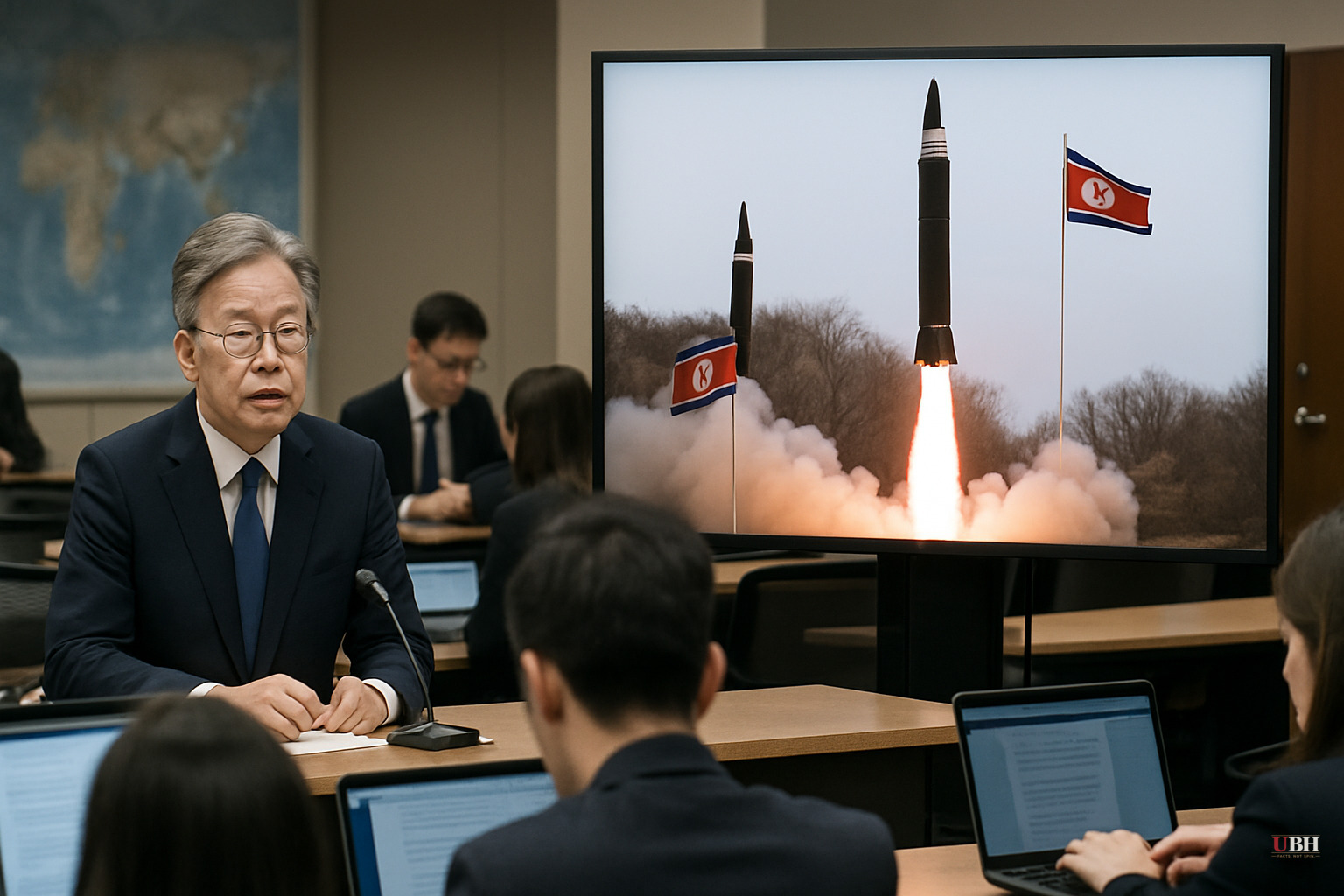
Since North Korea publicly acknowledged troop deployments to Russia's front lines, the diplomatic fallout has been widening steadily. Saturday brought the sharpest rhetorical exchange yet.
On Wednesday, South Korean President Lee Jae Myung signed a joint statement with EU leaders in Brussels that condemned what it called the "illegal military cooperation" between Pyongyang and Moscow. The statement named North Korea specifically, reading: "We condemn support by third parties, in particular the DPRK, which enables Russia to sustain its war of aggression against Ukraine," according to ZeroHedge's reporting on the exchange.
North Korea's foreign ministry responded through the state-run Korean Central News Agency on Saturday, framing the Russia partnership as a straightforward "exercise of sovereign rights." The ministry called the joint condemnation a "clear infringement on the sovereignty of our state and a grave hostile act."
Pyongyang reserved particular sharpness for Seoul, reiterating its designation of South Korea as the North's primary "enemy state."
The Brunson Angle
North Korea's statement also revived a rhetorical weapon it has been wielding for weeks. General Xavier Brunson, the top U.S. military commander in South Korea, drew controversy last month when he described his host nation as "the dagger in the heart of Asia." Pyongyang has since flipped the phrase, recasting Seoul as Washington's "favorite dagger" in what it describes as a broader American plot to invade the Asian continent.
China has echoed that framing. Whatever Brunson's original intent, his phrasing handed both Beijing and Pyongyang a ready-made propaganda line, and they have used it consistently. That represents a concrete messaging problem for the U.S.-South Korea alliance.
What's Actually Proven
Several facts are established. North Korea has acknowledged significant troop losses in support of Russia in Ukraine. Russia and North Korea signed a defense, technology, and economic cooperation pact under Putin and Kim. Lee Jae Myung did travel to Brussels and sign a joint EU statement on Wednesday condemning that cooperation. North Korea's foreign ministry did respond Saturday through KCNA.
What remains less specific in the available sourcing: the exact current scale of North Korean troop deployments, the precise terms of the defense pact, and what if any military technology transfers have occurred beyond troops and munitions.
The Strongest Case for Pyongyang's Position
North Korea's core argument is that bilateral military cooperation between sovereign states is sovereign business. This is not inherently unreasonable as a principle of international relations. The U.S. sells weapons to dozens of countries, some of whom use them in ways Washington's critics find objectionable. If the standard is "military partnerships must not prolong wars," Western nations have occasionally failed that test too. Critics of the Seoul-EU statement would argue that singling out the DPRK while accepting other forms of proxy support in the same conflict applies the rule unevenly.
That argument does not dissolve the specific facts: North Korean soldiers are fighting on Russian soil in a war that began with an unprovoked invasion. The principle of sovereignty does not extend to deploying troops to help one state occupy another.
A European Crisis With an Asian Orbit
The ZeroHedge report correctly identifies the broader shift. The Ukraine war has gradually drawn in actors and alliances well outside Europe. North Korean munitions and manpower, Chinese dual-use supply chains, and an active diplomatic exchange between Seoul, Brussels, and Pyongyang all point to a conflict that no longer maps cleanly onto a European theater.
What Comes Next
South Korea under President Lee is now visibly aligning with European institutions on Ukraine-related security posture. That's a notable shift. Lee came into office with a domestic focus and skepticism toward his predecessor's harder line on Pyongyang. His decision to co-sign a statement that explicitly names North Korea as an aggressor-enabler signals either a genuine strategic recalibration or a calculated diplomatic price paid for EU economic cooperation, possibly both.
The unresolved question is whether this tightening Western-South Korean alignment changes anything on the ground. North Korea has shown no indication of reducing its Russia support, and the defense pact signed by Putin and Kim gives Moscow political cover to deepen the relationship further. Whether Lee's Brussels statement translates into anything beyond diplomatic language—such as South Korean material support for Ukraine, which Seoul has so far avoided—remains an open and consequential question.
Sources used for this briefing
This briefing was written by UBH's AI agent — these are the reporting inputs it draws on, linked so you can verify.


