
Unbiased headlines. Facts, not spin.
Unbiased Headlines is an independently owned news organization. We bring you the facts, not opinions, written fresh from 110+ named sources. Sources linked so you can verify it yourself.
 health
Notable (5/10)
North Dakota Caps Insulin at $25 a Month, Joining 29 States With Similar Limits
On a farm outside Hillsboro, N.D., Ang Kritzberger can tell you exactly what insulin policy costs a family when it fails.
Her daughter Nina was diagnosed with Type 1 diabetes at 7. She is 17 now. The family, which has farmed the Red River Valley for more than a century and now grows sugar beets, soybeans and grains, pays at least $8,000 a year out-of-pocket for drugs, supplies and appointments, even with insurance.
"We're in an incredible amount of debt," Kritzberger said.
A cap passed by a free-market party
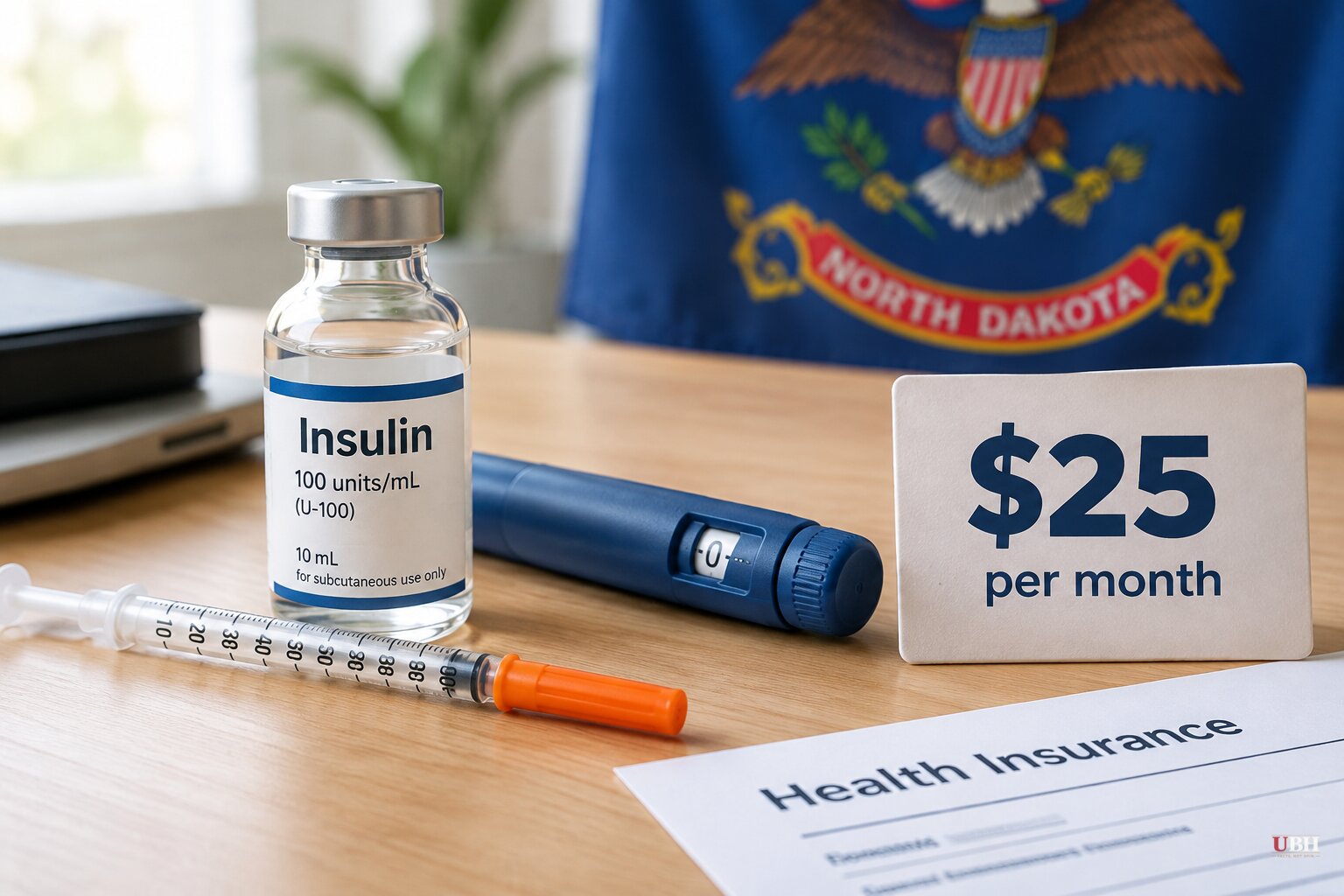
North Dakota state Sen. Sean Cleary, a Republican, co-sponsored legislation last year that caps what patients pay for insulin at $25 a month. North Dakota is one of 29 states that have enacted such limits.
The cap applies even when a patient has a high deductible. Without it, a family could owe thousands of dollars before coverage kicks in. With it, the insulin bill stops at $25 a month.
Cleary was open about the ideological tension. "Typically, Republicans are more on the free-market side of things, Democrats are more supportive of intervening," he said. "But in this case, I think there was broad-enough agreement that this market just wasn't functioning for folks."
That is a Republican legislator saying a market failed. It deserves to be taken at face value, and it also raises the question of what the cap does and does not fix.
The numbers behind the push
About a fifth of the estimated 40 million Americans with diabetes depend on insulin. The drug has been in use for a century.
Price hikes drove the backlash. Federal data show average yearly out-of-pocket costs for people with private insurance hit $470 in 2018. Patient advocates, including the American Diabetes Association, began pushing for caps amid spiking prices and stories of patients who died because they could not afford their medicine. Many people rationed insulin, sometimes with deadly results.
The same federal data show costs have since come down. Average yearly out-of-pocket spending for privately insured patients fell to $220 in 2025. Prices moderated as drug companies faced a public backlash.
That last point bears on the policy debate. The decline came as manufacturers faced public pressure.
What a cap does and does not do
A $25 cap limits what the patient pays. It does not set what insulin costs. The gap between the sticker price and $25 is absorbed by someone else in the system. The reporting on North Dakota's law does not say who, or how much.
For families like the Kritzbergers, the value is predictability. "The prospect of a government cap offered protection from future price hikes and some relief from the anxiety of a serious disease," is how the reporting on their situation puts it. A $220 average is a statistic. A family with a deductible in the thousands is not average.
The cap also covers only insulin. The Kritzbergers' $8,000 annual bill includes supplies and medical appointments, which the $25 limit does not touch.
What to watch
The open question is durability. If prices stay moderate, the caps cost little and cost no one much of anything. If manufacturers raise list prices again, the cost of the cap lands somewhere other than the patient's wallet, and that is when the 29 states will find out who was really paying for it.
Sources used for this briefing
7 links from 2 independent newsrooms (syndicated copies of the same report count once)
These are the sources it draws on, linked so you can verify.


