
Unbiased headlines. Facts, not spin.
Unbiased Headlines is an independently owned news organization. We bring you the facts, not opinions, written fresh from 110+ named sources. Sources linked so you can verify it yourself.
 health
Notable (5/10)
NATO Medical Chief and EU Health Authority Say Hospitals Are a War Frontline as Brussels Urges 72-Hour Household Kits
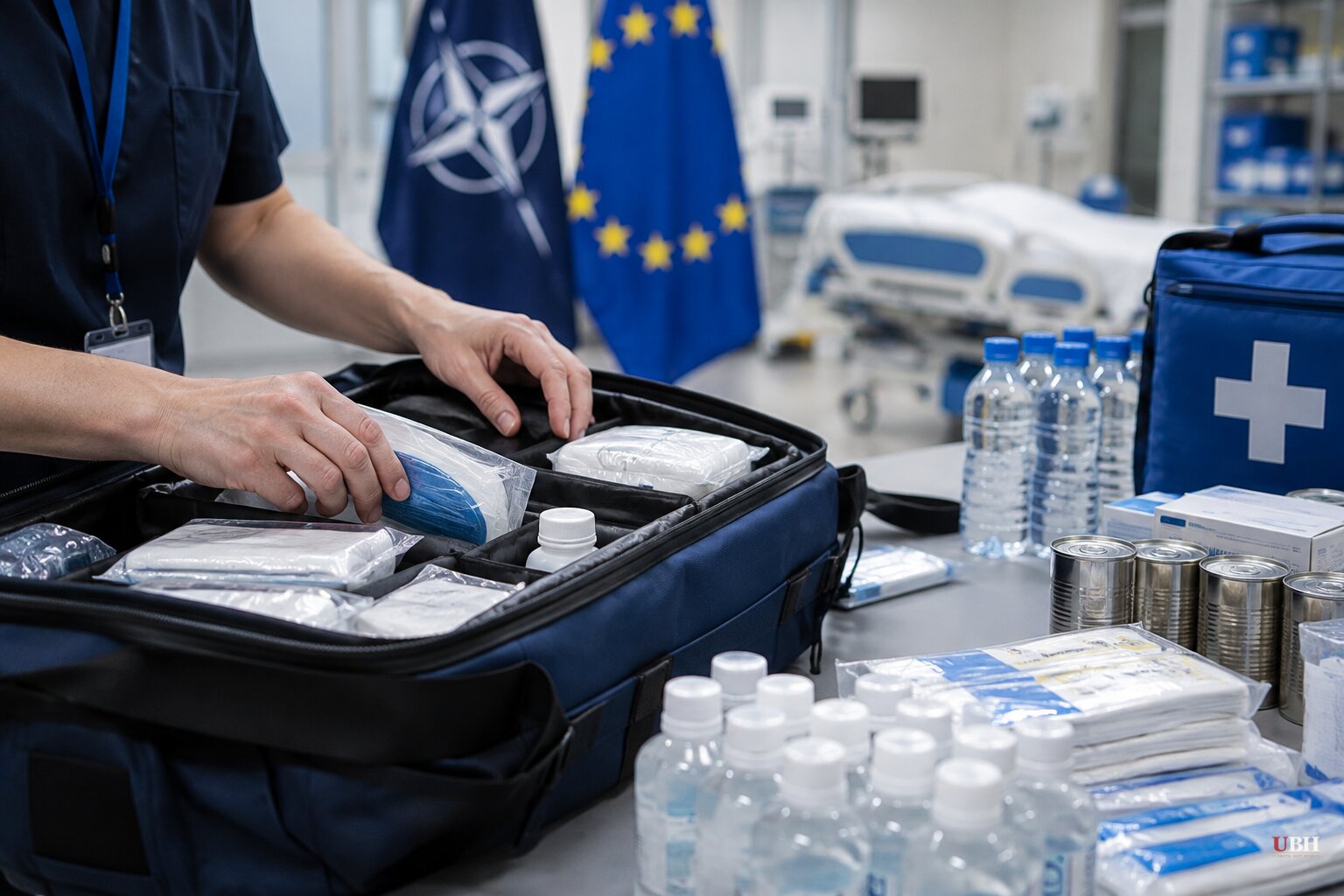
Since European governments began pouring money into defence and reinforcing NATO's eastern flank, the spending story has been about armies. Now the officials responsible for health are making the case that hospitals belong in the same conversation.
Brig. Gen. Petter Iversen, Norway's Surgeon General and chair of NATO's Committee of the Chiefs of Military Medical Services, put it in national-security terms. "Healthy society, it's a resilient society," he told Euronews. "If you are resilient, you can withstand the pressure from the adversaries."
Iversen said that means more than treating the wounded from a single attack. Hospitals must handle mass casualties, medical supplies must keep flowing, staff must know how to work in extraordinary conditions, and countries must be able to cope when several emergencies hit at once.
The AI and biology problem
The uncertainty that worries officials most is artificial intelligence applied to biology. AI speeds up drug development. It could also make it easier for malicious actors to build dangerous biological agents.
Laurent Muschel, director and deputy head of the EU's Health Emergency Preparedness and Response Authority (HERA), described the problem as one of not knowing the threat. "You don't know what you are facing, because it can be a virus engineered with AI or a state actor developing a new virus," he told Euronews. He said biosecurity "is going to be very high on the agenda."
Muschel's prescription is regulatory and surveillance-based. "We need to have the appropriate regulatory framework, the appropriate surveillance system to control the use of AI," he said. He called AI "a fantastic technology to develop new medicines," but one that "can also help bad actors to develop very powerful tools."
Iversen said NATO takes the combination of synthetic biology, bioinformatics and AI "really seriously." His gravest concern remains weapons of mass destruction. "The horrific thought of the use of weapons of mass destruction and the health implications that will have, both on the chemical and nuclear and biological side, will be the biggest threat," he said.
Such an attack could produce huge numbers of patients needing very different kinds of treatment at once. That is the capacity problem hospital planners are being asked to solve.
Brussels tells households to plan for 72 hours
The European Commission has pushed the same logic down to the kitchen table. At the European Civil Protection Forum in Brussels, Commissioner for Equality, Preparedness and Crisis Management Hadja Lahbib presented guidelines urging people to be able to meet their basic needs for at least three days while public help is mobilised.
The recommendations call for emergency supplies at home, grab bags, and teaching children and adults how to respond in a crisis. They also urge national governments to bring preparedness education into early childhood and primary schools, and to make sure emergency plans account for people with disabilities.
"When disaster strikes, the first hours can make all the difference," Lahbib said. "Every European should know what to do, how to protect their family, and how to help others." She added that "preparedness starts in our homes, in our schools, in our communities."
The guidelines are not legally binding. The Commission frames them as a way to help the 27 member states give their populations practical knowledge and to encourage households to take more responsibility for their own preparedness. The effort covers extreme weather and cyberattacks as well as the possibility of war.
Britain's version
In the UK, the Cabinet Office recommends that each person store nine litres of drinking water, plus canned food, torches, batteries, power banks and a wind-up radio in case the internet goes down. That campaign was launched amid concerns about British security. Defence Secretary Wes Streeting has warned that Britain must be ready to fight a war within 1,000 days.
The American model is older. FEMA's "Ready" campaign has urged households to keep emergency supplies since 2003.
What is still open
None of the officials quoted put a price on hospital readiness or said which governments are funding it. The Commission's household guidance carries no enforcement mechanism, so whether any of it happens depends on national capitals.
The open question is whether member states will treat medical resilience as defence spending, with budgets and deadlines, or leave it as advice. Muschel's call for an AI biosecurity framework and surveillance system likewise has no timetable attached.
Sources used for this briefing
7 links from 5 independent newsrooms (syndicated copies of the same report count once)
These are the sources it draws on, linked so you can verify.


