
Unbiased headlines. Facts, not spin.
Unbiased Headlines is an independently owned news organization. We bring you the facts, not opinions, written fresh from 110+ named sources. Sources linked so you can verify it yourself.
 health
Major Story (7/10)
Event date: November 6, 2026 ·
Florida's Locally Acquired Dengue Cases Reach 524, Most in a Year Since at Least the 1940s
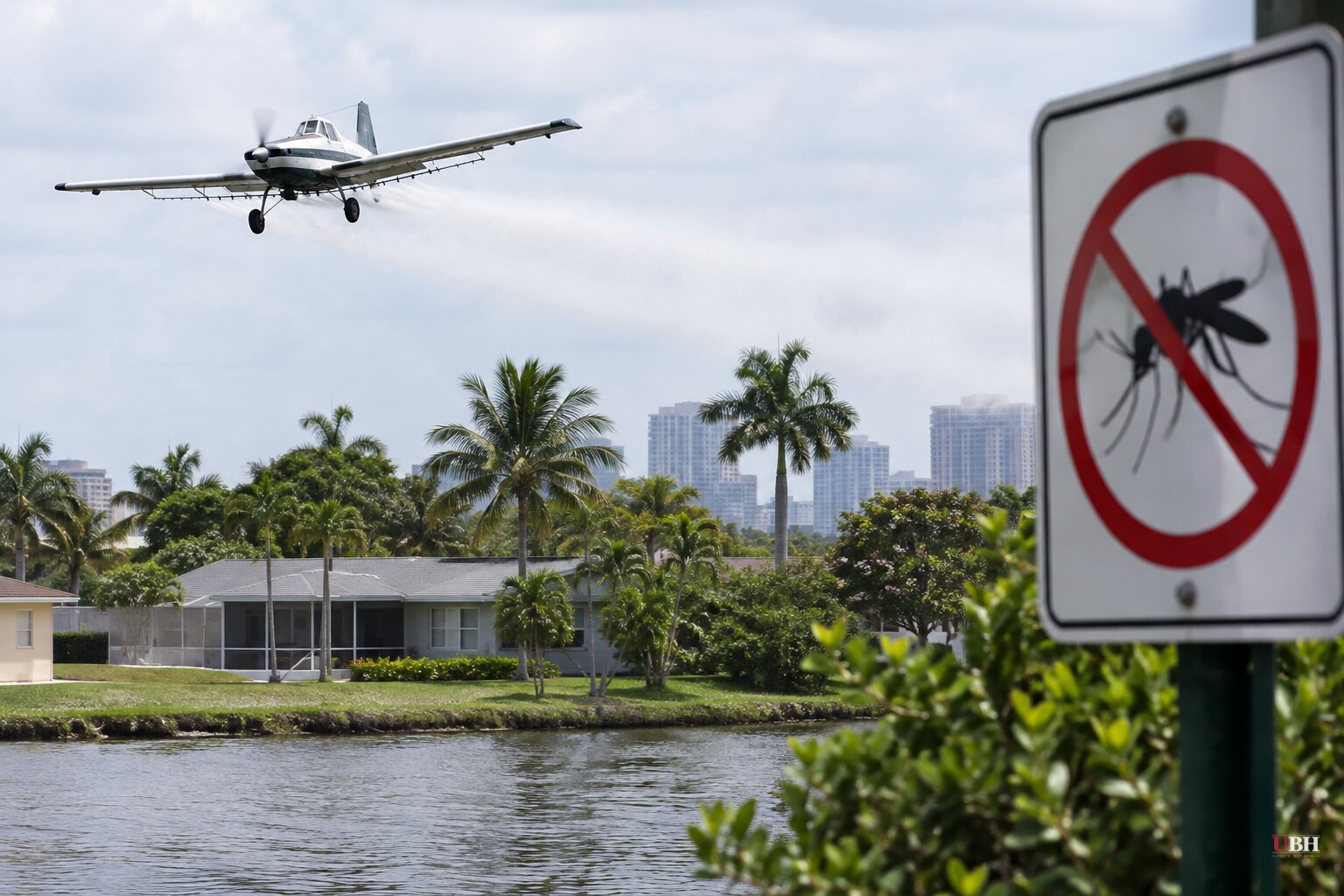
Since Hillsborough, Pasco and Pinellas counties declared local emergencies in late September, Florida's tally of locally acquired dengue cases has climbed to 524. That is the highest count in a calendar year for any state since at least the 1940s, according to state health department data and medical journals as summarized by the Associated Press.
The state had recorded 425 local cases in its report covering the week of Oct. 11-17 and 485 after the week of Oct. 18-24. Florida also logged 382 travel-associated cases as of Oct. 31, which means the year's total from both sources is above 900.
How big this is by Florida's own history
Florida reported 62 locally acquired cases in all of 2025, according to the state's final surveillance report. The previous modern high was just under 200, in 2023. In 2010 the state counted 58 local cases after nearly eight decades without a domestic outbreak.
The 2026 count is more than two and a half times the 2023 record.
Historically, dengue cases in the continental U.S. have been tied to travel. Most of Florida's cases this year were acquired inside the state, according to CDC figures cited by The New York Times. Eva Harris, an infectious-disease and vaccinology professor at UC Berkeley, told the Times: "It is very unusual to have transmission in the United States. This is so very much of an eye-opener."
Where the cases are
The outbreak is concentrated around Tampa. In the Oct. 11-17 report, Hillsborough County had 346 of the state's 425 local cases, about 81%, and Pinellas had 51. The Florida Department of Health says the Tampa Bay area accounts for roughly 95% of locally acquired cases statewide.
Cases have also turned up in Miami-Dade (nine), Orange (eight), Pasco (four) and Citrus (two) counties, plus single cases in Brevard, Broward, Manatee, Palm Beach and Polk. Seminole County confirmed a local case after that report's cutoff. As of Oct. 17, eight counties were under a mosquito-borne illness alert and 10 more were under an advisory.
Of 395 local cases typed by PCR testing, 393 were dengue serotype 2 and two were serotype 3. Health officials have found serotype 2 in 20 pools of Aedes aegypti mosquitoes, 19 in Hillsborough and one in Pasco.
By symptom-onset date, the state counted 21 cases in July, 160 in August and 226 in September. October's figure was 18 in a report that covered only through Oct. 17, so it is incomplete.
One death confirmed
The state confirmed its first dengue-related death of the year on Sept. 18 in Hillsborough County. The patient was an elderly Tampa-area woman who died Sept. 4. Her daughter, Anna Small, told the Times that Gay Rabb Small died on her 80th birthday, a week after diagnosis. Anna Small said she took her mother to the emergency room after noticing a tremor.
Most people infected with dengue never show symptoms. About 1 in 20 develops severe disease, which can cause shock, internal bleeding and death, according to the CDC. There is no widely available vaccine and no specific cure. The CDC recommends rest, fluids and acetaminophen, and says to avoid aspirin and ibuprofen because they raise bleeding risk.
The response and what it costs
The emergency declarations speed up purchasing and spraying and allow the counties to request state and federal reimbursement. Hillsborough has extended its emergency. The CDC awarded $800,000 for surveillance and mosquito control.
On Nov. 5, helicopters sprayed parts of Pinellas and Hillsborough with water mixed with Bti, a soil bacterium that kills mosquito and black fly larvae. The Florida Mosquito Control Association says crews are stepping up ground spraying, aerial applications and property inspections.
Aedes mosquitoes bite during the day, unlike many species that feed at dawn and dusk. They breed in as little as a tablespoon of standing water, so officials are urging residents to dump containers around their homes.
Physicians are being told to change how they screen patients. Medical Economics, citing the CDC's testing guidance, says a negative travel history no longer rules dengue out in parts of Florida, and that clinicians should manage suspected cases without waiting for test results.
What comes next
Experts point to Florida's warm, wet weather as favorable for mosquito breeding. Ira Longini, a University of Florida biostatistician, said: "I think the dengue outbreaks will get worse over the coming years in the United States."
Nationwide, more than 2,500 dengue cases have been reported this year, according to CDC figures cited by the Times. Travel-associated cases have shown up as far north as Minnesota and Maine.
It is unclear whether Tampa Bay transmission slows as cooler weather arrives. The state's next weekly arbovirus report will show whether the 40-to-60-case weekly pace seen in October is holding.
Sources used for this briefing
7 links from 7 independent newsrooms (syndicated copies of the same report count once)
These are the sources it draws on, linked so you can verify.


