
Unbiased headlines. Facts, not spin.
Unbiased Headlines is an independently owned news organization. We bring you the facts, not opinions, written fresh from 110+ named sources. Sources linked so you can verify it yourself.
 health
Notable (5/10)
Six-City European Study Finds Home Wood-Burning May Expose Children to Cancer-Linked PAH Pollution Similar to Traffic Exhaust
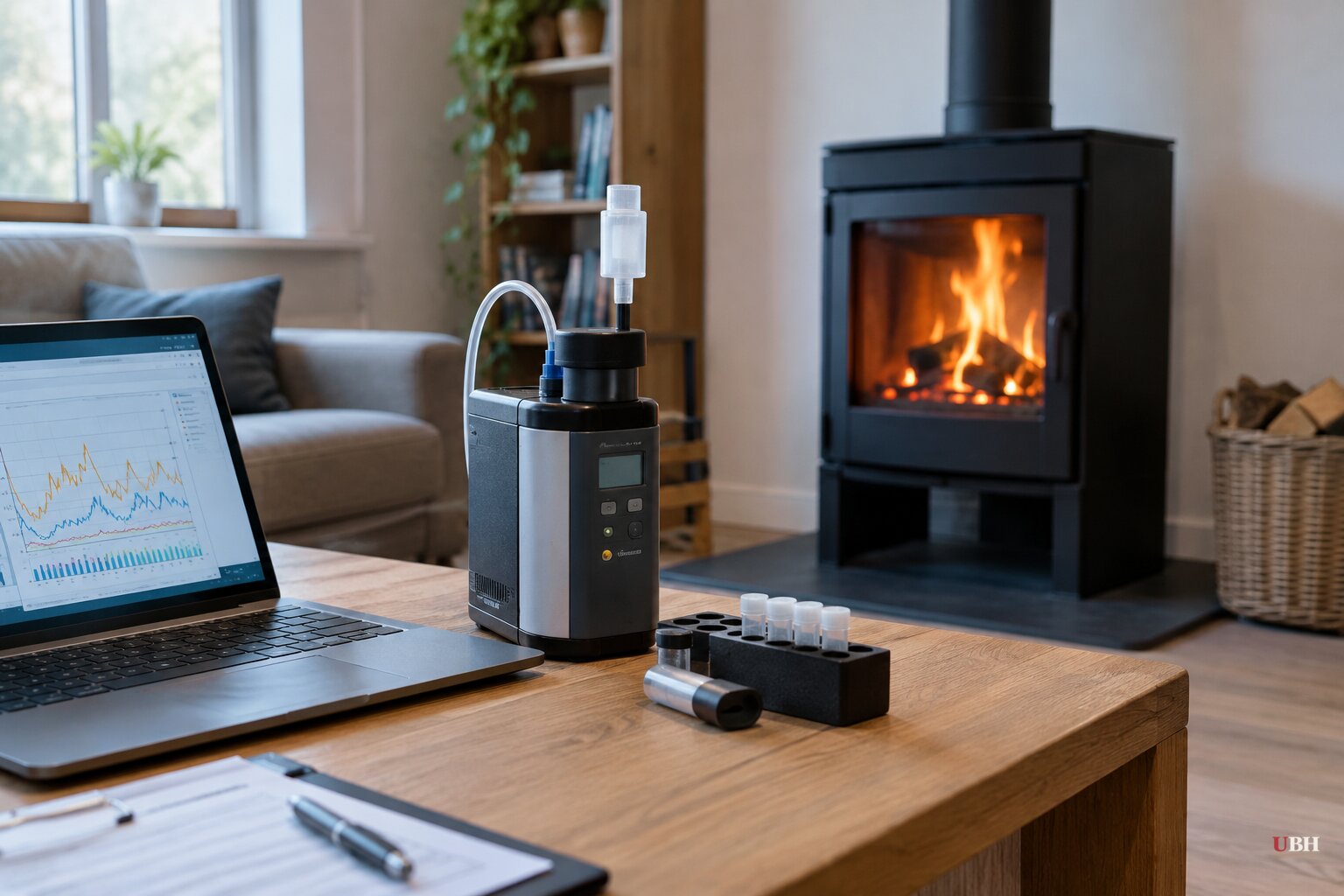
New research puts a spotlight on what burns in living rooms: wood stoves and open fires may expose children to pollution on a par with traffic exhaust.
The study measured polycyclic aromatic hydrocarbons, or PAHs, in and around Athens, Barcelona, Colchester, Copenhagen, Helsinki and Lisbon. PAHs are a family of pollutants released when fuels burn.
Samples came from the places children spend much of their time: homes, schools and sports centres.
What the measurements showed
Colchester and Athens, where wood-burning is common, had the highest PAH levels. In both cities, exposure was above World Health Organization guidelines.
Barcelona and Lisbon, where wood-burning is not practised, had the lowest.
"Urban areas with wood-burning, such as Colchester and Athens, had the highest PAHs levels," said Dr Barend van Drooge of the Institute for Environmental Assessment and Water Research in Barcelona, the study's senior author.
Sports centres had the lowest concentrations, followed by schools. Some schools, especially in Lisbon, were affected by busy roads nearby. Ventilation and indoor sources also mattered.
But some of the most polluted homes were in wood-burning areas, and many of them had open fireplaces and stoves.
Winter is the problem
Winter PAH concentrations were higher than summer ones. In Colchester homes, the heavier PAH compounds in winter ran more than 10 times summer levels. The lighter compounds ran about three times higher.
Van Drooge said wood-burning is a known PAH emitter, but its role in overall urban PAH levels was a surprise: "it was surprising that it has become such an important contributor to the overall presence of PAHs in urban areas."
What the researchers say about risk
Van Drooge said some PAHs are linked to cancer after prolonged exposure, as recognised by the International Agency for Cancer Research, and that evidence exists they delay cognitive development.
He also said none of the six cities exceeded unacceptable limits for lifetime cancer risk. That is the study's own caveat. Guideline exceedances in two cities are not the same as a measured cancer threat.
First author Maria Antonia Aretaki, of the same Barcelona institute, said understanding the pollutants in children's surroundings "is an important step towards protecting their health," given children's vulnerability to environmental pollutants.
Colchester is not the extreme case
Separate analysis of energy performance certificates by University College London researchers found Colchester ranked 120th out of 333 UK local councils for wood burners per square kilometre. Worthing, Norwich and Reading each had roughly four times the density.
That means the Colchester results may understate what is happening in denser wood-burning towns. None of those three towns was part of this six-city measurement, so their indoor PAH levels are unknown.
A wintertime study of 53 children at two primary schools in Anglesey (Ynys Môn) points the same direction. Children living in homes with wood burners could be exposed to more than three times as much particle pollution as children in homes without them.
That Anglesey finding concerns particle pollution generally, not PAHs specifically.
The open question
The six-city study shows association and comparison, not a casualty count. It does not report children harmed, and its authors say cancer-risk limits were not breached.
What remains unanswered is whether households in the densest wood-burning UK towns look more like Colchester or something worse. Only measurements in places like Worthing, Norwich and Reading would settle it.
Sources used for this briefing
7 links from 7 independent newsrooms (syndicated copies of the same report count once)
These are the sources it draws on, linked so you can verify.


