
Unbiased headlines. Facts, not spin.
Unbiased Headlines is an independently owned news organization. We bring you the facts, not opinions, written fresh from 110+ named sources. Sources linked so you can verify it yourself.
 health
Notable (6/10)
Federal Restriction on Some 7-OH Products Could Take Effect as Early as Today, Nov. 13
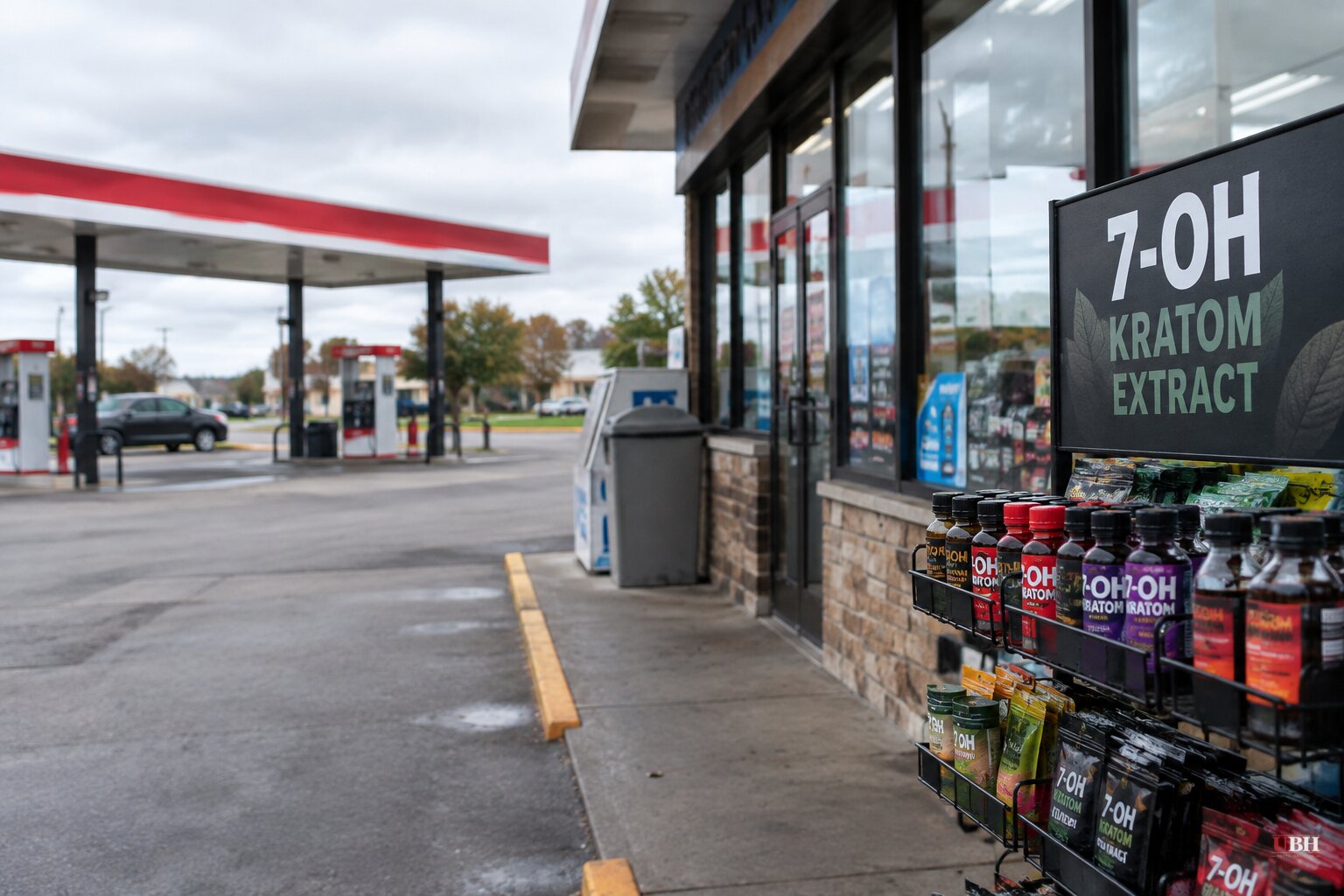
A federal restriction on some 7-OH products could go into place as early as today, Friday, Nov. 13, 2026. The products are sold at gas stations, smoke shops, liquor stores and online.
No federal action has been taken against "traditional botanical kratom," the leaf-based product. The target is 7-OH.
What 7-OH is
7-OH, or 7-hydroxymitragynine, is one of the major psychoactive compounds in kratom, a tree in the coffee family. It occurs naturally in kratom only in very small amounts. It seems to act more like an opioid in the human brain than kratom leaf products do.
The retail versions are a different animal. Highly concentrated 7-OH products, sometimes sold alongside other semi-synthetic opioids, have shown up over the past few years as tablets, gummies, tonics and chocolate.
Labeling is a core problem. The products are not always clearly marked, so it is difficult or impossible for users to know how much of the substance they are consuming.
One user's account
A man identified only as Tyler, 38, told NPR his opioid addiction began in his early 20s. He asked that his last name be withheld because of the stigma around addiction.
He used kratom leaf powders to ease withdrawal and believes they helped him stay off opioids for a decade.
In early 2025 he spotted tablets at a gas station sold as "kratom products." They were 7-OH. At first the euphoria, which he compared to opioids, "felt like a kind of a miracle," he said.
Nearly a year and a half later he was in a rapid detox program in Michigan, sedated so he could sleep through withdrawal. "I did not know at all what I was in for. It was much more potent than I had imagined," he said.
The medical picture
Larissa Mooney, an addiction psychiatrist at the Medical University of South Carolina, says she has seen the same pattern at two institutions. She previously worked at UCLA and arrived at MUSC earlier this year. "More and more patients over the years" are presenting with problems controlling their kratom and now 7-OH use, she said.
Most people who use these substances don't develop a disorder. Mooney noted that a subset do, losing control over their use and finding they can't stop. Researchers and policy officials say some users of 7-OH and kratom show classic signs of addiction.
A study found calls to poison centers about kratom rose dramatically in recent years. The parents of a South Carolina man who died with the psychoactive ingredient in kratom in his system are calling for stricter regulation.
How many people use it
Nobody knows. Some estimates suggest more than 5 million Americans have used kratom in their lifetimes. David Epstein, a senior investigator in the National Institute on Drug Abuse's Intramural Research Program, says he has seen estimates as high as 15 million.
Those figures usually don't separate whole-leaf kratom from 7-OH or related products. The leaf and the concentrate are not the same thing.
Why it stayed legal
The U.S. government has tried over the past decade to restrict both kratom and 7-OH. Strong opposition from the public and from powerful advocacy groups backing the substances kept them federally legal.
That opposition rests on real experiences. Kratom is used by some people with opioid addiction to maintain long-term recovery, as Tyler did for years with leaf powder. Others say it makes them feel energized or focused, or that it relieves pain and calms them.
The pending restriction is aimed at the concentrated products, not that leaf. Whether the line holds in practice is untested, since many kratom products now also contain 7-OH, according to MUSC.
What to watch
The restriction covers only some 7-OH products. Retailers, users and the advocacy groups that blocked earlier efforts will find out how broadly it applies once it takes effect. Whether it does so today, as the earliest possible date allows, or later is the open question.
The leaf product sits outside any federal action for now.
Sources used for this briefing
7 links from 3 independent newsrooms (syndicated copies of the same report count once)
These are the sources it draws on, linked so you can verify.


