
Original briefings. Zero spin.
Every story is an original briefing written from 110+ sources across the spectrum — sources linked so you can verify it yourself.
 energy
Notable (6/10)
Event date: August 27, 2026
energy
Notable (6/10)
Event date: August 27, 2026
NOAA's New Fall Outlook Confirms Warmer, Drier North and Wetter Southwest as El Niño Nears Record Strength
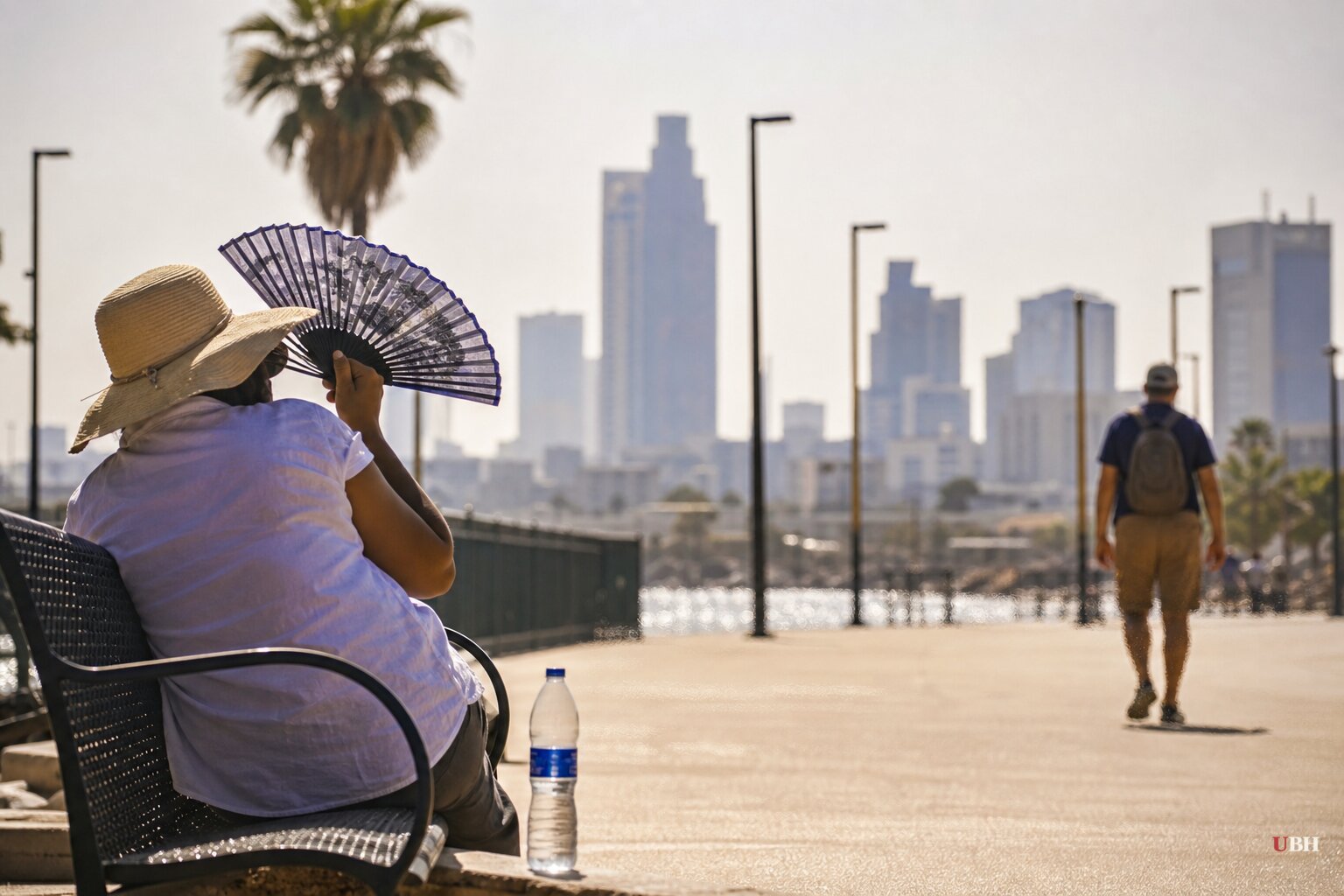
Since NOAA reported Niño 3.4 ocean temperatures running up to 2.6°C above average on August 31, the agency has released a new piece of the puzzle: its actual seasonal outlook for September through November, the period that will determine how this record-chasing El Niño first shows up on the ground.
The Climate Prediction Center's fall outlook, detailed by Newsweek, shows elevated odds of above-average temperatures across most of the contiguous United States, with the strongest warm signal over the Pacific Northwest and northern Rockies. No part of the Lower 48 is favored for below-normal temperatures this fall, according to the outlook.
Precipitation is a different story. The Climate Prediction Center favors wetter-than-normal conditions for Arizona, New Mexico and the Four Corners region, plus a separate wet zone across Georgia and the Carolinas. Drier-than-normal conditions are favored for the Pacific Northwest and parts of the Great Lakes. Large swaths of the central U.S. fall into what forecasters call "equal chances," meaning there's no strong tilt toward wet, dry or normal.
The "equal chances" designation covering a huge share of the map reflects real uncertainty. NOAA's own models show no strong signal for tens of millions of Americans this fall. The agency is upfront about it rather than papering over the gap.
Texas Already Living the Dry Side
The National Weather Service's Brownsville/Rio Grande Valley office, in a local three-month outlook reported by MyRGV.com, put more than three-quarters of the Valley under a Moderate Drought designation as of late August. The office said a persistent rain-free, hot, and windy August deepened drought conditions across deep South Texas, even as it noted a potential pattern flip toward wetter conditions by October or November if the El Niño signal takes hold regionally.
The Record Chase Continues
NOAA's Climate Prediction Center has said there's a greater than 90% chance this event becomes a "very strong" El Niño during fall and winter, according to Newsweek and ABC News. ABC News, citing NOAA scientist Michelle L'Heureux, reported a 69% chance the October-through-December period produces an anomaly that would exceed every El Niño on record dating back to 1950, making it the strongest ever measured. The snowbrains ski-forecast update, current as of August 20, put the projected peak anomaly just under 2.5°C during that same window, the threshold NOAA uses to define a record-breaking event.
Ben Kirtman, dean of the University of Miami's Rosenstiel School, told USA Today that scientists are in "uncharted territory" because no one has watched an extreme El Niño unfold on top of the planet's current warming. Climate scientist Daniel Swain, of the University of California Agriculture and Natural Resources, described the compounding effect to USA Today as El Niño potentially pushing global temperature impacts from "the 8th or 9th floor" to "the 10th or 11th" once layered on existing warming.
California's Flood and Ski Angle
Swain, speaking separately at an American Community Media briefing, said California should expect its wettest winter in years, particularly across the central and southern part of the state, with peak impacts likely landing between December and March. He flagged a specific compounding risk: winter storm waves and "astronomically high" king tides will coincide with temporarily elevated coastal sea levels, threatening low-lying communities around San Francisco Bay, Monterey Bay, the Carquinez Strait and the Sacramento-San Joaquin Delta, including Stockton.
On the recreational side, the snowbrains ski forecast pointed to California's best winter setup in years, citing 1997-98 and 2024 as the closest historical analogs, both among the wettest Februaries on record for parts of the state. The Northern Rockies interior, covering Montana, Idaho and northern Wyoming, is trending the opposite direction, tightening into the driest zone in NOAA's latest maps.
What Comes Next
NOAA's Climate Prediction Center is expected to update its Niño 3.4 readings and seasonal probabilities again before the October-December window it identified as the likely peak. Michael McPhaden, a retired NOAA senior scientist, told USA Today this event will rival or exceed the three previous "extreme" El Niños of the past 50 years: 1982-83, 1997-98 and 2015-16. Whether it actually breaks the record, and whether California's storm track lines up with the wet forecast rather than the drier outcome some past strong El Niños have delivered, won't be clear until winter data starts coming in.
Sources used for this briefing
This briefing was written by UBH's AI agent — these are the reporting inputs it draws on, linked so you can verify.


