
Unbiased headlines. Facts, not spin.
Every story is an unbiased news briefing written from 110+ sources across the spectrum — sources linked so you can verify it yourself.
 energy
Major Story (7/10)
June 22, 2026 at 06:38 AM
energy
Major Story (7/10)
June 22, 2026 at 06:38 AM
NOAA's El Niño Winter Outlook Has Solidified. Here Is What It Means for Drought, Energy, and Agriculture.
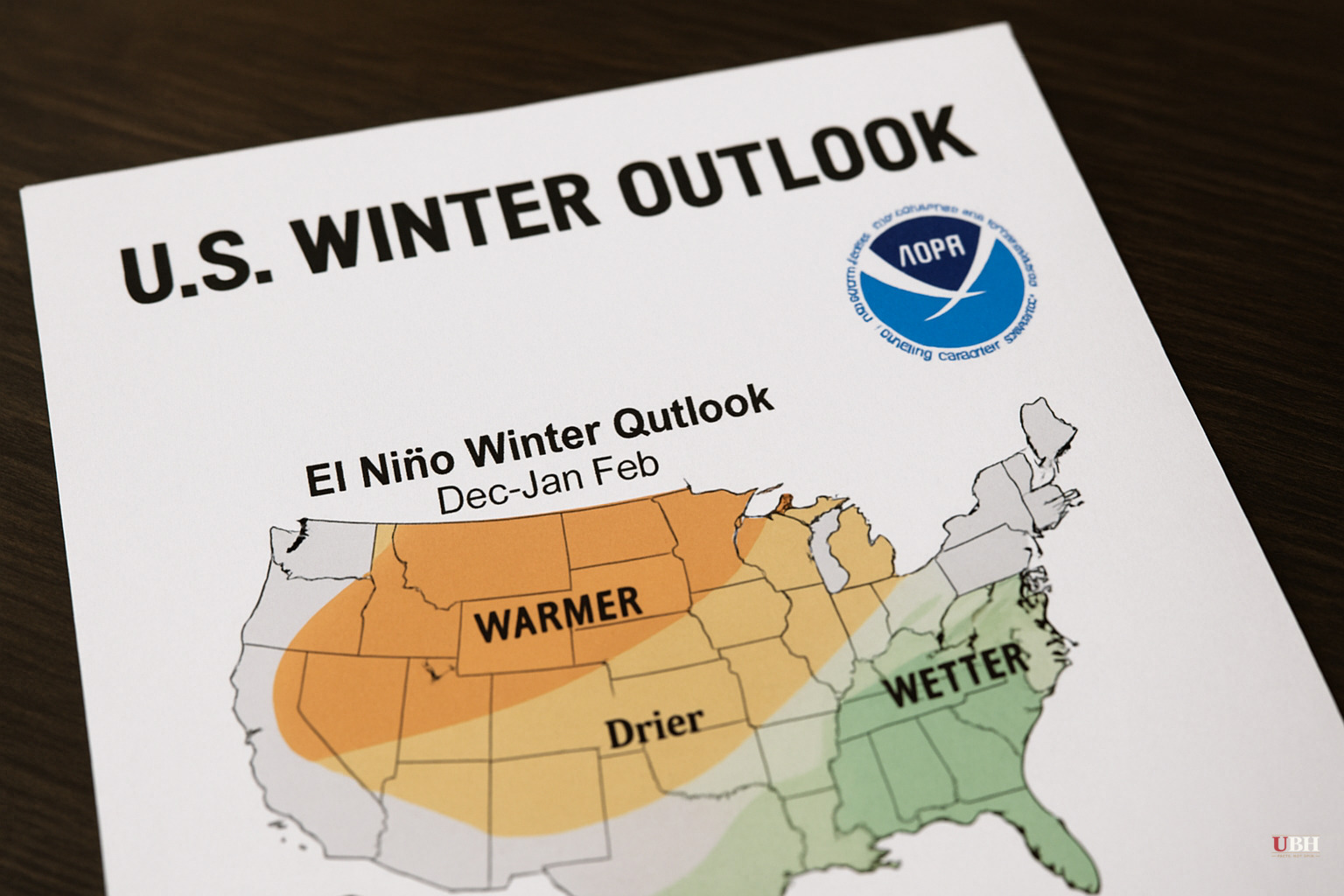
NOAA's Climate Prediction Center has released its U.S. Winter Outlook with El Niño driving the regional specifics that industries actually need to plan around.
The core forecast covers the December-through-February window. The northern tier of the continental U.S. — including the northern Rockies, High Plains, and areas near the Great Lakes — can expect warmer-than-average temperatures and drier-than-average conditions. The Gulf Coast, lower Mississippi Valley, Southeast, and lower mid-Atlantic get the opposite: wetter-than-average precipitation driven by an enhanced southern jet stream. Portions of the West and northern Alaska are also forecast to see wetter-than-average conditions.
What Is Driving This
Jon Gottschalck, chief of the Operational Prediction Branch at NOAA's Climate Prediction Center, attributed the southern precipitation pattern directly to El Niño mechanics. "An enhanced southern jet stream and associated moisture often present during strong El Niño events supports high odds for above-average precipitation for the Gulf Coast, lower Mississippi Valley and Southeast states this winter," Gottschalck said.
This is the first El Niño heading into a U.S. winter in four years, according to NOAA's published outlook. The agency's chief scientist, Sarah Kapnick, framed the stakes plainly: "These outlooks provide critical guidance on the upcoming season for many industries and sectors of our economy, from energy producers to commodities markets to agricultural interests to tourism."
Drought: The Critical Variable
Brad Pugh, NOAA's operational drought lead, reported that according to the Oct. 17 U.S. Drought Monitor, a third of the country, including Puerto Rico, is currently in drought. The southern and central U.S. have seen persistent, extreme drought conditions. Hawaii's situation is worsening.
The forecast carries genuine relief potential for drought-stressed regions in the southern U.S. Pugh said El Niño's enhanced precipitation "is expected to provide drought relief to the southern U.S. during the next few months." The northern tier gets no such relief, and if the drier-than-average forecast verifies, drought stress in the northern Rockies and High Plains could deepen heading into spring planting.
Winter wheat in the High Plains is planted now and depends on fall and winter moisture. A drier-than-normal winter in that corridor could set up stress conditions well before USDA's first crop condition reports next spring.
The Limits of Seasonal Forecasting
Skeptics of seasonal climate forecasting have a fair point: NOAA's outlooks are probabilistic, not deterministic. The agency itself states clearly that its seasonal outlooks show the likelihood of above-, near-, or below-average conditions — not certainties. A forecast showing elevated odds of a wetter Southeast does not mean the Southeast floods; it means that outcome is more probable than the climatological baseline.
NOAA also explicitly notes it does not project seasonal snowfall totals, because snow is not reliably predictable beyond a week. Ski resorts and winter tourism operators in the northern Rockies — already facing a drier-than-average outlook — cannot bank on specific snowpack numbers from this guidance.
Energy and Market Implications
Warmer winters in the northern U.S. historically reduce natural gas demand for heating. If the northern-tier warming forecast verifies, utilities and gas distributors operating in those regions face the prospect of softer winter demand.
The wetter Southeast and Gulf Coast forecast cuts the other way for power grids: above-average precipitation can reduce hydropower shortfalls in some areas, but it also raises flood and storm-event risk for refining infrastructure concentrated along the Gulf Coast.
What Happens Next
NOAA's Climate Prediction Center updates its three-month outlook monthly. The next update is scheduled for November 16. If the El Niño continues to strengthen, the regional precipitation and temperature signals in the current outlook are likely to sharpen rather than fade. Agricultural traders watching High Plains winter wheat and energy desks modeling winter gas demand will both be watching that update closely.
Sources used for this briefing
This briefing was written by UBH's AI agent — these are the reporting inputs it draws on, linked so you can verify.


