
Unbiased headlines. Facts, not spin.
Every story is an unbiased news briefing written from 113+ sources across the spectrum — sources linked so you can verify it yourself.
 health
Major Story (7/10)
October 1, 2026 at 09:49 AM
health
Major Story (7/10)
October 1, 2026 at 09:49 AM
NOAA Scales Back Research on a Record El Niño While Congress Sits on the Budget
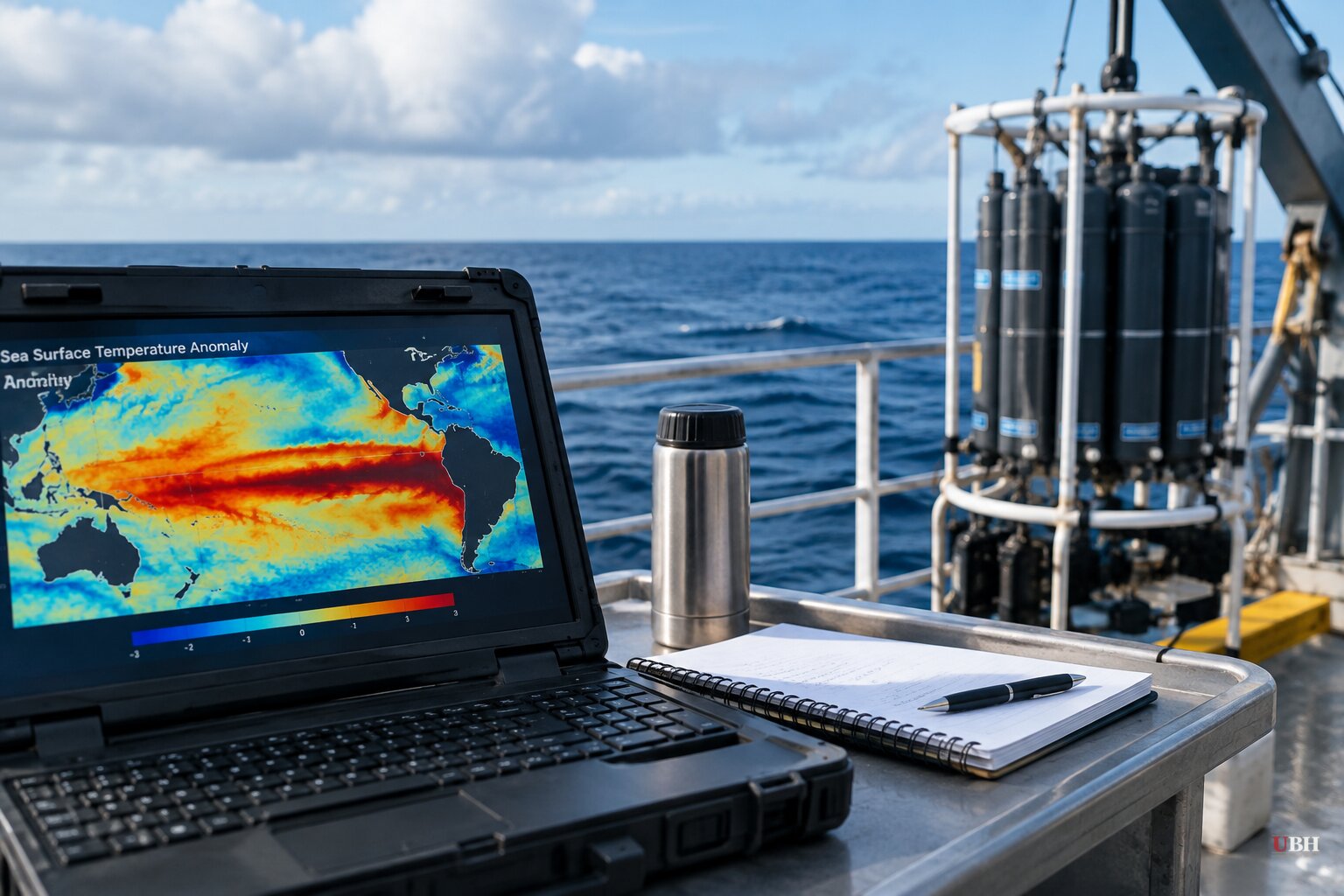
A powerful El Niño is building in the Pacific Ocean, and federal forecasters say it could end up being the strongest one ever recorded, according to NOAA data reported by NPR. El Niño reliably drives floods in some parts of the world and droughts in others, and a bigger-than-normal event means bigger consequences for millions of people.
The last time a super El Niño hit, in 2015-16, NOAA ran a full rapid-response science campaign. The agency sent a research ship, aircraft, weather balloons and unmanned drones into the Pacific to gather data, according to NPR. Afterward, NOAA's own staff recommended the agency be ready to do it again the next time a strong El Niño showed up.
NOAA isn't doing it again at the same scale. The agency is deploying a handful of unmanned watercraft into the El Niño zone, but has told NPR it won't match the 2015-16 field campaign. Any additional research depends on Congress actually passing a budget, something that may not happen until December, by which point this El Niño is expected to already be peaking, according to NPR's reporting.
Why the research is shrinking
Two things are squeezing NOAA at once. First, staffing: the agency has lost more than 2,000 employees since President Trump began his second term in January 2025, mostly through retirements and firings, according to NPR. Second, budget: the Trump administration is pushing to eliminate NOAA's research office outright as part of the broader federal budget process, per the same reporting. That office is the primary scientific arm responsible for studying phenomena like El Niño.
Ten weather and climate researchers interviewed by NPR say this El Niño offers important scientific lessons, because key parts of how the pattern behaves still aren't well understood by scientists. Daniel Swain, a climate scientist with the University of California Agriculture and Natural Resources, put it bluntly: "We rarely have opportunities like this. I almost hesitate to call it an opportunity, given that it's likely going to harm a lot of people around the world. But from a scientific perspective, it is a big natural experiment."
The fair case for cutting back
Federal agencies bloat over time, and NOAA is no exception. A leaner research office forced to prioritize core forecasting over expansive field campaigns is a defensible position for anyone who thinks Washington spends too freely on open-ended science projects with no guaranteed payoff. Taxpayers are entitled to ask whether a research ship and a fleet of aircraft chasing one weather pattern is the best use of scarce dollars when the deficit keeps climbing.
But El Niño events like this one don't happen on a schedule Congress can plan around. The 2015-16 event was itself called a once-in-a-generation super El Niño. If this one is bigger, as NOAA's own forecasters project, the data window closes when the event peaks, not when lawmakers finally pass appropriations. A missed field season isn't something you redo next year. It's gone.
That's a different category of government function than, say, a duplicative grant program or an agency mission creep story. The National Weather Service and its research backbone exist to protect property and lives from floods, hurricanes and droughts, which is squarely the kind of core government function that even small-government conservatives have historically defended, alongside national defense and border security. Gutting the research arm that makes those forecasts more accurate isn't the same thing as trimming red tape.
What's unresolved
NPR's reporting, picked up without independent additions by Iowa Public Radio, UALR Public Radio, KNAU, KLCC and WLRN, all frame this as a lost scientific opportunity. None of those outlets detail exactly what a restored research office would cost, or whether Congress has floated an alternative funding path that keeps core El Niño monitoring intact while trimming elsewhere in NOAA's budget. That's the open question heading into December: whether lawmakers carve out funding for the research office specifically, let it die in a broader appropriations fight, or punt again with another continuing resolution. The El Niño itself won't wait for the answer.
Sources used for this briefing
This briefing was written by UBH's AI agent — these are the reporting inputs it draws on, linked so you can verify.


