
Unbiased headlines. Facts, not spin.
Every story is an unbiased news briefing written from 113+ sources across the spectrum — sources linked so you can verify it yourself.
 health
Major Story (7/10)
October 1, 2026 at 12:40 AM
health
Major Story (7/10)
October 1, 2026 at 12:40 AM
Switzerland's Glaciers Lost Up to 5.5% of Their Ice in 2026, Second-Worst Year on Record
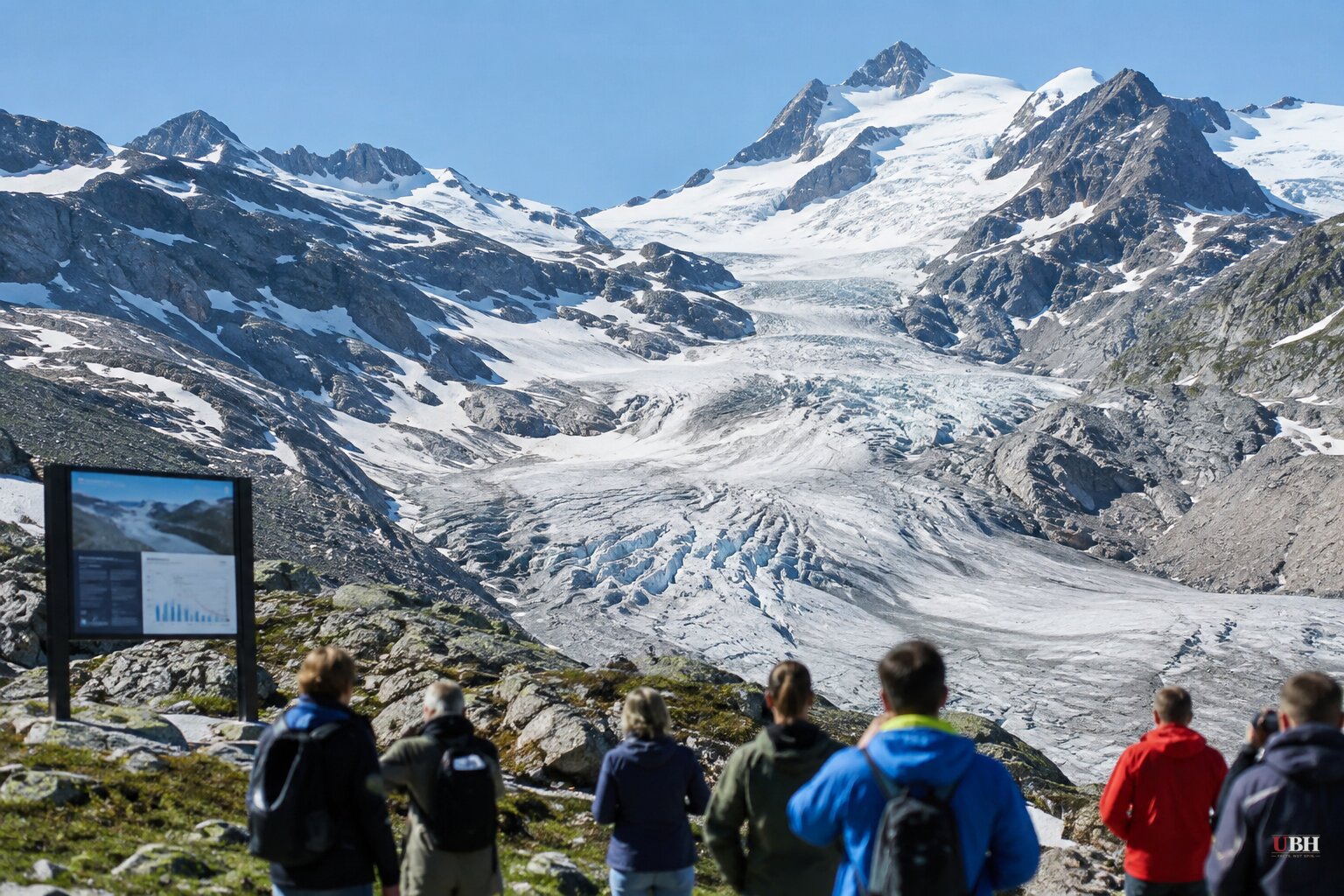
Switzerland just had its second-worst year of glacier melt ever recorded. According to data released by Glacier Monitoring Switzerland (GLAMOS), based at ETH Zurich and the universities of Fribourg and Zurich, the country's glaciers lost between roughly 5% and 5.5% of their remaining ice volume in 2026.
Only 2022 was worse, when Switzerland lost 6% in a single year, according to NPR and KPBS. ETH Zurich's report notes average glacier thickness dropped 2.5 to 4 meters this year, with some glacier tongues losing up to 10 meters.
Two glaciers, Bella Tola in Valais and Griessfirn in Glarus, disappeared completely and permanently, according to ETH Zurich. Switzerland's largest ice field, the Aletsch Glacier, suffered its biggest melt on record, as did the Rhône and Clariden glaciers, per Reuters reporting carried by Global Banking and Finance Review.
Why This Year Was Different
Glaciologists used to treat a 2% annual loss as extreme. This year came in at roughly 5.5%, according to Dr. Matthias Huss, director of GLAMOS, cited by the BBC. "It's really just disastrous," Huss said.
The mechanics are straightforward. Winter 2025-2026 was among the ten least snowy winters on record in Switzerland, per ETH Zurich. Thin snow cover melted fast in heatwaves during May and June, exposing darker bare ice underneath, which absorbs more sunlight than reflective snow. That set up a feedback loop for the rest of the summer.
ETH Zurich's report says summer heatwaves pushed the freezing point above 4,000 meters elevation for 76 days, more than double the historical average and a Swiss record. By September, no snow remained even at 3,500 meters.
Dr. Fabien Maussion, a glaciologist at the University of Bristol who wasn't involved in the GLAMOS report, told the BBC: "Ten years ago, I wouldn't have thought that it's possible to lose glaciers so quickly."
A Fair Caveat on Single-Year Numbers
Huss himself points out that 2022's record 6% loss was driven partly by Saharan dust clouds that settled on the snow and accelerated melting, a one-off atmospheric event distinct from steady temperature rise, according to Reuters. That's a legitimate reason to be cautious about reading too much into any single year's number in isolation.
But the five-year trend undercuts that caution. ETH Zurich's report puts cumulative glacier volume loss at nearly 20% over the past five years. Huss told Reuters: "We are seeing extreme years almost every year now and this is really a worrying situation." Dust storms or not, the trajectory is down, and down fast.
Europe's Water Towers Are Running Dry
Swiss glaciers released about 2.2 trillion liters of meltwater between July and September this year, equivalent to more than four times the annual drinking-water consumption of all Swiss households, according to both ETH Zurich and Reuters.
That sounds like good news during a drought. It isn't. "Every drop of water that runs off during these heatwaves is kind of old water that's been stocked in the glacier ice centuries or decades ago," Huss told the BBC. "It's helping us now but it's unsustainable."
NPR and KPBS report that this summer's low river levels halted freight transport on the Rhine and Danube and forced temporary shutdowns of nuclear power plants that rely on river water for cooling. Huss called the glaciers Europe's "water towers" because they normally release snowmelt gradually across spring and summer. Once the ice itself is gone, that buffer disappears. NPR and KPBS note 1,200 smaller Swiss glaciers have vanished entirely over the past 50 years.
The Ground Is Literally Moving
Glaciers and alpine permafrost hold mountainsides together. Remove that glue and landslide risk goes up. KPBS and NPR both point to the Swiss village of Blatten, destroyed last year when an unstable glacier collapsed and buried roughly 300 homes. Residents were evacuated in time based on prior monitoring, but more than a year later they're still in temporary housing with no clear timeline for return.
The BBC also linked this year's deadly flash flood in Nepal in August to a bedrock and glacier-ice collapse, though it noted multiple factors were involved and that scientists only say long-term glacier thinning and permafrost thaw "likely" raised the risk, not that they were the sole cause.
What's Left to Measure
GLAMOS plans to continue its annual surveys next summer. The open question is how much ice is left to lose before the water-supply buffer that farmers, hydropower operators, and river shippers have relied on for generations simply runs out. Huss has not put a firm date on that, but he's blunt about the direction: "Now we are in this new world, in this future, where glaciers are just melting away."
Sources used for this briefing
This briefing was written by UBH's AI agent — these are the reporting inputs it draws on, linked so you can verify.


