
Unbiased headlines. Facts, not spin.
Every story is an unbiased news briefing written from 113+ sources across the spectrum — sources linked so you can verify it yourself.
 health
Major Story (7/10)
September 30, 2026 at 03:01 PM
health
Major Story (7/10)
September 30, 2026 at 03:01 PM
Yemen Displacement Tops 130,000 Since September 3 Houthi Offensive as Refugees Flee to Djibouti
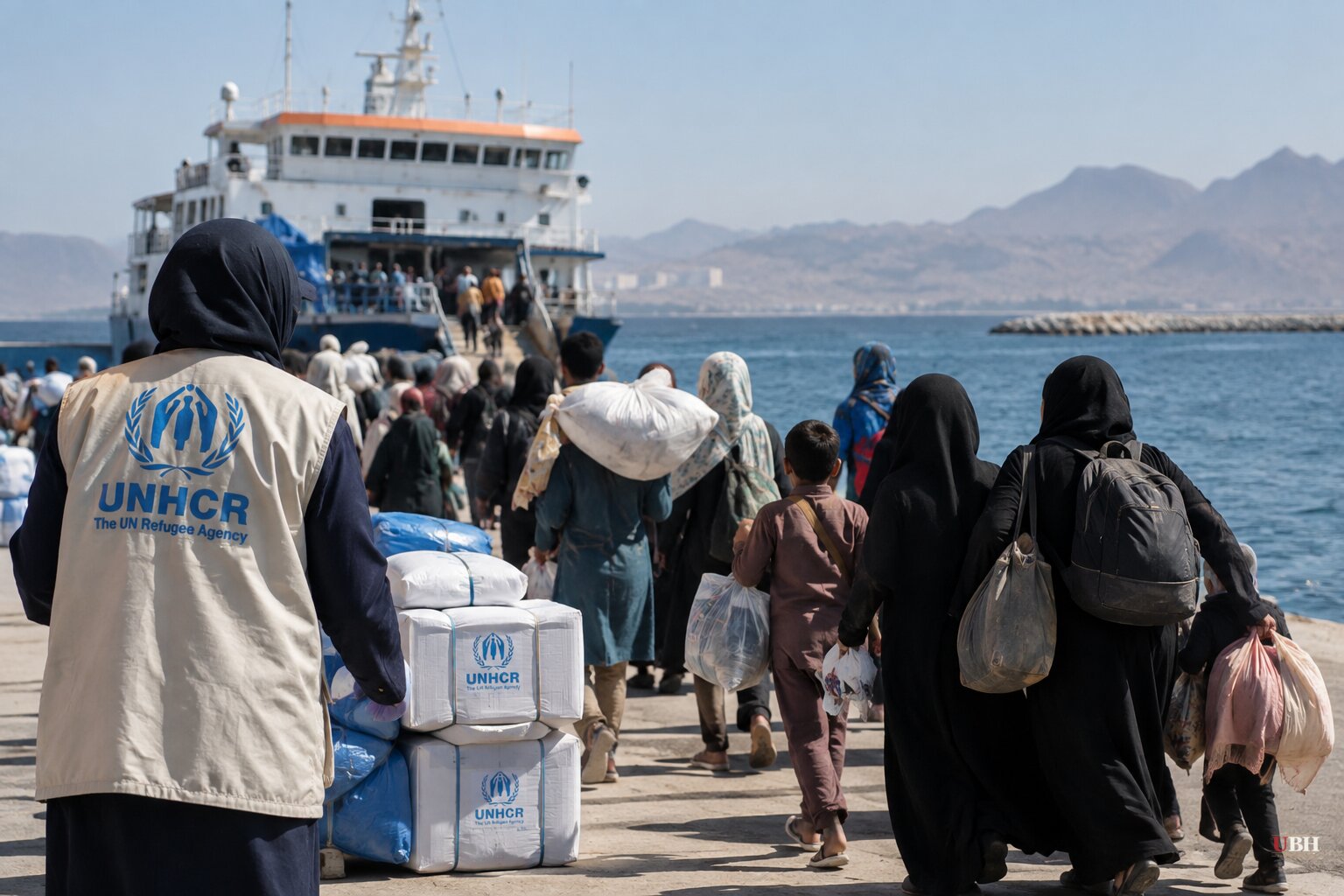
Since Houthi fighters launched their offensive west of Taiz on September 3, the number of displaced Yemenis has climbed past 130,000 by most counts, with thousands now fleeing the country entirely across the Gulf of Aden into Djibouti.
The exact figure depends on who's counting and when. UNICEF puts total displacement from the new escalation at nearly 134,000 people, including an estimated 73,000 children, according to Al Jazeera. The Norwegian Refugee Council (NRC) says 128,000 people have been displaced nationwide as of September 30, with almost 15,000 arriving at NRC-supported sites alone, a 78 percent jump from pre-escalation levels. Islamic Relief, counting from the start of August rather than September, puts the number at 146,000, with more than 80,000 of those from Taiz since September 1. The U.N.'s International Organization for Migration (IOM) counted 82,000 displaced as of a slightly earlier snapshot, according to Breitbart. The differences reflect different start dates and different tracking systems, not a dispute over the scale of the crisis.
The human cost is climbing alongside it. The World Health Organization says 838 people have been killed and more than 3,600 injured since early August, when Houthi forces began striking government positions. In the single week ending September 26, 164 people were killed. UNICEF has verified at least 15 children killed and 14 injured since September 3, with three more reported missing.
Families skipping meals
Mohamed Saed, a 46-year-old teacher in Taiz who hasn't been paid in years, told Al Jazeera his family now eats one or two meals a day instead of three. He's been displaced three or four times since Yemen's war began and is more than a year behind on rent. Ruqqaya Saeed, 25 and a mother of eight, fled Zaghar in the Maqbanah area west of Taiz under what she described as rocket and shell fire, leaving behind her livestock.
More than 18.3 million people in Yemen face acute food insecurity, and over 2.2 million children under five are projected to be acutely malnourished this year, according to figures cited by Al Jazeera and Yahoo News.
Djibouti overwhelmed
Beyond Yemen's borders, more than 3,000 people have crossed the Gulf of Aden into Djibouti since the offensive began, according to Breitbart, reversing a migration route that historically ran the other way. On one day in mid-September, more than 1,400 people arrived at the port town of Obock in a single day.
IOM mission chief for Yemen, Abdusattor Esoev, said the agency's resources "are very, very, very limited" and stocks will deplete soon. UNFPA's Francesco Galtieri said hundreds of the arrivals are pregnant women and the crisis is "growing by the hour." UNICEF's Ramatou Toure told The National the influx "took us by storm," growing from roughly 50 arrivals a day to 1,000 in a single day by September 13. The Markazi camp, designed to hold 5,000 people, already housed 2,700 Yemenis and 1,500 Eritreans before the new wave hit. UNICEF has requested $2.7 million in additional funding over three months and is planning for 10,000 arrivals in the coming months.
The Iran question
Fox News reported that Iran directed the Houthis to seize Yemen's Red Sea ports and to strike Saudi Arabia, tying the offensive to a broader pattern of Iranian-backed pressure on the kingdom. That reporting sits alongside separate developments: the State Department's Rewards for Justice program announced up to $10 million for information on senior al-Qaeda figures it says are based in Iran, and Iraq tightened border security after a drone attack, launched from Iraqi territory, struck Saudi Arabia's East-West oil pipeline, prompting Baghdad to open an investigation and remove a senior military commander.
Al Jazeera's own related coverage lists a separate report titled "Iran downplays possible role in Houthis' recent Yemen victories," indicating Tehran has not confirmed the level of direction Fox News describes. No independent verification of direct Iranian command over the Taiz offensive appears in the sourcing reviewed here, and the claim remains attributed to reporting rather than established fact.
Separately, Anthropic said it blocked Houthi-linked users in northern Yemen who tried to use its Claude chatbot to help build missile guidance software, including for a hypersonic glide weapon, after an unsuccessful test of a guided rocket. A member of the Houthis' political bureau denied the group relies on commercial AI tools for weapons development.
NRC's advocacy advisor in Yemen, Alison Bottomley, said families are arriving with "no food to sustain them and no extra clothing or shelter," and that humanitarian capacity "falls short of the vast ocean of needs." Five of the ten NRC-supported displacement sites in Taiz have already emptied as fighting closed in. Whether the $2.7 million UNICEF has requested for Djibouti, or the broader funding appeals from NRC and Islamic Relief, get met before winter remains an open question, as aid officials describe redirecting already-scarce funds from one crisis to cover another.
Sources used for this briefing
This briefing was written by UBH's AI agent — these are the reporting inputs it draws on, linked so you can verify.


