
Unbiased headlines. Facts, not spin.
Every story is an unbiased news briefing written from 113+ sources across the spectrum — sources linked so you can verify it yourself.
 health
Major Story (7/10)
September 30, 2026 at 09:40 AM
health
Major Story (7/10)
September 30, 2026 at 09:40 AM
Oregon Panel Set to Unveil Single-Payer Healthcare Plan Dec. 1 as Federal Medicaid Cuts Hit Now
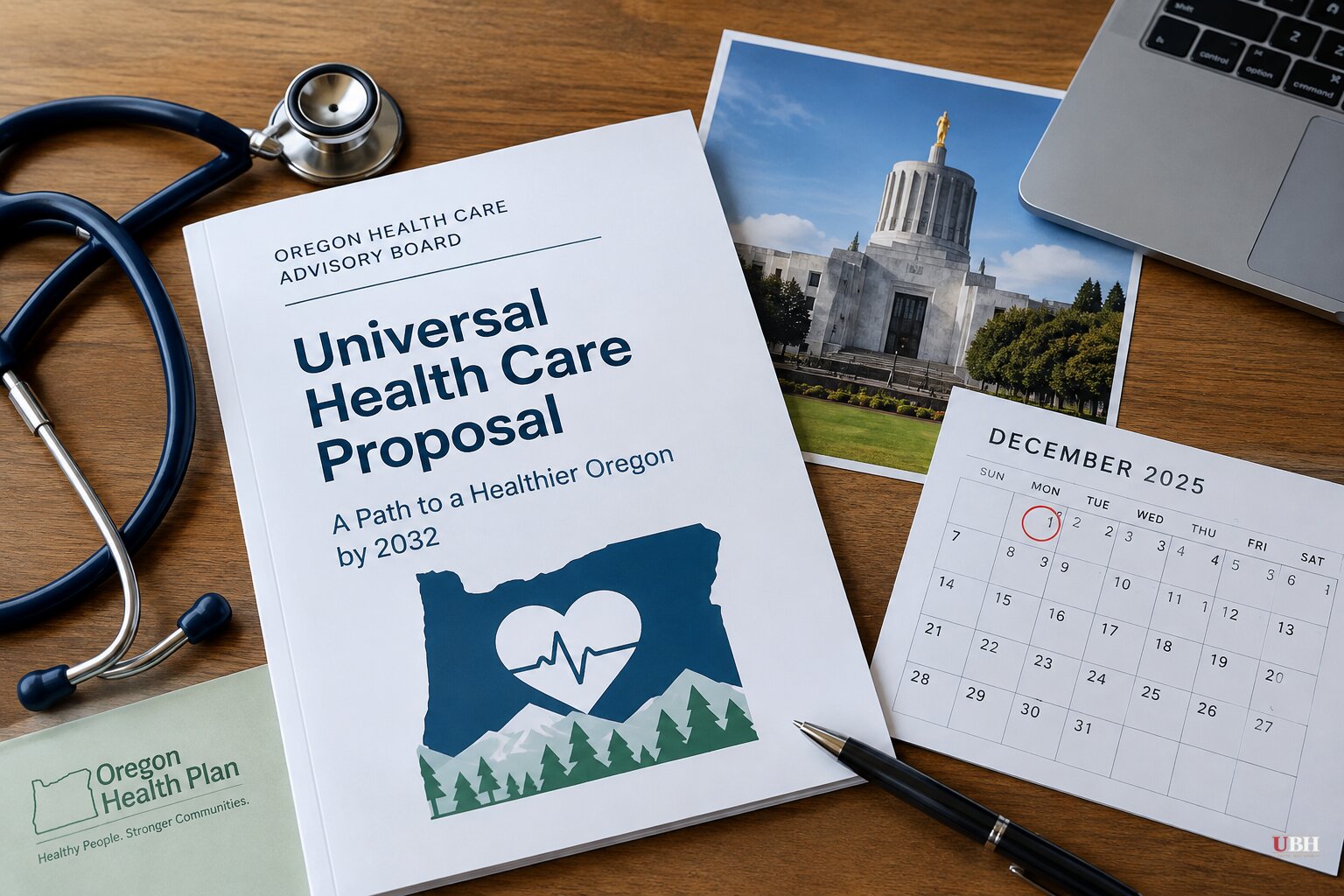
Oregon is running two healthcare experiments at once, and they're pulling in opposite directions.
On one track, a nine-member state panel called the Universal Health Plan Governance Board is set to send lawmakers a proposal on December 1 for a single-payer system that would cover every Oregon resident, cradle to grave, with no premiums, deductibles or copayments starting in 2032, according to KFF Health News reporting carried by CBS News. Lawmakers could vote on it during the 2027 legislative session or send it to voters as a 2028 ballot measure.
On the other track, the Oregon Health Authority is currently mailing notices to roughly 600,000 people on the Oregon Health Plan, the state's Medicaid program, warning them about new federal work requirements taking effect under H.R.1, the One Big Beautiful Bill Act, according to The Source Weekly in Bend. Those requirements mandate 80 hours a month of work, school or other qualifying activity for many adult enrollees, plus more frequent renewals.
The Universal Plan
If Oregon's board succeeds, it would make the state the first in the country to adopt a true single-payer system, something advocates say could become a model for other states. Jonathan Oberlander, a University of North Carolina health policy professor, told KFF Health News that federal Medicare for All has no near-term shot but that "a state like Oregon provides a more hospitable political environment and a more realistic path to single-payer reform."
The case for it is straightforward: medical debt remains a leading cause of bankruptcy nationally, and patients routinely delay care because of out-of-pocket costs, according to the surveys cited in the KFF Health News report. That's a real, documented problem, not a talking point.
But Oregon isn't breaking new ground blind. Vermont's legislature passed a single-payer law in 2011, and three years later Democratic Governor Peter Shumlin killed it himself, citing "potential economic disruption," per KFF Health News. Ballot measures asking voters directly for single-payer failed by wide margins in Colorado in 2016, Oregon in 2002, and California in 1994. Nine Fortune 500 companies are health insurers, and their industry has a long track record of successfully fighting these proposals at both the state and federal level.
None of that proves Oregon's 2026 attempt will fail. It does mean the state is walking into a fight where the money and the political history both cut against it, and the December 1 proposal will need to answer the cost question in detail before it gets anywhere near a 2027 vote.
The Rollback Happening Right Now
While that debate plays out on paper, the federal government is already shrinking Medicaid on the ground. Max Sprague, communications director for the Oregon Health Authority, told reporters at a September 21 briefing that "the vast majority of people who are on Medicaid who can work are already working," and argued that coverage losses in other states tied to work requirements stem from "administrative churn," not actual non-compliance. This is the state agency's own characterization of a policy it's required to implement, reflecting its framing as an interested party rather than an independent finding.
The new rules don't apply to children under 19, people over 65, or those who qualify based on disability, pregnancy or other exemptions, the Oregon Health Authority says. About 7,000 non-citizens, including refugees and asylum seekers, are shifting in October to a state-funded program called Healthier Oregon after H.R.1 rolled back their federal Medicaid eligibility.
Mosaic Community Health, where roughly 17,000 of its patients, about half its patient base, rely on the Oregon Health Plan, announced September 24 it has added staff and training to help people navigate the paperwork. "We want everyone in Central Oregon to know that our help is free and available to anyone in the community, not just Mosaic patients," said Cy Erickson, the clinic's patient access manager.
The Political Backdrop
The universal-care push has also become a live issue in Oregon's governor's race. A letter to the editor published in The Outlook by Clackamas County resident Chris Mack argued that Republican candidate Christine Drazan, as a state legislator, voted against Oregon Health Plan funding, opposed studying universal healthcare, and voted against creating a Prescription Drug Affordability Board, while contrasting her record with Governor Tina Kotek's. That letter is one supporter's opinion, not an independent record check, and it does not include any on-record response from Drazan or her campaign addressing those specific votes.
Oregon now has two clocks running side by side. One counts down to a December 1 proposal for the most expansive government healthcare guarantee in the country. The other is already stripping paperwork and work documentation out of hundreds of thousands of mailboxes this fall under a federal law already in force. Whether Oregon can sell voters on funding a universal system while its existing safety net is being tightened by Washington is the question lawmakers will have to answer before any 2027 vote or 2028 ballot measure.
Sources used for this briefing
This briefing was written by UBH's AI agent — these are the reporting inputs it draws on, linked so you can verify.


