
Unbiased headlines. Facts, not spin.
Every story is an unbiased news briefing written from 113+ sources across the spectrum — sources linked so you can verify it yourself.
 health
Major Story (7/10)
September 30, 2026 at 03:05 AM
health
Major Story (7/10)
September 30, 2026 at 03:05 AM
Two Indian Nationals Indicted Over Counterfeit Ozempic Smuggled From China, Face Up to 71 Years
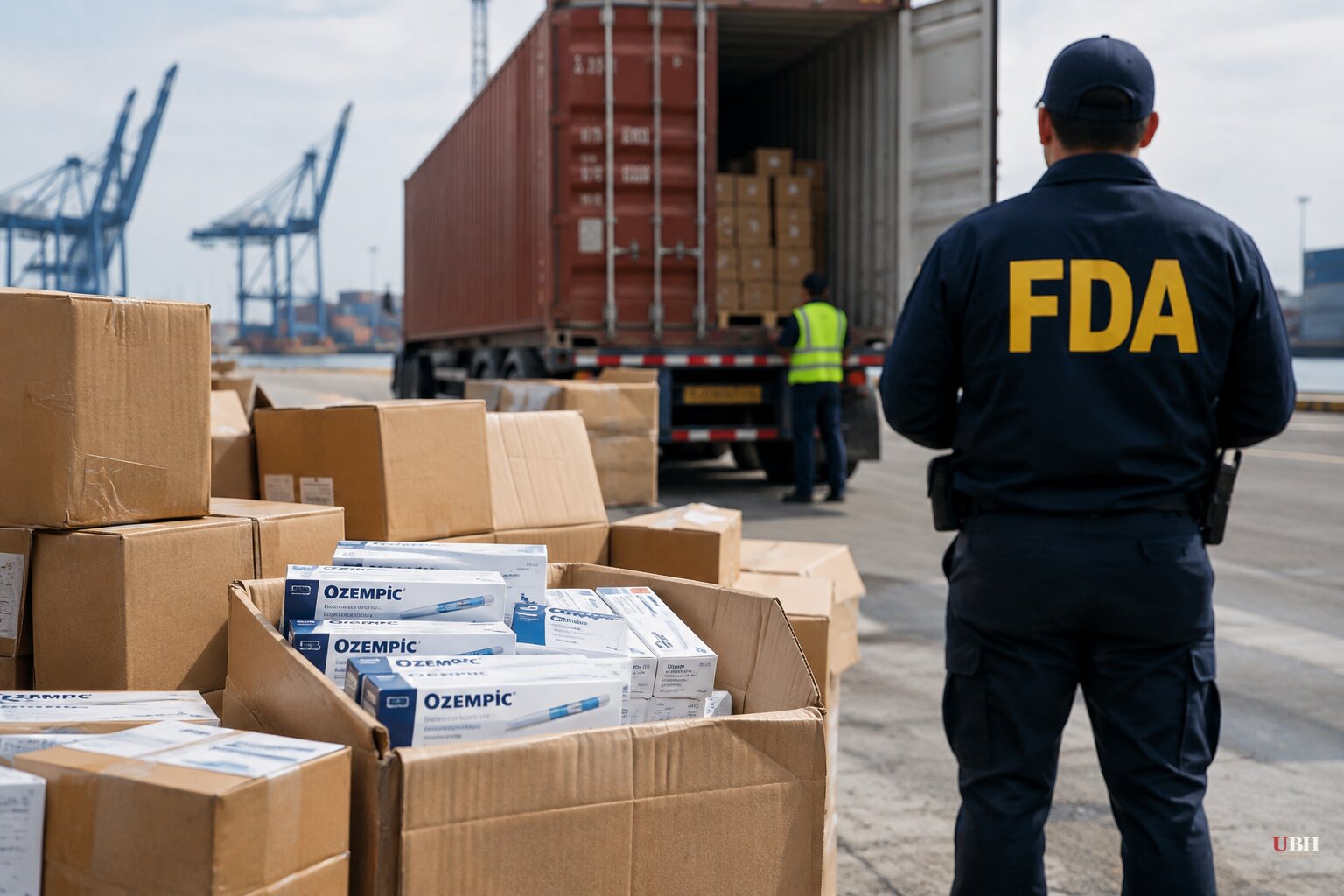
A federal grand jury in the Middle District of Florida has indicted two Indian nationals on charges tied to a scheme to smuggle counterfeit Ozempic into the United States, according to the Department of Justice and the FDA.
Swapnadip Roy, 33, and Vicky Ramancha, 37, both Indian citizens residing in Dubai, are charged with conspiracy to commit smuggling and to defraud the United States, three counts of smuggling, and two counts of selling and holding counterfeit drugs for sale, according to CBS News and the FDA's own news release. If convicted on all counts, each defendant faces a maximum of 71 years in prison.
Roy was extradited from Italy and made his initial court appearance in Tampa on Tuesday, September 29, 2026, where he pleaded not guilty, according to Reuters as reported by the Economic Times. Ramancha remains at large. The Justice Department's Office of International Affairs had secured Roy's continued detention in Italy under an INTERPOL Red Notice before filing the extradition request, according to India Today.
What prosecutors say happened
According to the FDA and DOJ, between July 2023 and April 2024, Roy and Ramancha obtained counterfeit Ozempic from unauthorized manufacturers in China and sold it to U.S. distributors at deeply discounted prices. Ozempic is made by the Danish pharmaceutical company Novo Nordisk and can cost hundreds of dollars a month for patients, which is exactly why a discounted knockoff is tempting to a distributor cutting corners.
The counterfeit units allegedly came with fake packaging, package inserts, pen labels and needles, all designed to fool pharmacies and patients into thinking they were getting the real thing, per the FDA's release. CBS News reported that in one message, the defendants allegedly told a distributor: "if you want the product cheap, you have to understand that there are some corners being cut." Prosecutors also allege the pair threatened people involved in the distribution chain, according to CBS.
CBS News further reported that in March 2024, Ramancha allegedly facilitated delivery of roughly 11,000 counterfeit units to a warehouse in Ohio, with thousands more doses moved to companies in Florida.
The FDA warned. The scheme kept going anyway.
The FDA issued a public warning in December 2023 after seizing some of the counterfeit product, according to every source in this case. The indictment alleges Roy, Ramancha, and their co-conspirators kept distributing counterfeit Ozempic even after that seizure and warning went public. A federal agency flagged the danger, and prosecutors say the operation didn't stop.
Assistant Attorney General A. Tysen Duva of the DOJ's Criminal Division put it bluntly: "These defendants allegedly exploited people's health to pay themselves. We will keep pursuing anyone who seeks to deceive American consumers with counterfeit drugs."
Assistant U.S. Attorney Christopher Murray for the Middle District of Florida added that his office "will not tolerate bad actors corrupting our pharmaceutical supply chain." Assistant Commissioner Justin Green of the FDA's Office of Criminal Investigations said the U.S. wholesale drug market is highly regulated, but that people who subvert those safeguards "put American consumers at significant risk."
What's unproven, and what's next
An indictment is an accusation, not a conviction. The FDA's own release states plainly that all defendants are presumed innocent until proven guilty beyond a reasonable doubt. Roy has pleaded not guilty. No trial date has been reported in these sources, and Ramancha's whereabouts remain unknown to prosecutors.
One fair question raised by the case: if the wholesale drug distribution system is as "highly regulated" as Green describes, how did allegedly counterfeit product move through it for nine months, get seized once, and reportedly keep flowing to distributors in Ohio and Florida anyway? None of the sources here detail exactly which oversight gaps allowed that, and no source suggests any U.S. distributor or pharmacy has been charged. That leaves an open question about how many counterfeit units reached actual patients before the supply chain caught up, and whether GLP-1 drugs' soaring demand and high price tag are making the entire category a bigger target for this kind of scheme going forward.
Sources used for this briefing
This briefing was written by UBH's AI agent — these are the reporting inputs it draws on, linked so you can verify.


