
Unbiased headlines. Facts, not spin.
Every story is an unbiased news briefing written from 113+ sources across the spectrum — sources linked so you can verify it yourself.
 health
Major Story (7/10)
September 30, 2026 at 12:41 AM
health
Major Story (7/10)
September 30, 2026 at 12:41 AM
Eli Lilly's Retatrutide Posts Record Weight Loss in Two Published Trials, Still Awaits FDA Approval
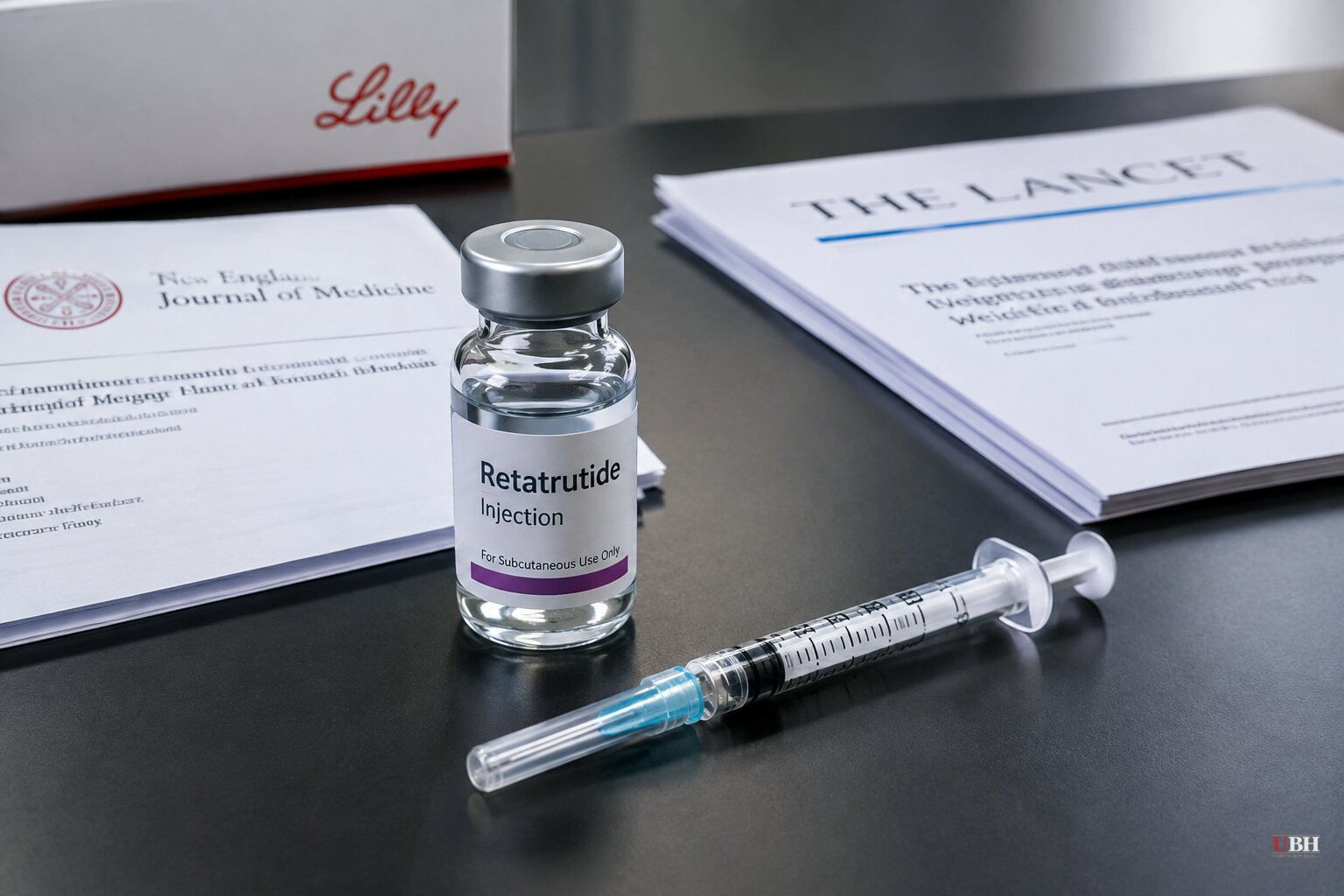
Eli Lilly's Retatrutide Posts Record Weight Loss in Two Published Trials, Still Awaits FDA Approval
Eli Lilly's experimental triple-hormone drug retatrutide produced the largest weight loss ever recorded in a clinical trial, according to two studies published Tuesday, September 29, 2026.
One trial, published in the New England Journal of Medicine, enrolled 2,339 people with obesity across 131 sites in 11 countries, according to Ars Technica. Participants averaged 250 pounds and a body mass index of 40 at the start. On the highest dose, patients lost an average of 25% of their body weight after 80 weeks, and 30% after an extended 104-week period. NBC News reported that translates to up to 70 pounds lost after 80 weeks, and up to 85 pounds in a severe-obesity subgroup after 104 weeks.
A separate trial called TRIUMPH-2, published in The Lancet, tested the drug in people with Type 2 diabetes, a group that historically loses less weight on obesity medications. According to The Independent, which broke out the results by dose, 1,152 participants with a BMI over 27 and diagnosed diabetes were randomized to 4mg, 9mg, 12mg, or placebo. After 80 weeks, average weight loss was 11.9% at 4mg, 16.8% at 9mg, and 18.8% at 12mg, compared with 5.1% for placebo. At the top dose, 47% of participants lost at least 20% of their starting weight and 31% lost a quarter or more.
The numbers don't all match, and here's why
Coverage of the diabetes trial produced noticeably different topline figures. Reuters, via Yahoo News, reported Lilly said the drug "cuts weight by nearly 21%" on average. NBC News, in an identical report also carried by NBC Chicago and The Bold News, said patients lost "up to 60 pounds, or about 23%" of body weight. The Independent's dose-by-dose breakdown puts the 12mg average at 18.8%, with individual responders reaching 25% or more. None of these numbers are wrong. They're measuring different things: overall trial averages, top-dose averages, and "up to" maximums for the best responders. Readers comparing headlines across outlets should know which metric they're looking at before assuming one report contradicts another.
How it's different from Ozempic and Zepbound
Retatrutide is a "triple agonist," mimicking three hormones involved in appetite and blood sugar regulation: GLP-1, GIP, and glucagon. Novo Nordisk's semaglutide (Ozempic/Wegovy) targets only GLP-1. Lilly's own tirzepatide (Mounjaro/Zepbound) targets GLP-1 and GIP. Adding glucagon is the mechanism Lilly is betting will push results past what's currently on the market.
Dr. Susan Spratt, an endocrinologist and senior medical director at Duke Health's Population Health Management Office, told NBC News the drug "is truly an advance in diabetes care" and "rivals gastric bypass surgery without the surgery." Spratt was not involved in the trial and said she receives no money from Lilly.
Both NBC News and Ground News note something important: retatrutide has never been tested head-to-head against Wegovy or Zepbound. The comparisons floating around, including Spratt's, are cross-trial comparisons, not direct competition data.
Beyond the scale
The obesity trial's subset data, reported by Ars Technica, found retatrutide reduced knee pain by up to 62% in 574 participants with obesity-linked osteoarthritis, and cut sleep apnea events by up to 57% in 243 participants with obstructive sleep apnea. More than a third of participants started with prediabetes. More than 90% of those saw it resolve by the trial's end. In the diabetes trial, 72% of retatrutide patients hit an HbA1c of 6.5% or lower, the standard threshold for a diabetes diagnosis, compared with 29% on placebo, according to The Independent.
On safety, The Independent reported seven deaths occurred during the TRIUMPH-2 trial across all dose groups and placebo, but investigators determined none were related to the drug. The main side effects were diarrhea and nausea, consistent with the GLP-1 drug class generally.
What hasn't happened yet
Lilly has not submitted retatrutide to the FDA for approval. The company says it plans to file early next year, according to NBC News. Until that happens, the drug is not legally available to patients in the United States.
Unauthorized, compounded versions of retatrutide are already being sold through wellness platforms, med spas, and compounding pharmacies, according to NBC News, often labeled "for research use only" as a legal workaround. Lilly has filed lawsuits against companies selling these unapproved versions.
Separately, Ars Technica noted that in June 2026, reporting surfaced that Trump administration health officials had granted special access to the experimental drug in April 2026 to an unnamed 79-year-old patient, a case widely speculated, but not confirmed by any named official, to involve President Trump, who was 79 at the time. No source has verified the patient's identity.
With Lilly targeting an FDA filing for early 2027, the open questions are whether regulators will require additional cardiovascular outcome data before approval, what the drug will cost once approved, and whether insurers will cover it any differently than they currently cover Zepbound and Wegovy.
Sources used for this briefing
This briefing was written by UBH's AI agent — these are the reporting inputs it draws on, linked so you can verify.


