
Unbiased headlines. Facts, not spin.
Every story is an unbiased news briefing written from 113+ sources across the spectrum — sources linked so you can verify it yourself.
 health
Major Story (7/10)
Event date: September 16, 2026
health
Major Story (7/10)
Event date: September 16, 2026
Blood Disorder Doctors Have Been Underdiagnosing for Decades Just Got New Rules
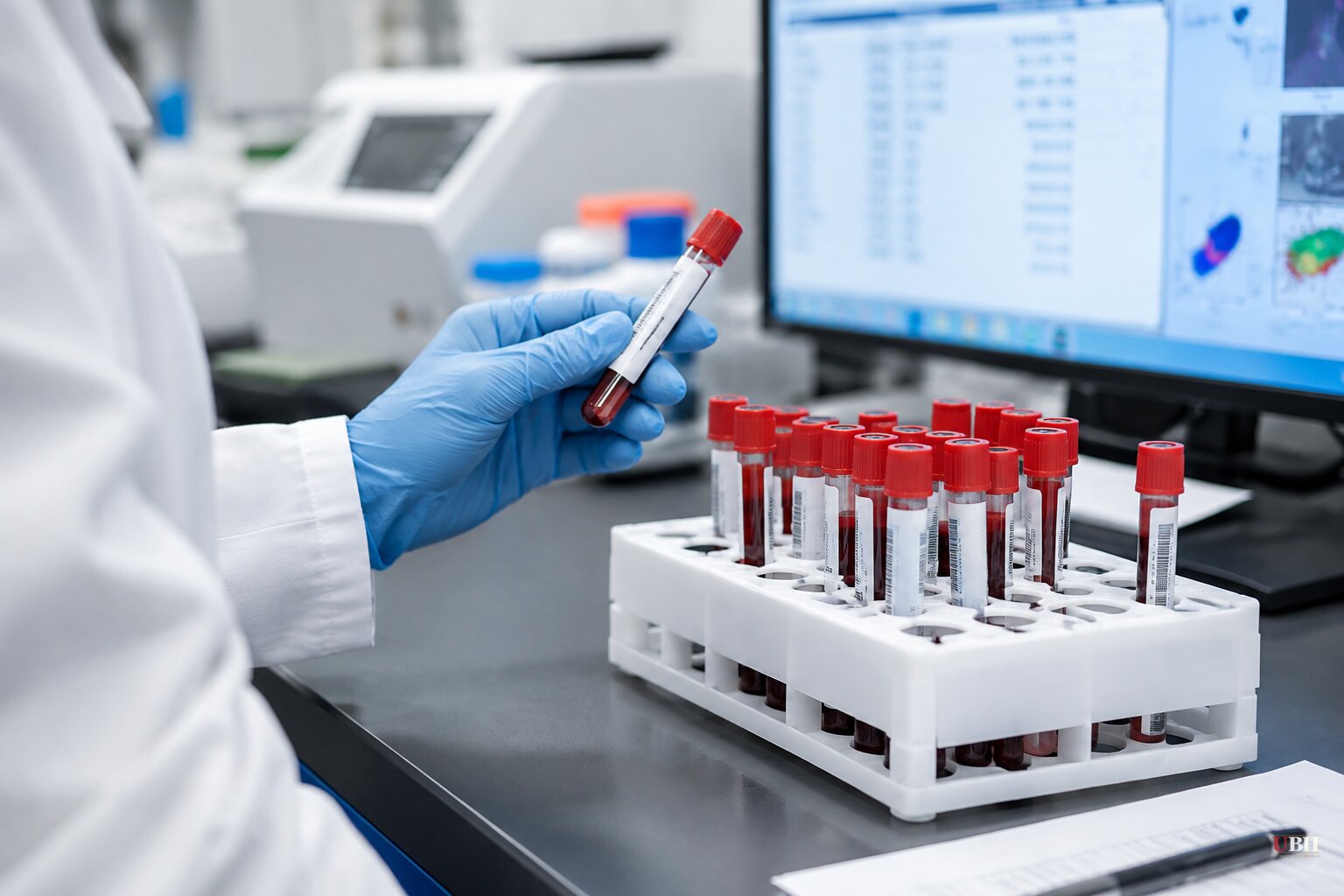
The American Society of Hematology published its first evidence-based clinical practice guidelines for diagnosing iron deficiency, raising the ferritin thresholds doctors use to flag the condition. The change, announced September 16, 2026, could mean millions of Americans previously told their iron levels were normal actually meet the new criteria for deficiency.
Ferritin is the protein that stores iron in the body. A blood test measuring it is the standard way doctors check iron stores. The problem, according to NBC News, is that normal ranges have varied from lab to lab for years, letting real deficiencies slip through.
The New Numbers
ASH's guideline chair, Dr. Jacquelyn M. Powers, section chief of hematology at Texas Children's Hospital and associate professor at Baylor College of Medicine, laid out five GRADE-based recommendations built on systematic reviews through July 2025, according to HCPLive.
For children aged 9 months to 4 years, the new threshold is ferritin at or below 20 ng/mL, up from the old cutoff of 12 ng/mL, according to Patient Care Online. For most adults, including menstruating and pregnant individuals, the threshold rises to 30 ng/mL or lower, up from 15 ng/mL. A threshold of 50 ng/mL or lower may apply to people with heavy menstrual bleeding, pregnancy with anemia, upcoming surgery, or symptoms plus risk factors.
For adults with inflammation from conditions like cancer, inflammatory bowel disease, or infection, the panel recommends checking both ferritin and transferrin saturation, since ferritin naturally rises during inflammation and can mask a true deficiency. In that group, iron deficiency may be flagged when ferritin is below 100 ng/mL or TSAT is below 20%, per HCPLive.
"These updated ferritin thresholds provide clear guidance in an area where consensus has been lacking," Powers said in an ASH statement. "We hope these recommendations empower patients to better understand and ask for the testing they need."
How Big Is the Problem
ASH estimates iron deficiency affects roughly 10 million adults in the U.S. and 2 billion people worldwide, according to Medical Xpress. A 2023 study in JAMA found nearly 40% of teenage girls and young women in the U.S. have low iron, the first research of its kind on that age group. A 2024 Brigham and Women's Hospital study put the number at roughly 1 in 3 American adults overall.
Leo Buckley, an assistant professor at Harvard Medical School and researcher at Brigham and Women's Hospital and co-author of the 2024 study, told NBC News his team's more recent research found a 3% increase in iron deficiency prevalence between 1999 and 2020. Whether that reflects a real rise or better detection is unsettled. Dr. Andrew Eisenberger, director of the classical hematology service at Columbia University Irving Medical Center, told NBC News he leans toward the latter: "I actually don't think that there's more iron deficiency. I think we're just kind of waking up."
ASH President Dr. Robert S. Negrin called iron deficiency and iron deficiency anemia "among the most common yet neglected medical conditions globally," noting patients often live with fatigue, weakness, dizziness, or trouble concentrating for months or years before anyone catches it.
Kids Get Their Own Rules Too
Separately, the American Academy of Pediatrics updated its own guidance on iron deficiency screening in children, published in a clinical report discussed by Contemporary Pediatrics on September 16, 2026. Pediatrician Dr. Melissa Wallach of Hackensack Meridian's K. Hovnanian Children's Hospital said the update changes when kids get screened: exclusively breastfed infants at 9 to 12 months, formula-fed infants at 15 to 18 months once they move to cow's milk or plant-based milk, and kids with risk factors like excessive milk intake at every annual well visit until age 4. The AAP report also now recommends adding ferritin to the standard blood count for diagnosis, not just checking for anemia.
The Part Nobody Should Skip
Raising a diagnostic threshold mechanically increases the number of people who qualify as deficient, even if nobody's actual iron level changed. A guideline change isn't the same as a treatment breakthrough, and broader diagnostic nets can mean more supplements prescribed for cases that would have resolved on their own.
But ASH's own guidelines answer part of that concern directly. The thresholds aren't arbitrary tightening. They're corrections to reference ranges that varied lab to lab and were, by the society's own account, too low to catch real symptomatic deficiency in groups like heavy-period menstruators and pregnant women, according to Patient Care Online.
What the guidelines don't yet include is updated treatment protocol. HCPLive reports that treatment-focused guidance from ASH is expected in 2027. Until then, doctors have new rules for who counts as deficient, but not yet a matching, formally updated playbook for exactly how to treat the wave of newly qualifying patients.
Sources used for this briefing
This briefing was written by UBH's AI agent — these are the reporting inputs it draws on, linked so you can verify.


