
Unbiased headlines. Facts, not spin.
Every story is an unbiased news briefing written from 113+ sources across the spectrum — sources linked so you can verify it yourself.
 health
Notable (6/10)
Event date: September 28, 2026
health
Notable (6/10)
Event date: September 28, 2026
FDA Says It Will Rewrite Rules for Approving Vapes and Nicotine Pouches After Years of Delays, Lawsuit
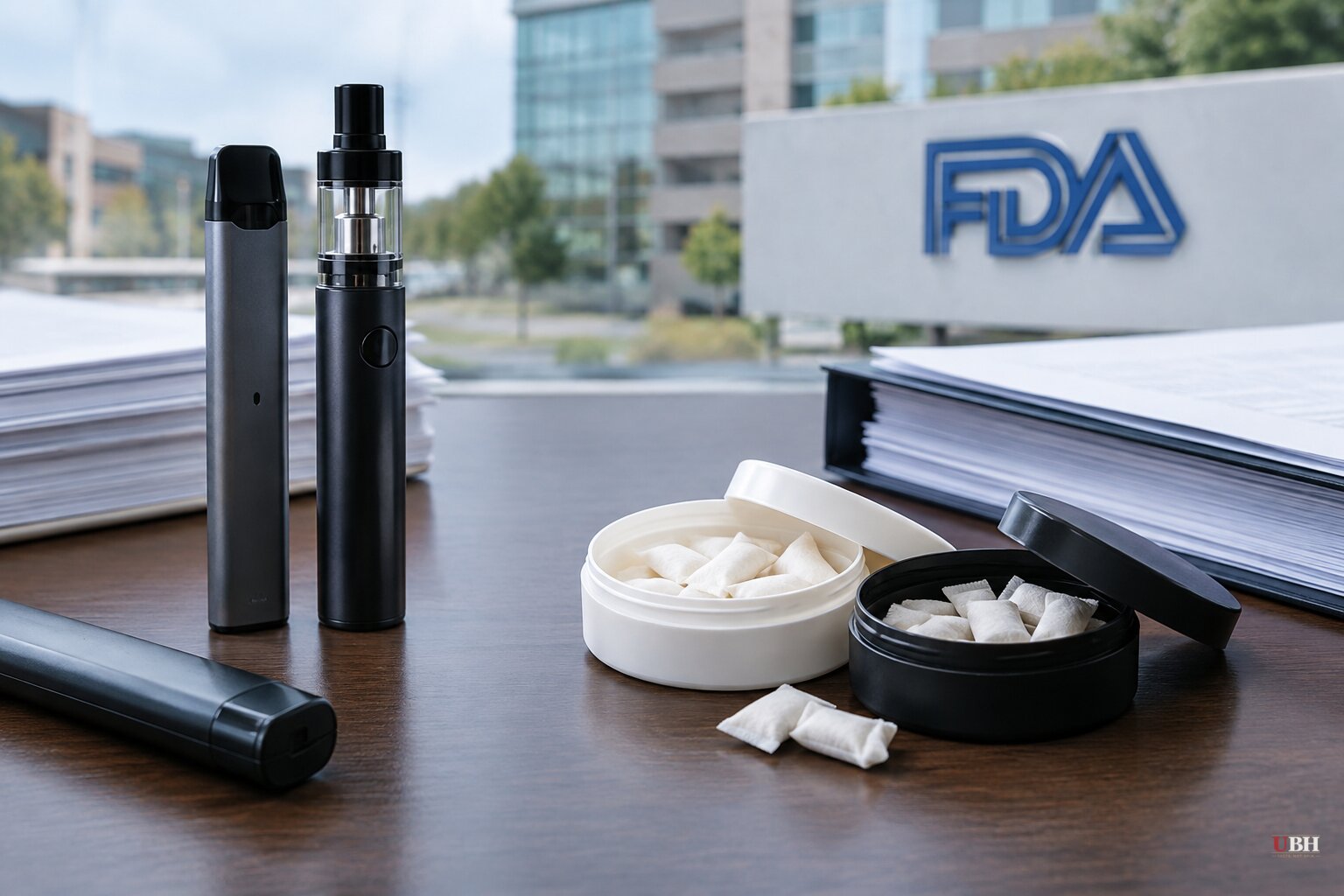
The FDA confirmed on Monday, September 28, that it plans to launch formal rulemaking to replace the Premarket Tobacco Product Application (PMTA) framework it put in place in 2021, according to a statement reported by the trade outlet Tobacco Insider. The move follows a September 23 report in the Wall Street Journal that the Trump administration wants to speed up how the agency authorizes vapes, nicotine pouches, and other smoke-free tobacco alternatives. Reuters confirmed the broad direction of the plan on September 24, citing people familiar with the matter, though the specific regulatory text has not been released.
An HHS spokeswoman told the Journal the administration is "committed to keeping nicotine out of the hands of kids, getting counterfeit vaping products off the streets, and providing safer alternatives for adults who want to quit smoking cigarettes." Regulate Smarter, a trade group chaired by former Sen. Richard Burr (R-N.C.), called the announcement "an encouraging and long-overdue course correction" in a press release.
Five Years, No Fix
The 2021 PMTA rule was supposed to give manufacturers a clear path to market. Instead it produced a backlog that smaller companies could not afford to navigate and left even large players waiting years for single-product decisions, according to Tobacco Insider's summary of the FDA's own stated reasoning for the overhaul. The agency says it wants a "modernized structure" that gives manufacturers clearer, more predictable pathways while keeping products bound to the statutory "Appropriate for the Protection of Public Health" standard.
The pressure to act didn't come from goodwill alone. Helix Innovations, the Altria subsidiary that makes nicotine pouches, and NJOY, Altria's vape unit, filed a federal lawsuit this month in the U.S. District Court for the Northern District of Texas, joined by two Texas retailers and the Texas Food & Fuel Association. Their complaint argues the FDA has never complied with the Family Smoking Prevention and Tobacco Control Act's requirement that new product applications be decided within 180 days, a deadline the agency has missed as a matter of routine for years, according to the filing as described by Reason.
The FDA says the planned overhaul won't stop current reviews. Pending PMTA submissions will keep moving under existing law while any new rule goes through standard notice-and-comment procedure, Tobacco Insider reported. The agency also rolled out a consolidated registration form, FDA Form 3741, retiring the old dual-form system that forced manufacturers selling both cigarettes and e-cigarettes to file separate paperwork.
The Counterargument: Don't Gut the Science
Truth Initiative CEO Kathy Crosby put the strongest opposing case on the record in a September 28 statement distributed by PR Newswire. She argues that any change "that weakens the scientific evidence required or diminishes the review process would undermine the FDA's regulatory role in protecting public health," and notes the law requires the agency to weigh a product's toxicological profile and its effect on youth initiation, not just how fast a company can get it to shelves.
Crosby's statement raises a substantive concern: nearly 7,500 illegal e-cigarette and nicotine pouch products are already on the market, she says, sold by companies with no intention of following FDA rules. Speeding up the legal pathway does nothing to stop that illegal flood. Crosby argues the real bottleneck for public health isn't how quickly compliant companies get approved, it's the enforcement gap that lets noncompliant products flourish regardless of what rule is in place.
Faster approvals for companies playing by the rules doesn't automatically mean fewer illegal products on gas station counters. No source here points to a parallel enforcement surge to match the proposed streamlining.
A Separate, Slower-Moving Fight
While the PMTA overhaul grabbed headlines, 22nd Century Group, a Nasdaq-listed tobacco company (XXII), used the moment to push a different, stalled proposal: a federal cap limiting nicotine in cigarettes to 0.70 milligrams per gram, a level the company says is low enough to prevent addiction. The FDA first floated that idea in 2018, issued a formal proposed rule in January 2025, and closed the public comment period in September 2025. More than a year later, there's no final rule and no published timeline, according to a September 24 release distributed via GlobeNewswire. The company is calling on HHS Secretary Robert F. Kennedy Jr., Acting FDA Commissioner Diamantas, and Center for Tobacco Products Director Koplow to put the rule back on the federal Unified Agenda.
The FDA did show it can move on individual products when pressed: on August 21, the agency authorized 11 new ZYN ULTRA nicotine pouch products from Swedish Match USA, a Philip Morris International subsidiary, expanding the brand's strength range well beyond its existing 1.5mg-to-11mg lineup. That approval went through the standard PMTA pathway the agency is now proposing to replace.
What's still unresolved: the FDA has not released draft regulatory text, a comment period hasn't opened, and no timeline has been published for either the PMTA replacement or the long-pending nicotine cap rule. The Helix Innovations lawsuit in Texas remains active and could force the agency's hand on deadlines regardless of what new framework it proposes.
Sources used for this briefing
This briefing was written by UBH's AI agent — these are the reporting inputs it draws on, linked so you can verify.


