
Unbiased headlines. Facts, not spin.
Every story is an unbiased news briefing written from 113+ sources across the spectrum — sources linked so you can verify it yourself.
 health
Major Story (7/10)
October 1, 2026 at 08:55 AM
health
Major Story (7/10)
October 1, 2026 at 08:55 AM
Lilly's Oral GLP-1 Pill Orforglipron Clears Heart-Safety Bar in Trial, Bigger Claims Still Unproven
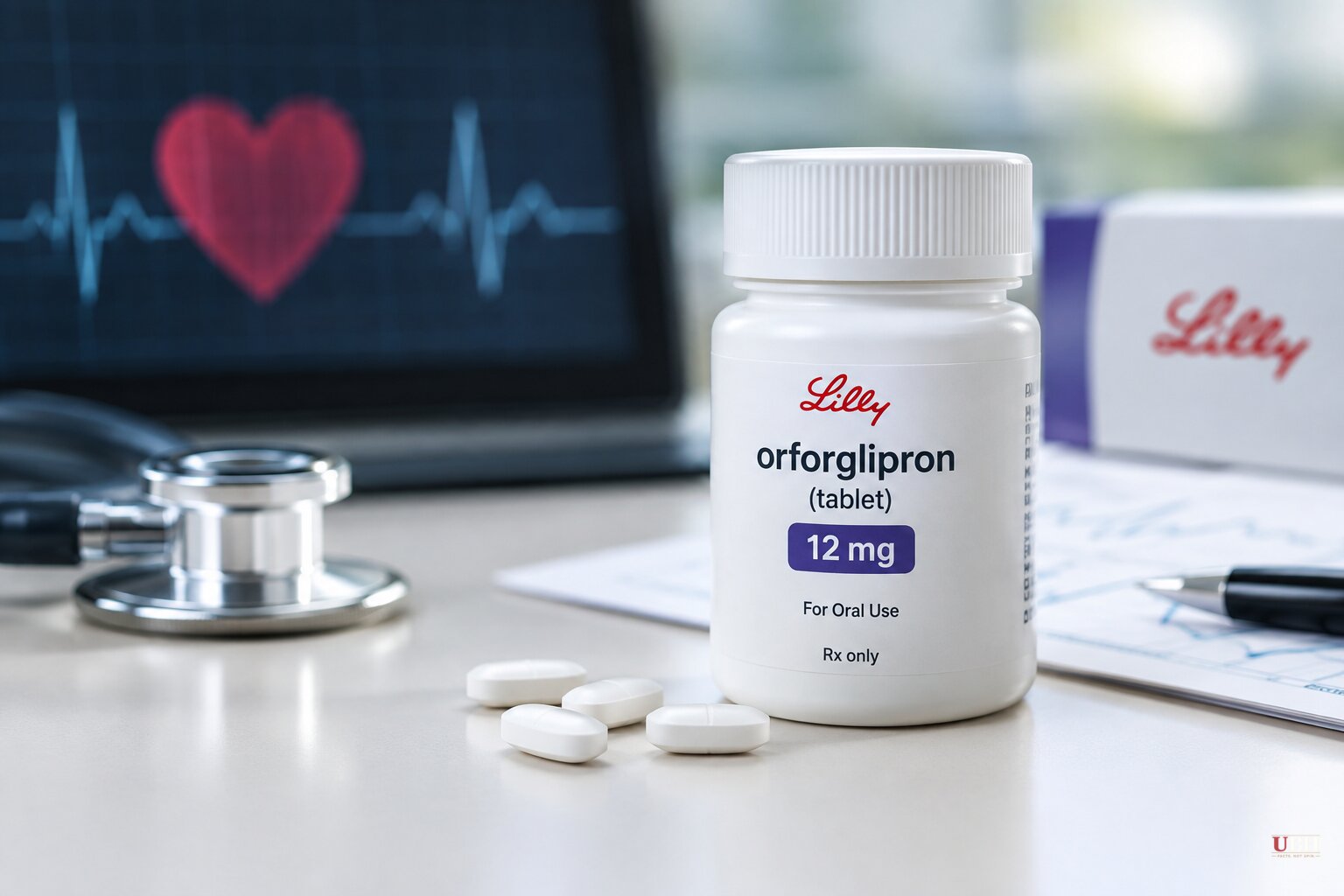
Eli Lilly's oral GLP-1 pill orforglipron, sold under the brand name Foundayo, met its main safety goal in a major new trial, according to results Lilly announced September 30 and presented at the European Association for the Study of Diabetes meeting in Milan. The data were published simultaneously in The Lancet.
The trial, called ACHIEVE-4, is the largest and longest study of orforglipron in type 2 diabetes to date, according to Lilly. It compared the pill against titrated insulin glargine in adults with type 2 diabetes and obesity or overweight who were already at elevated cardiovascular risk, following them for a median of two years.
What the trial actually proved
The primary question was narrow: does orforglipron avoid making heart risk worse compared to insulin. It passed. Major adverse cardiovascular events hit 4.2% of patients on orforglipron versus 5.0% on insulin glargine, a hazard ratio of 0.84 with a 95% confidence interval of 0.59 to 1.20, meeting the pre-set bar for noninferiority, according to lead investigator Klara Klein, MD, PhD, of the University of North Carolina School of Medicine, whose team reported the findings.
The numbers Lilly is leading with
Lilly's own press release puts different numbers up top: a 53% lower risk of cardiovascular death (hazard ratio 0.47, 95% CI 0.25-0.90) and a 57% lower risk of all-cause death (hazard ratio 0.43, 95% CI 0.25-0.75) versus insulin glargine, both from what the company calls "pre-planned analyses."
Those are striking numbers. They're also not what ACHIEVE-4 was powered to prove. MedPage Today's coverage of the same data states plainly that "heart benefits remain unproven" and notes Klein's team "stressed" that ACHIEVE-4 "was not statistically powered for superiority on cardiovascular outcomes." Lilly's release does not carry that caveat with the same weight, framing the death-rate drops as "suggesting the potential for more comprehensive health benefits" rather than flagging the statistical limits up front.
Lilly makes Zepbound (tirzepatide), its injectable GLP-1 drug, and stands to gain financially if orforglipron, a pill, clears regulatory hurdles for a cardiovascular indication. That's not evidence the data are wrong. It is a reason to read a drugmaker's own press release on its own drug's trial with the same scrutiny applied to any interested party's claims.
The real superiority test is already running. A separate trial called ATTAIN-Outcomes is underway, powered specifically to measure whether orforglipron beats placebo on cardiovascular outcomes in people with established heart disease or chronic kidney disease, according to Klein's team. Results aren't in yet.
The trade-offs
Orforglipron also delivered real metabolic benefits over 104 weeks: sustained weight loss, better blood sugar control, a 24.2% drop in a marker of kidney damage called albuminuria, and a slower decline in kidney filtration rate compared to insulin glargine. At week 52, patients saw their waist circumference drop by 7.0 cm, systolic blood pressure fall 4.4 mmHg, triglycerides down 18.9%, and a marker of inflammation called hsCRP down 38.9%, according to Lilly's release.
The cost was gut trouble. Gastrointestinal side effects hit 62.1% of orforglipron patients versus 14.2% on insulin glargine, and GI issues were the number one reason people quit taking the pill, according to the published results.
Orforglipron's selling point is convenience. It's a once-daily pill that doesn't require fasting or water restrictions, unlike oral semaglutide, because it's a non-peptide compound that's cheaper and easier to manufacture, per MedPage Today. It's already FDA-approved for obesity treatment. A cardiovascular indication would be a separate, bigger win for Lilly, one that rival drug semaglutide has already secured.
The bigger GLP-1 picture at the same conference
Two other studies presented around the same EASD meeting complicate the simple "weight loss equals heart protection" story.
A team led by Professor Helen Colhoun of the University of Edinburgh, publishing in the European Heart Journal on September 24, re-analyzed the SELECT trial of semaglutide in 17,604 people with overweight or obesity. Semaglutide cut cardiovascular disease by 20% in that trial. Colhoun's group found that weight loss, waist circumference, and standard risk-factor improvements could explain no more than half of that reduction, suggesting the drug protects the heart through some other mechanism nobody has pinned down yet.
Separately, Dr. Karen Hvid of Copenhagen University Hospital analyzed data on 313,145 people from the UK Biobank and the Copenhagen General Population Study who did not have diabetes or heart disease. People with a BMI of 25 to 26.9, currently too low to qualify for GLP-1 weight-loss prescriptions, but who had high remnant cholesterol or inflammation markers, developed coronary heart disease at roughly the same rate as people who do qualify for the drugs today, according to Hvid's team.
That's an observational finding, not a clinical trial. It shows a correlation between risk markers and heart disease in a group currently excluded from GLP-1 coverage. It does not prove that giving this lower-BMI group the drugs would lower their heart risk, since nobody in the study was actually randomized to take them.
No regulator has acted on any of this. The FDA has not expanded orforglipron's approval to cover cardiovascular protection, and ATTAIN-Outcomes, the trial that could actually prove or disprove a heart benefit, is still enrolling or following patients with no reported completion date in these materials.
Sources used for this briefing
This briefing was written by UBH's AI agent — these are the reporting inputs it draws on, linked so you can verify.


