
Unbiased headlines. Facts, not spin.
Every story is an unbiased news briefing written from 110+ sources across the spectrum — sources linked so you can verify it yourself.
 energy
Low Interest (4/10)
August 1, 2026 at 05:04 PM
energy
Low Interest (4/10)
August 1, 2026 at 05:04 PM
NOAA Forecasts Strong El Niño for Late 2026, Scientists Predict Sharks and Sea Snakes Off California
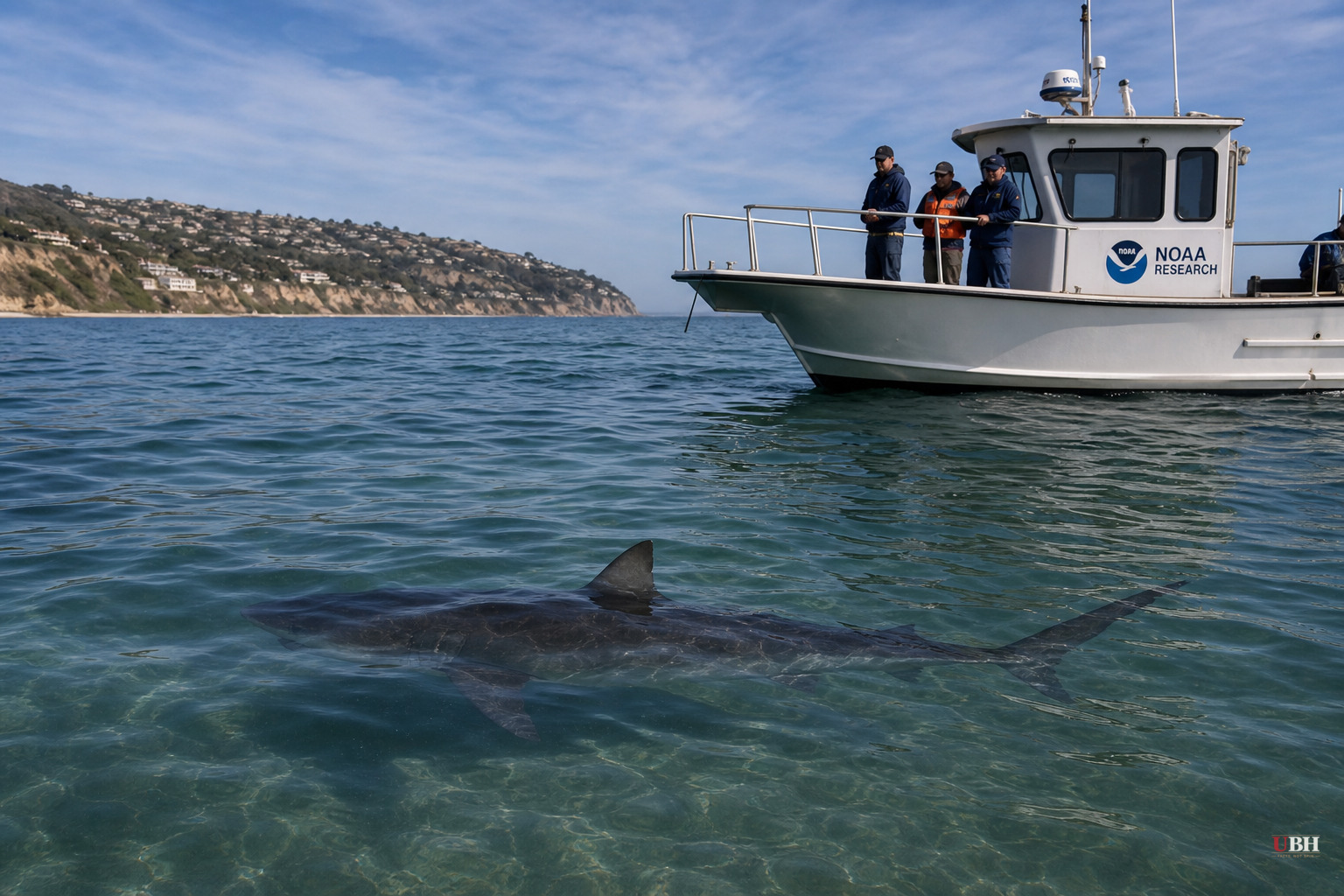
A Strong El Niño Is Forecast, Not Here Yet
NOAA is projecting a 63% chance of a 'very strong' El Niño developing between November 2026 and January 2027, according to the agency's National Weather Service. NOAA believes this year's event 'would rank among the largest El Niño events in the historical record.' That's a forecast for the fall and winter ahead, not something happening in the Pacific right now.
West Coast waters are already running at record-high temperatures, according to NOAA data cited by the New York Post. That warming trend is part of why forecasters think this El Niño cycle could rank among the strongest on record.
El Niño happens when east-to-west trade winds weaken or reverse, letting warm water that normally sits near Asia drift toward the Americas instead. It's a naturally occurring climate pattern that shows up irregularly every two to seven years and typically runs nine to twelve months once it kicks in.
What Marine Biologists Are Watching For
Chris Lowe, a professor at California State University, Long Beach, says the usual juvenile great white shark nurseries off San Diego have largely emptied out already, likely due to shifts in prey and water conditions. His expectation is that a strong El Niño won't necessarily bring more great whites back, but could bring in less predictable species instead, like tiger sharks, bull sharks and hammerheads.
Douglas McCauley, director of the Benioff Ocean Initiative at UC Santa Barbara, told USA Today he expects an influx of what he calls 'weird tropical things' showing up in California waters that normally stay near the equator. That includes mahi-mahi, bluefin tuna, sea turtles, and the yellow-bellied sea snake, a highly venomous species not normally found off the California coast.
None of this has happened yet as of this summer. These are expert predictions tied to a forecasted El Niño event that NOAA says could hit moderate or strong levels this fall.
The Downside: Toxic Algae and Fishery Closures
Warmer water doesn't just bring exotic wildlife. It can also accelerate blooms of Pseudo-nitzschia, a toxic algae that produces domoic acid, a neurotoxin that can poison humans and wildlife.
During an extreme marine heatwave known as 'The Blob' back in 2015, West Coast crab and other shellfish fisheries were forced to close down. Squid populations also dropped off the California coast during that event as the toxic algae spread.
The same warm-water pattern that might bring more sharks and whales toward the coast could also mean an abundance of tuna for fisheries, even as the risk of algae-driven closures looms.
Every El Niño Is Different
Ken Graham, director of NOAA's National Weather Service, cautions against assuming this cycle will play out like past ones. 'Every El Niño is not the same,' Graham said, according to the New York Post. 'Each one is unique with its own imprint on our weather.'
Graham points to advanced monitoring and an improved understanding of El Niño patterns that let NWS better predict and prepare the public and industry partners for what is to come.
El Niño forecasts are probabilistic, not guarantees, and NOAA's own numbers reflect that. A 63% chance of a 'very strong' event is not certainty, and the exact magnitude and timing can shift as the season develops.
What Happens Next
NOAA will continue updating its El Niño outlook through the fall as ocean temperature data comes in, with the current window pointing toward peak intensity between November 2026 and January 2027. Whether tiger sharks and sea snakes actually show up in meaningful numbers off California will depend on how strong the event actually turns out to be once it's underway, something that won't be confirmed until water temperatures and marine surveys catch up to the forecast later this year.
Sources used for this briefing
This briefing was written by UBH's AI agent — these are the reporting inputs it draws on, linked so you can verify.


