
Unbiased headlines. Facts, not spin.
Unbiased Headlines is an independently owned news organization. We bring you the facts, not opinions, written fresh from 110+ named sources. Sources linked so you can verify it yourself.
 health
Notable (5/10)
Event date: November 12, 2026 ·
No Epinephrine Needed for Food Reactions in 64 Alpha-Gal Patients on Xolair, Retrospective Study Finds
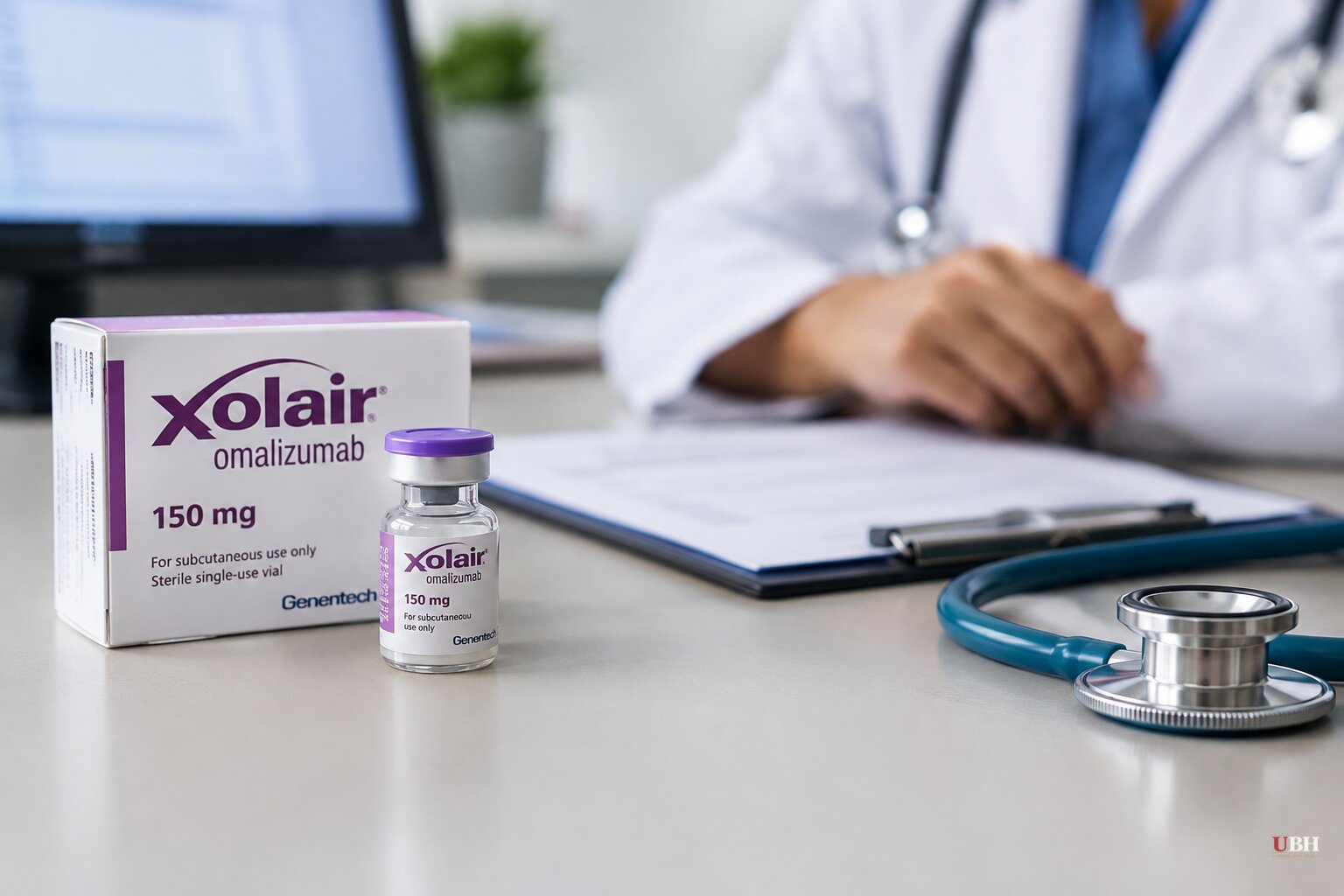
A drug already approved for asthma, hives and food allergy may protect some people from the worst of the tick-borne red meat allergy. The evidence so far is a single retrospective study that has not been published.
Collette M. Tilly, MD, of the University of North Carolina at Chapel Hill, presented the findings at the American College of Allergy, Asthma and Immunology annual meeting in Phoenix. The announcement came Nov. 12.
What the study found
The researchers reviewed medical records from April 2022 through November 2025 for 64 patients with alpha-gal syndrome who took omalizumab, sold as Xolair. Each had a compatible clinical history, positive alpha-gal-specific IgE blood tests and at least three months of follow-up.
The median age was 55, with a range of 20 to 89. Thirty-six patients, or 56%, were female.
Before treatment, 52 patients (81%) had a documented history of anaphylaxis. Thirty-four (53%) had needed epinephrine for a reaction to mammalian food, even while avoiding it.
The median time on omalizumab was 23 months, ranging from 3 to 83 months. In that time, none of the 64 patients used epinephrine for a food-related reaction.
Sixty-one patients (95%) reported a clinically meaningful drop in how often or how badly they reacted. About one in three added mammalian foods or products back into their diets: 13% fully and 19% partially, according to the figures presented.
Side effects were infrequent and mostly mild, with joint pain the most common. Two patients, about 3%, stopped the drug because of adverse events.
The researchers' own limits
Tilly did not oversell it. "Omalizumab is not a cure for alpha-gal syndrome, nor should it be considered [as] putting these patients into remission," she told MedPage Today. She said it could reduce reaction frequency and severity, cut the need for epinephrine and lessen the fear of unexpected reactions.
The study's own authors say the data are retrospective and unpublished. A prospective trial with food challenges would be needed to confirm any benefit.
The epinephrine result also covers food-related reactions only. And the cohort took the drug under real-world conditions, with patients who were already being careful about what they ate.
Outside doctors urge caution
Alpha-gal syndrome was not among the conditions tested in the randomized trials that led to omalizumab's food allergy approval. Those trials studied milk, egg, peanut, cashew and walnut.
Jay Lieberman, MD, of the University of Tennessee Health Science Center in Memphis, said he would still consider use in alpha-gal patients on-label "if you consider alpha-gal a food allergy." But he said the condition is less predictable than other food allergies.
"If you have a peanut allergy, you will react if I perform a challenge; with alpha-gal, it depends on so many things," Lieberman said. He pointed to co-factors, the fat content of the food and how much a patient eats. That makes the question of how much meat a patient can safely eat on the drug a hard one.
Dennis K. Ledford, MD, of the University of South Florida in Tampa, commented earlier this year on a smaller series from the same group. He wrote that the logic of the treatment is sound, since omalizumab reduces free IgE and, ultimately, IgE bound to mast cells. But he added that "the dose of omalizumab is important, and the treatment does not guarantee ad lib ingestion without adverse events."
There is also a theoretical wrinkle. Omalizumab is produced in Chinese hamster ovary cells, which may variably express alpha-gal. HCPLive has previously noted that this creates a theoretical anaphylaxis risk, so precautions at the start of treatment are warranted in these patients.
Erin McGintee, an allergy and immunology specialist at ENT & Allergy Associates, explained the mechanism: "If you have less IgE, it's going to take a much higher dose of an allergen to trigger a reaction." The drug raises the threshold for a reaction. It does not remove the allergy.
The ACAAI says between 96,000 and 450,000 Americans may have alpha-gal syndrome, and that the summer of 2026 was a particularly bad tick season. A CDC study published this year estimated that 24% of adults in five states where Lone Star ticks are common had antibodies to alpha-gal, which suggests past tick exposure.
The allergy is also easy to miss. Reactions often start hours after eating, which makes them hard to tie to a food. A companion case report at the meeting described a 66-year-old man with hives, coughing and trouble getting enough oxygen hours after red meat and alcohol. His doctor did not suspect alpha-gal at first, because he could sometimes eat red meat without trouble.
Jeffrey Yu, MS, lead author of that report, said the case is typical. "On average, people wait about seven years to get the right diagnosis," he said.
Current advice for patients remains strict avoidance of red meat and meat-based soups and gravies, and consideration of avoiding gelatin or dairy. Nothing in the study changes that guidance.
The open question is whether the result survives a controlled setting. The authors say it would take a prospective trial with food challenges to show how much meat a patient on omalizumab can safely eat. No such trial has been announced.
Sources used for this briefing
7 links from 7 independent newsrooms (syndicated copies of the same report count once)
These are the sources it draws on, linked so you can verify.


