
Unbiased headlines. Facts, not spin.
Unbiased Headlines is an independently owned news organization. We bring you the facts, not opinions, written fresh from 110+ named sources. Sources linked so you can verify it yourself.
 health
Low Interest (4/10)
Event date: November 14, 2026 ·
AIIMS Delhi Says It Performed India's First Open Fetal Surgery for Spina Bifida, at 25 Weeks
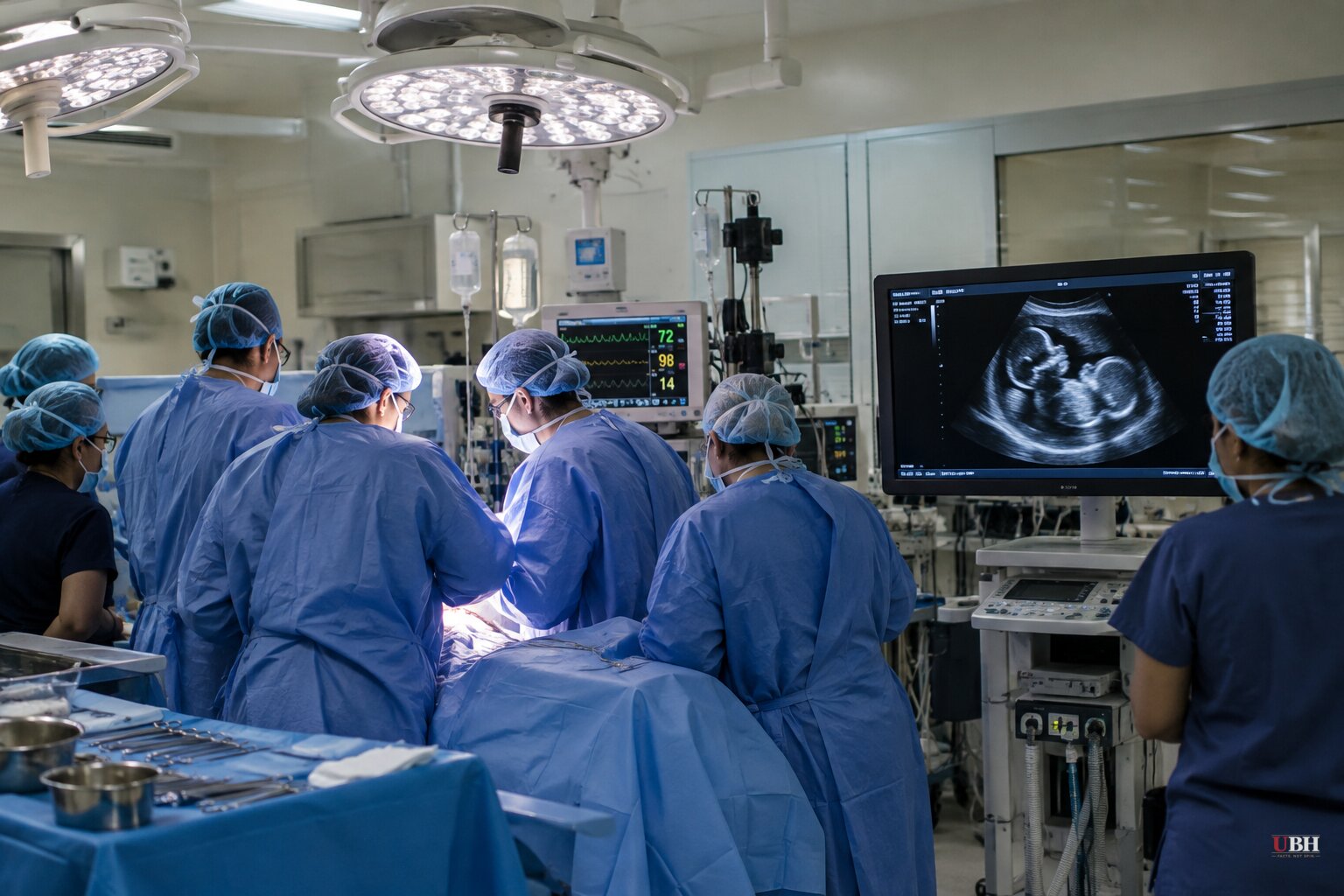
Doctors at the All India Institute of Medical Sciences in New Delhi operated on an unborn baby's spine on Thursday, November 12. The institute announced it Saturday, November 14, and called it India's first open fetal surgery.
The operation lasted six hours. The baby was at 25 weeks' gestation and had a lumbosacral myelomeningocele, the most severe form of spina bifida. In that condition, the spinal cord and its coverings push out through an opening in the spine.
What the surgery involved
Open fetal surgery means the surgeons reach the baby by opening the mother's abdomen and uterus. They then locate the defect and close it while the baby is still in the womb.
AIIMS said the team worked at its Neurosciences Centre with high-end microscopy and continuous ultrasound guidance. More than 30 clinicians and nurses took part, drawn from obstetrics and gynaecology, maternal-fetal medicine, neurosurgery, obstetric and neuroanaesthesia, plastic surgery, radiodiagnosis and neonatology.
Dr Deepak Gupta led the neurosurgical team. Dr Neena Malhotra and Dr K Aparna Sharma led the maternal-fetal medicine and obstetric teams.
The operation came after more than five weeks of preparation, the hospital said. That included detailed fetal imaging, counselling, anaesthetic preparation and operative simulation.
Why operate before birth
Children born with myelomeningocele can face paralysis, bladder and bowel dysfunction, hydrocephalus and other lifelong neurological disabilities. The usual approach is to repair the defect after birth.
Gupta, who is president of the Indian Society for Pediatric Neurosurgery, said the point of operating earlier is to protect the exposed spinal cord from further injury during the remaining months of pregnancy.
"In carefully selected babies, prenatal repair can reduce hindbrain herniation and the need for treatment of hydrocephalus, while improving early lower-limb function and the likelihood of independent walking," he said. "It is an opportunity to improve outcomes, not a cure."
The evidence he points to is the international Management of Myelomeningocele (MOMS) trial. It found that 40 percent of children who had prenatal repair needed a cerebrospinal-fluid shunt by 12 months. Among children repaired after birth, the figure was 82 percent. Prenatal surgery was also associated with better motor outcomes and less Chiari II hindbrain herniation.
The risks
The surgery is not low-risk, and the doctors said so. AIIMS cited prematurity and complications related to the uterine scar. Doctors also listed premature labour, bleeding and infection.
For that reason, the institute said, the procedure is recommended only at specialised centres and in carefully selected pregnancies. Sharma said the safety of both mother and fetus depends on detailed counselling, high-quality anaesthesia and coordinated monitoring before and after surgery.
Sharma said the mother and the fetus are stable and recovering well. AIIMS said both will stay under close multidisciplinary monitoring through the rest of the pregnancy, delivery and the newborn period.
Who paid
AIIMS said the procedure was provided free of cost under the government's Janani Shishu Suraksha Karyakram, a scheme for maternal and newborn care. The institute did not say what the operation would otherwise cost, and it did not say how many such cases it plans to take on.
What is still unknown
This is a single operation announced two days after it happened. The baby has not been born. The outcomes the MOMS trial measured, including shunt need, motor function and walking, are tracked over months and years. None of that can be assessed yet for this child.
AIIMS has not said when the delivery is expected or how it will track and report the baby's results. Those answers will show whether the procedure becomes a repeatable service for Indian families or remains a one-off milestone.
Sources used for this briefing
6 links from 6 independent newsrooms (syndicated copies of the same report count once)
These are the sources it draws on, linked so you can verify.


