
Unbiased headlines. Facts, not spin.
Unbiased Headlines is an independently owned news organization. We bring you the facts, not opinions, written fresh from 110+ named sources. Sources linked so you can verify it yourself.
 politics
Major Story (8/10)
Event date: October 23, 2026 ·
Ninth Circuit Panel Rules 2-1 That Trump's 2025 Federalization of California Guard Was Unlawful
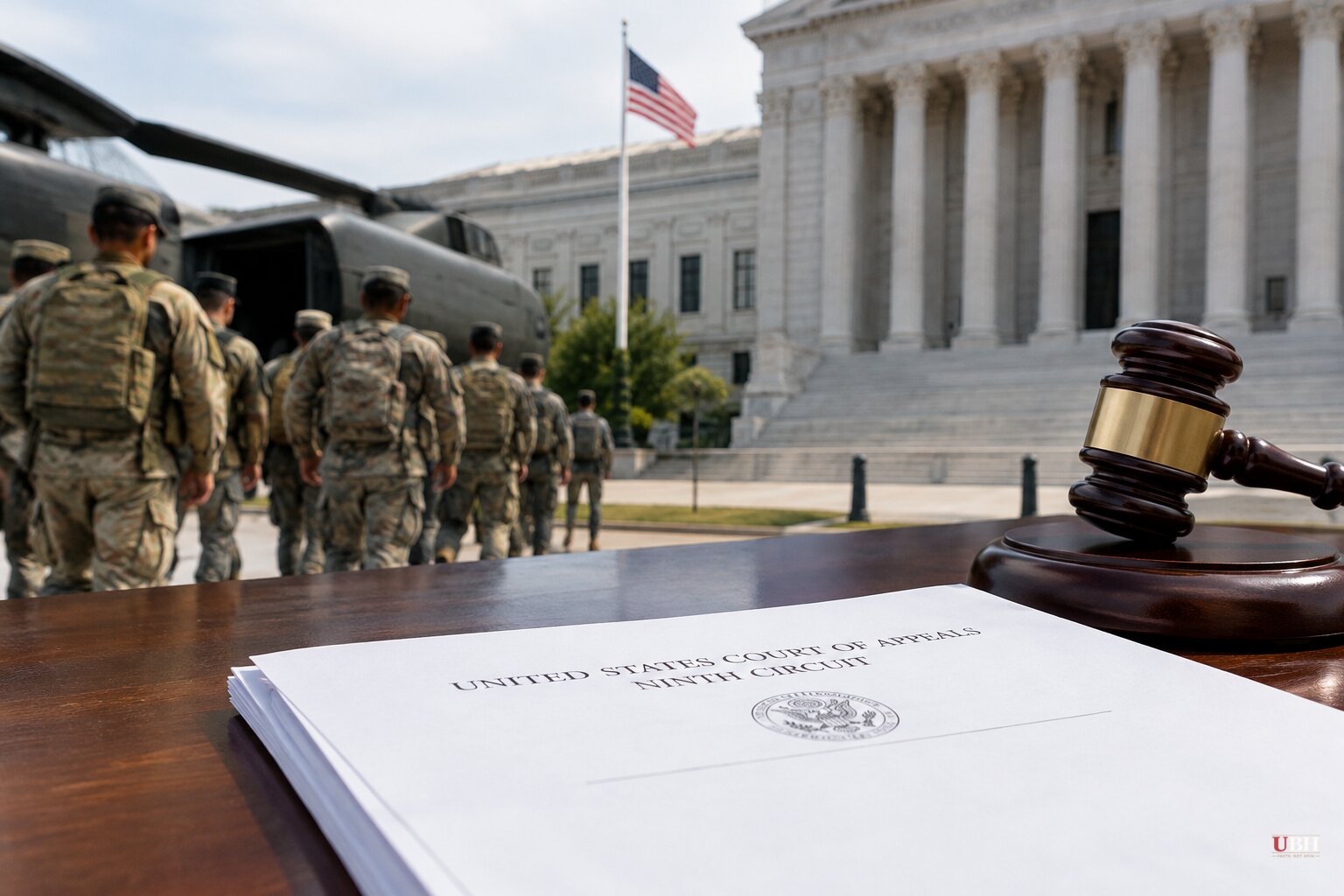
Since Trump federalized 4,000 California National Guard troops in June 2025, the case has gone from a sweeping appellate win for the White House to a Supreme Court reversal of its legal footing. Today, Oct. 23, a Ninth Circuit panel finished the job on the Los Angeles deployment.
The court ruled 2-1 that the federalization order was unlawful. Judge Jennifer Sung, a Biden appointee, wrote the majority opinion. Judge Eric Miller, a Trump appointee, joined her. Judge Mark Bennett, also a Trump appointee, dissented.
What the panel held
Sung wrote that Title 10 of the U.S. Code did not authorize the initial order. "The order exceeded the President's statutory authority and encroached on Congress's calling forth power, in violation of the constitutional separation of powers," she wrote. The panel called the order "ultra vires and unconstitutional."
The court also rejected the argument that Los Angeles was in a state of rebellion. "A determination that the conditions in Los Angeles on June 7, 2025, constituted 'a rebellion or danger of rebellion' does not reflect a colorable assessment within a range of honest judgment," Sung wrote.
She found no evidence of organization among bad actors, only sporadic or impromptu violence. That tracks the findings of U.S. District Judge Charles Breyer, who first blocked the deployment days after California sued.
The panel affirmed Breyer's order. California's attorney general describes it as a temporary restraining order. Other accounts of the ruling describe it as a preliminary injunction.
The administration's argument
The Trump administration argued that attacks on federal agents and vehicles, plus property damage during protests against immigration sweeps, showed the government could not enforce federal law. Trump called the protests "a form of rebellion." Administration lawyers also pitched the statute as a way to take command of a state's Guard without invoking the far stronger Insurrection Act.
That approach now looks closed off. California Attorney General Rob Bonta called it "the Trump Administration's transparent attempt" to keep the option of calling up California troops again.
The Justice Department did not respond to requests for comment after the ruling.
How the same court got here
In June 2025, Sung, Bennett and Miller were the panel that stayed Breyer's order. They found the deployment could proceed under an obscure, nearly untested subsection of the law. That ruling set a "great level of deference" to the president, though the panel rejected the claim that his decision was beyond judicial review.
Another Ninth Circuit panel leaned on that precedent in Portland that fall. Judge Jay Bybee later wrote separately, urging the court to rehear the case: "There is no greater threat to the sovereignty of the states than an assertion of federal control over their domestic affairs." The Portland decision relied in part on data the Justice Department later admitted was false.
Then a Seventh Circuit panel found the president had offered "insufficient evidence" for a deployment in Illinois, even under the Ninth Circuit's deferential standard. On Dec. 23, the Supreme Court sided against the administration in the Illinois case.
The justices wrote that "at this preliminary stage, the government has failed to identify a source of authority that would allow the military to execute the laws in Illinois." According to one account of the decision, the court read the statute to allow the president to take over Guard troops only when the regular military has been outmatched. Federalized troops were ordered out of Los Angeles that December.
The dissent
Bennett did not argue that the deployment was sound. He argued the panel should not have decided the case.
The administration had asked to drop its appeal of Breyer's order, and Bennett wrote that the court should not have ruled on the merits after that request. He also said the parties had not fully briefed how the Supreme Court's Illinois decision applies, and that the case was at an early stage. He accused the majority of legal errors, including using the wrong legal standard on whether Trump exceeded his authority.
The majority declined to let the administration withdraw. Bonta said the court "rejected the Administration's attempt to withdraw its appeal."
Reaction from California
Gov. Gavin Newsom called it "a crucial day for the rule of law, upholding the Constitution, and defending democracy." He said another court had issued "a complete rejection of Donald's Trump illegal, authoritarian takeover of our state's National Guard."
Bonta said the administration used "isolated incidents of violence as a pretext" and that deploying the Guard "with no rhyme or reason was a clear example of federal overreach."
The administration's side of that dispute is the one it made in court. It cited attacks on federal personnel and property as reason enough to act.
What remains open
The ruling arrives long after the practical fight ended. The troops left Los Angeles in December. What survives is the precedent, and the question of whether the administration will fight it.
The Justice Department has not said whether it will seek rehearing by the full Ninth Circuit or ask the Supreme Court to step in. The administration's own attempt to drop the appeal suggests it may not want to defend this record on the merits. The ruling now stands unless it does.
Sources used for this briefing
7 links from 6 independent newsrooms (syndicated copies of the same report count once)
These are the sources it draws on, linked so you can verify.


